
On 28 November, Mr. Antônio Sapezeiro, leader of the Quilombola community of Nova Vista in Sapê do Norte, São Mateus, (Espirito Santo, Brazil) was filmed lying, immobilised and defenceless, on the concrete road, surrounded by Suzano security guards and military police officers called by them. This is not uncommon behaviour for Suzano, the biggest pulp mill producer in the world. While the company is receiving millions in financing because of its sustainability promises and its commitments “to lift people out of poverty”, it is not being transparent about its severe social and environmental impacts.
Earlier in the morning of 28 November, Suzano’s security guards ordered Mr. Sapezeiro to leave the field he was working in. The field is part of an area that his Quilombola community had occupied last October as their customary land. This happened after pointlessly waiting 17 years to get the land that had already been officially certified by the Palmares Foundation, a public institution set up to defend Afro-Brazilian culture and by INCRA, the National Institute for Colonisation and Agrarian Reform.
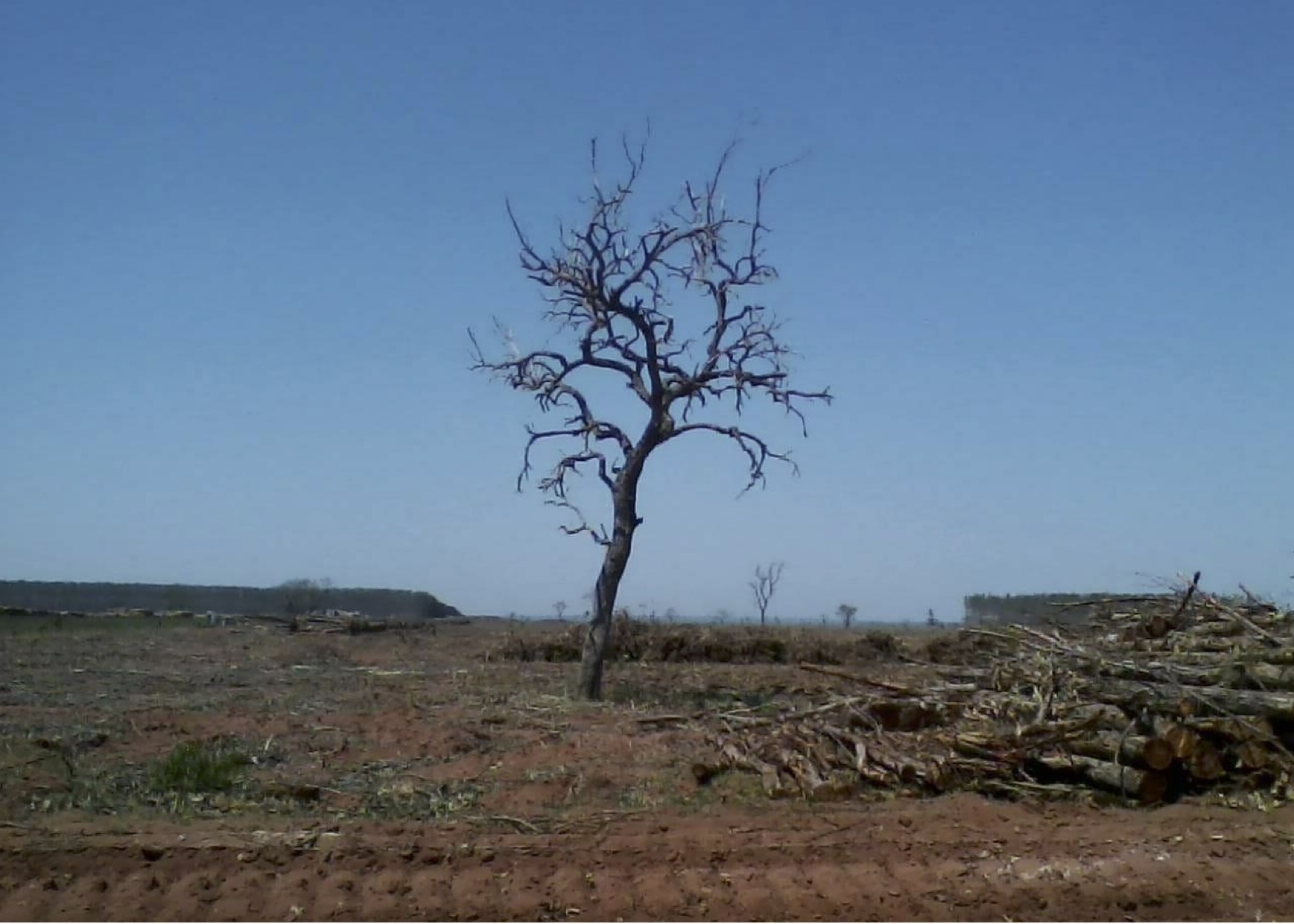
Vast areas of traditional land of the Quilombola communities had been taken away from them in past decades, through land grabbing, and then acquired by Suzano to develop their own plantations (in some cases, a company then integrated in Suzano, Aracruz, has been actively involved in human rights abuses). Now, under Brazilian law, the 3,495 Quilombolas living in Brazil should have been secure in their land protection. Logic would have it that state institutions would enforce the Quilombolas’ right to their traditional land. What often happens instead, is that the Quilombolas end up in prison, when they attempt to reclaim their traditional land. This specific case is no exception.
Unfortunately for Mr. Sapezeiro, Suzano security guards came back to the contested land in the evening. After arguing, the security dog bit him, and finally the military police arrested him.
Mr. Sapezeiro had recently undergone an operation and his state of health was fragile. Nevertheless, he was taken in no uncertain terms and taken to prison. He was released only several days later, after his poor farmers’ association and social organisations that followed the drama lived by the Sapê do Norte’s people, had collected the money to pay the bail.
In its clarification note, Suzano has claimed responsibility for recurring use of public force to manage the conflict over land with the community to which it theoretically that land belongs.
This is not only wrong, it is also playing with the fire. Last year, several Indigenous communities, who had reclaimed their ancestral lands taken away by companies, have recently been targeted by armed fazendeiros (agrarian latifundists) mobs in different regions of Brazil, including in areas in Bahia where Suzano was sourcing.
Suzano conflicts with local communities are not limited to Espirito Santo or Bahia. In a different area, in Brazil’s north-eastern Maranhao, the situation doesn’t look better. Last year the community of Curvelandia used branches and palm fronds to block the road running through their village. Suzano had promised to pave and manage the dirt road and reduce the number of trucks using it to get to nearby eucalyptus plantations – but it never complied. The road was built smashing locals’ farms, and the company started to pump water from the local spring. According to the local farmer union, in the municipality of Anapurus, in the same state, about 70% of the land acquired by Suzano originates from land grabbing. Other sources suggest that the land grabbing heritage of Suzano is much wider.
In Brazil at least 100 million hectares (12% of all of arable land) have been grabbed illegally, by using fake certificates (grilagem). The lands that Suzano acquired from third parties are home to more than 200 communities, including many Indigenous communities, claiming that land as their traditional heritage. As illustrated by the recent case in Nova Vista, Suzano fights back these claims by recurring to criminalization. At the same time, it plans to almost double its land bank in the next decade.
Facing extensive social conflicts, Suzano responds by promising to lift 200,000 people out of poverty line in our areas of operation by expanding its social programs. Yet Suzano is one of the biggest landowners in Brazil, controlling over two million hectares in five Brazilian states. In some areas, like Conceição da Barra (Espirito Santo) Suzano alone controls 62% of the municipality’s arable land that therefore cannot be used by local communities. Eucalyptus plantation work is highly mechanised and unsafe (Suzano is facing 2,449 probable and possible labour proceedings) and it generates very little number of jobs, 1 to 2.7 jobs per 100 ha, while the same surface in the area feeds 20 families living on subsistence agriculture.
Local people would prefer to have their back, and to live decently from it, rather than being dependent on Suzano charity.
Despite these disputable social records, and despite the 262 possible and probable civil and environmental proceedings the company is facing, Suzano has succeeded in achieving high environmental, social and governance (ESG) ratings, and it continues to benefit from green funds: 39% of the company’s debt is linked to green financing and that amount is set to grow.
Since 2016, Suzano has received over USD 35 billion from big players including JPMorgan Chase, BNP Paribas, Rabobank, Mizuho and Bank of America.
The company has also attracted billions in both green and development investments: in December 2022, after having obtained US$ 430 million from the Brazilian development bank BNDES, also the private arm of the World Bank (IFC) approved its first ever loan to Suzano. Together with Brazilian and international organisations, EPN opposed this financing, but IFC chose to ignore our concerns. We feared that this would open up financing from other development banks, and this became reality when FMO announced that it is considering joining IFC in the loan.
EPN and other civil society organisations informed them on numerous occasions, both the private and public banks are willingly profiting from the severe social and environmental impacts. Moreover, public development funds are being given to a company that has to date not yet proven to actually bring development to a region.