
At a Glance
- The U.S. Department of Labor has proposed modernizing how employer-sponsored group health plans deliver required disclosures under the Employee Retirement Income Security Act of 1974 (ERISA).
- The proposal would allow group health plans to make electronic delivery the default, while preserving every participant’s right to request paper documents.
- Under current ERISA requirements, employer-sponsored health and welfare plans print and mail more than 20 billion pages every year, despite the widespread use of electronic communications. The proposed safe harbor could reduce a significant portion of this paper use – and an even greater reduction could be achieved by extending it to all ERISA-covered health and welfare plans, including life, disability, and accidental death & dismemberment benefits.
- ERISA governs employer-sponsored health and retirement plans covering approximately 154 million Americans, making this one of the largest opportunities to reduce unnecessary paper use through a simple policy change.
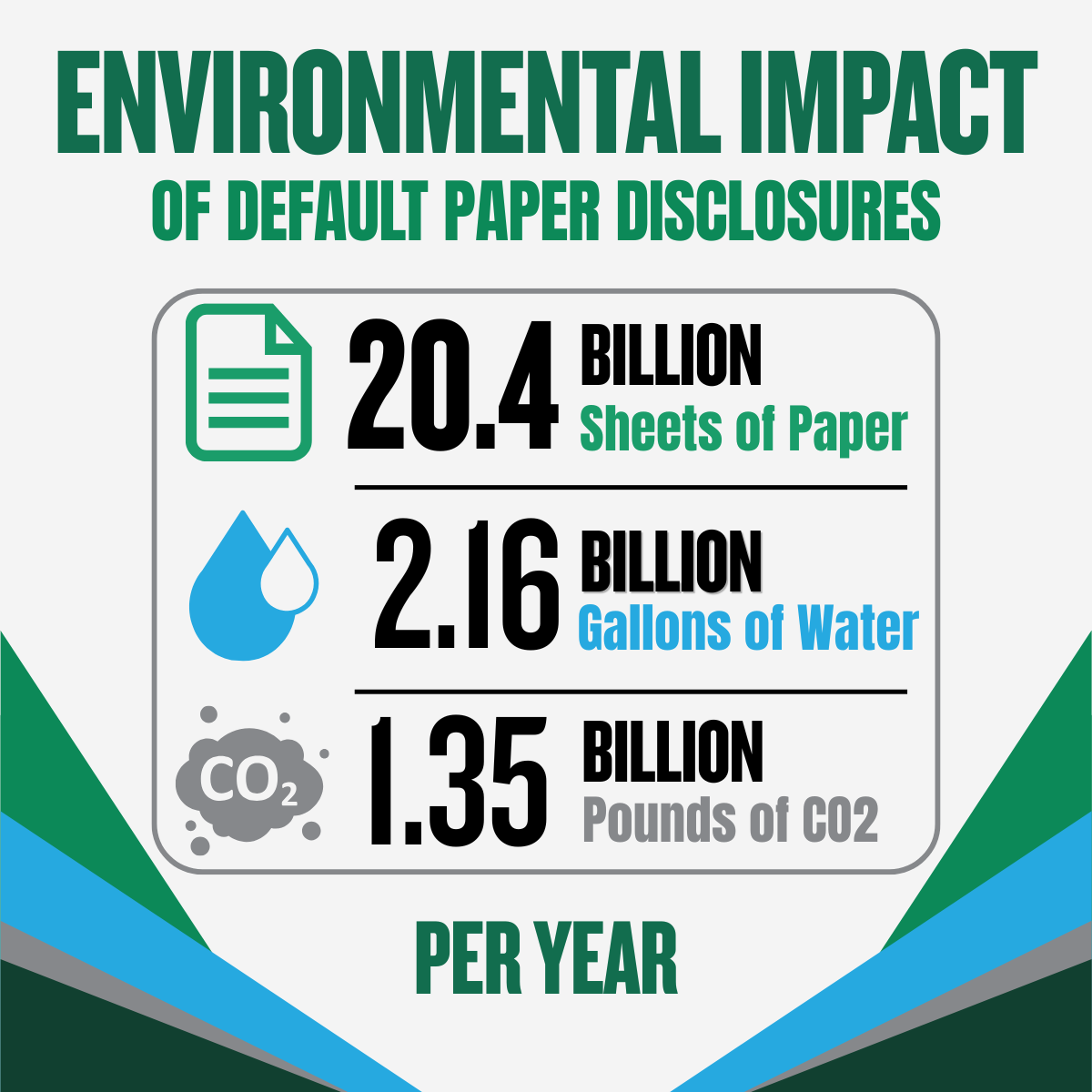
- Using the Paper Calculator™, EPN found that modernizing these requirements across all ERISA-covered health and welfare plans could save the equivalent of 2.2 million trees, conserve 2.16 billion gallons of water, reduce 1.35 billion pounds of greenhouse gas emissions, and prevent 113 million pounds of solid waste every year.
- A separate 2025 analysis estimates these reforms across ERISA plans could save employers and plan administrators $19.5 billion over the next decade, while improving access to important health plan information and preserving consumer choice.
- The proposal is now open for a 60-day public comment period through September 21, 2026.
A Long-Overdue Modernization
The U.S. Department of Labor (DOL) has released a proposed rule that would modernize how ERISA-covered group health plans deliver required disclosures, expanding the use of electronic delivery while preserving participants’ right to receive paper documents if they choose. The proposal represents a significant step toward reducing unnecessary paper use, lowering administrative costs, and improving access to important health plan information.
The proposal also marks an important milestone in years of collaboration and advocacy by Environmental Paper Network (EPN), our members, and partner organizations to modernize outdated paper disclosure requirements. Earlier this year, EPN highlighted the environmental and administrative benefits of this policy change, and we are pleased to see the issue advancing through the formal federal rulemaking process. Stakeholders now have an opportunity to help shape the final policy by submitting public comments.
Why This Change Matters
Many of the federal requirements governing health plan disclosures were developed decades ago, when paper mail was the primary way people received important information. A nationally representative survey found that nearly eight in ten employees enrolled in ERISA-covered health plans would prefer electronic delivery by default, provided they retain the option to receive paper communications. Yet federal disclosure requirements often make paper mail the default for these communications.
While paper documents remain an important option for some participants, requiring billions of paper mailings each year no longer reflects how most people access information. Electronic delivery can also provide faster access to time-sensitive notices, such as enrollment information or changes in benefits, while preserving the option to receive paper copies.
By reducing unnecessary printing and mailing while preserving consumer choice, the proposal would help modernize health plan communications to better reflect how people access information today.
Significant Environmental Benefits
Responsible paper use means using paper where it adds value while avoiding unnecessary printing when effective digital alternatives exist. According to a 2025 analysis, employers and ERISA-covered health and welfare plans print and mail more than 20.4 billion sheets of paper every year under current disclosure requirements, making this one of the clearest opportunities to reduce unnecessary paper use. And while the proposal to allow default e-delivery for group health plans could reduce a significant share of this paper use, extending the rule to include all ERISA welfare plan disclosures – such as life, disability and accidental death & dismemberment plans – could deliver even greater reductions each year.
Using EPN’s Paper Calculator™ Version 4.1, we estimated the environmental impacts associated with the paper currently used to meet disclosure requirements across all ERISA-covered health and welfare plans. The results demonstrate that a relatively simple policy update could deliver substantial environmental benefits every year, including:
- Saving the equivalent of 2.2 million trees
- Conserving 2.16 billion gallons of water
- Preventing 1.35 billion pounds of greenhouse gas emissions
- Reducing 113 million pounds of solid waste
Modernizing these requirements would also reduce emissions of hazardous air pollutants, particulate matter, sulfur dioxide, volatile organic compounds, and other pollutants associated with paper manufacturing.
These are meaningful environmental gains achieved through a practical policy update that preserves consumer choice. These environmental benefits come alongside significant economic savings. A 2025 analysis estimates that allowing electronic delivery by default for all ERISA health and welfare plan disclosures would generate $19.5 billion in savings between 2025 and 2034, or roughly $2 billion each year. Those savings would primarily come from reducing the need to print, process, and mail billions of paper disclosures, allowing employers and plan administrators to direct more resources toward serving participants.
Together, these impacts demonstrate that practical, common-sense regulatory reforms can improve access to information while benefiting participants, employers, health plans, and the environment.
Years of Collaboration Made This Milestone Possible
This proposal reflects years of work by organizations and stakeholders committed to finding practical ways to modernize paper-based communications without compromising access to important information.
EPN has worked alongside partners to build support for common-sense reforms that reduce unnecessary paper use while preserving consumer choice. By demonstrating the measurable environmental impacts of paper reduction, EPN has shown that modernizing disclosure requirements can deliver meaningful benefits for people, the environment, and the organizations responsible for providing these communications.
Looking Ahead
The Department of Labor’s proposed rule represents an important milestone, but it is not the final step. The proposal is now open for a 60-day public comment period through September 21, 2026, providing an important opportunity for stakeholders, organizations, and the public to share input before the Department considers a final rule.
This proposal is part of a broader federal effort to modernize outdated paper-based disclosure requirements. Combined with the U.S. Securities and Exchange Commission’s recently proposed electronic delivery rule, these two initiatives represent a historic opportunity to reduce unnecessary paper consumption across the healthcare and financial sectors while improving efficiency, preserving consumer choice, and delivering meaningful environmental benefits.
Throughout the public comment process and beyond, EPN will continue bringing together stakeholders, providing data-driven analysis, and advocating for reforms that reduce unnecessary paper use, protect forests, address climate change, and support communities.
Back to News