
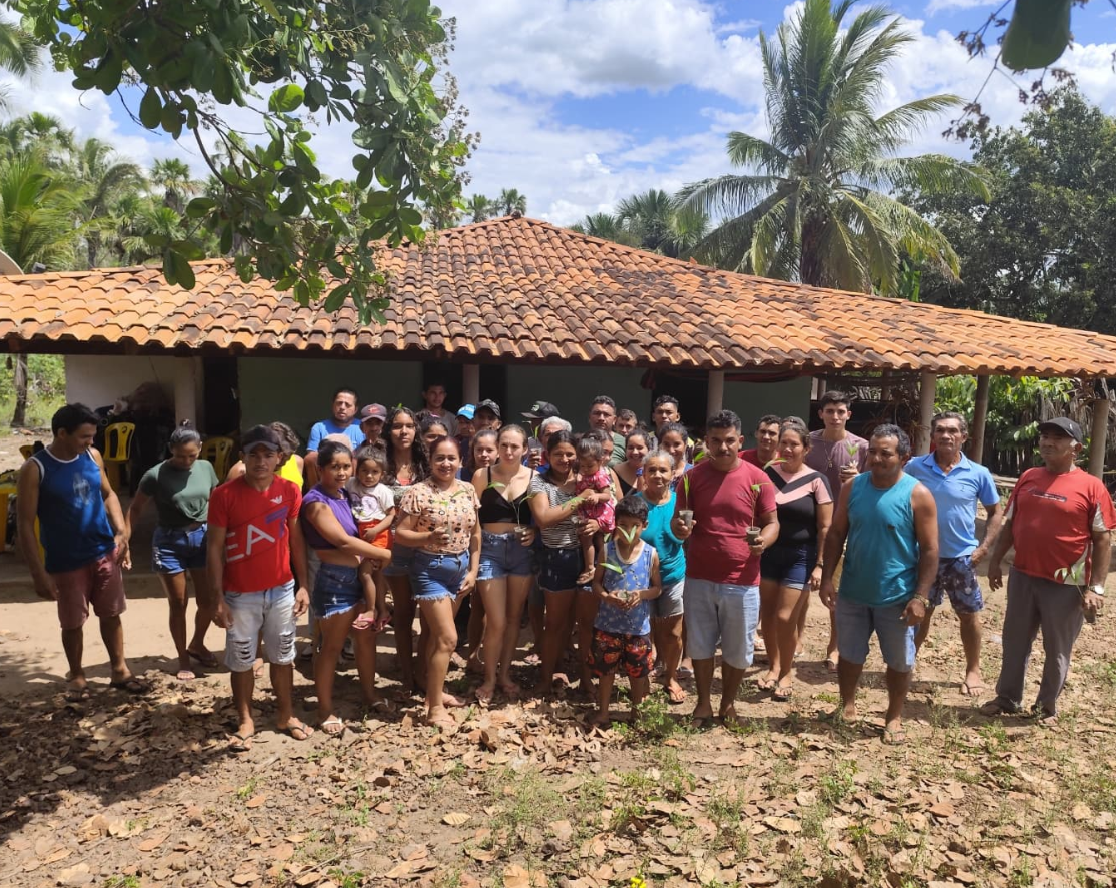
Photo: Meeting with the Formiga People’s Association regarding the land and environmental dispute with the company Aço Verde do Brasil (AVB) in the municipality of Anapurus (MA). © Fórum Carajás
This blog was a collaboration between the Environmental Paper Network, Fórum Carajás, and the Global Forest Coalition.
The promise of “green steel” has become an attractive narrative in global efforts to decarbonize heavy industry. After all, the steel industry is responsible for around 7% of global energy-related carbon dioxide emissions. Companies highlight claims of reduced carbon emissions, renewable charcoal, and sustainable forestry as evidence that steel production can become environmentally friendly.
In Brazil, some steel producers market eucalyptus-derived charcoal as a renewable, low-carbon or even carbon-neutral substitute for fossil coal. However, behind these claims lies a reality that many rural communities in Brazil know all too well: land conflicts, environmental degradation, and threats to traditional livelihoods.
Illustrating this contradiction is Aço Verde do Brasil (AVB), a Brazilian steel producer that has 50,000 hectares of industrial eucalyptus plantations for charcoal production, and has declared its factory in the state of Maranhão the “world’s first carbon neutral steel plant”. However, long-standing conflicts over land with communities in the area show why industrial decarbonization cannot be assessed through carbon accounting trickery alone. It must also be judged by its consequences for impacted territories and communities.
Formiga Community Faces Intimidation
The community of Formiga in the Baixo Parnaíba region of Maranhão has been in a dispute with AVB over approximately 600 hectares of land for several years. Formiga residents claim the land as theirs under community ownership laws, and argue they hold documents asserting their rights over the disputed area. However, AVB also claims the land as its own, and plans to clear it, in order to expand its eucalyptus plantations.
Earlier this month, Formiga residents were unexpectedly visited by a large group of armed military police officers after AVB filed a complaint alleging that community members had occupied company land. The community rejects this characterization and says that the police contingent arrived without a search warrant.
Mayron Régis, from Fórum Carajás, an NGO that supports local residents and a member of the Biomass Action Network (BAN), explains that “the allegation has no basis. The Formiga community is in a dispute with AVB over 600 hectares and, for some time, residents refrained from planting on this land because of threats made by the company,” he says. “But they decided to begin planting again because they are farmers, and farming is what they know and how they sustain themselves. In response to that decision, the company fabricated this complaint as a way of preventing residents from continuing to cultivate the land.”
The accusation is unfounded. The dispute concerns approximately 600 hectares of land, officially registered in the rural property registry of the national land agency INCRA as owned by the local community.
However, the company claims the land too. For a considerable period, Formiga residents avoided cultivating the area because of threats allegedly made by the company. As farming is the primary source of livelihood for Formiga residents, their collective way of life depends on cultivating their traditional lands. For the community, choosing to cultivate the land was not an “invasion”, but them exercising their right to work the land and sustain themselves, on land they understand to be their own. Rather than seeking dialogue, AVB chose to continue its campaign of harassment and intimidation by filing a complaint that resulted in police intervention. For the community, this represents another attempt to prevent families from exercising their rights.
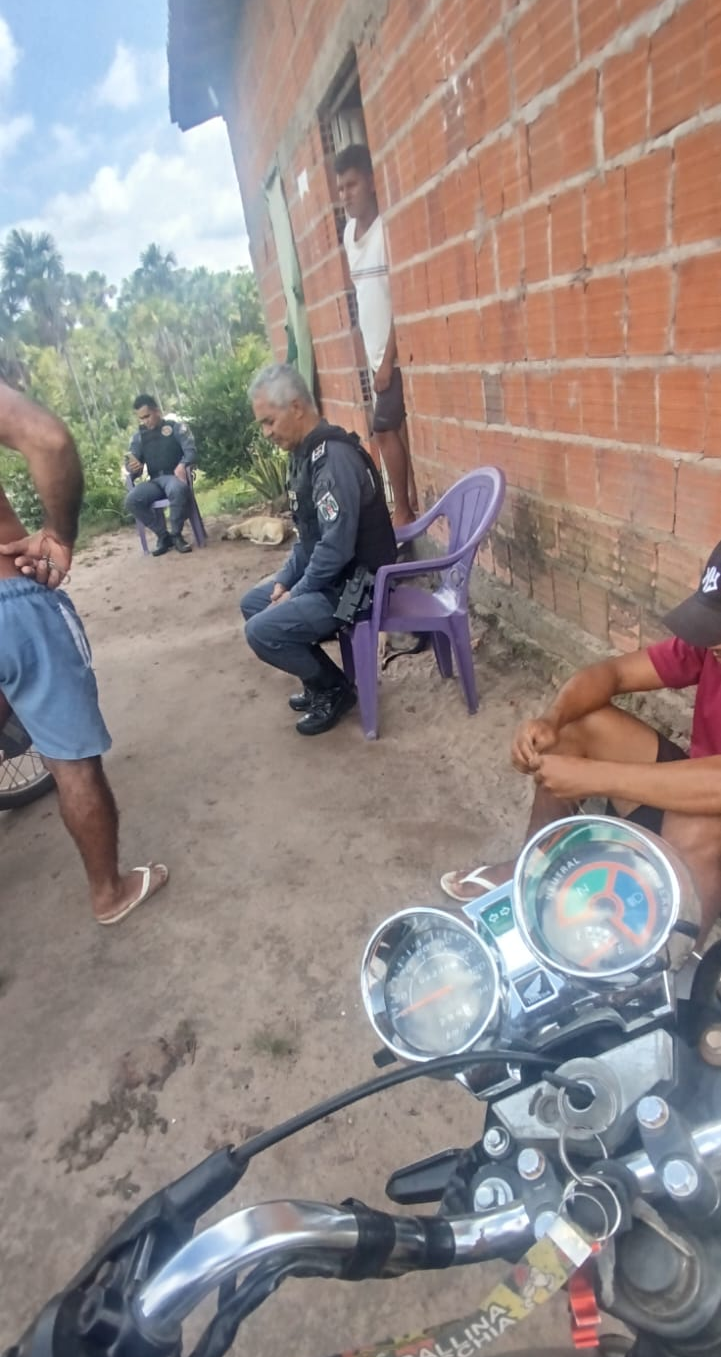
Photo shared in WhatsApp groups by Mayron Regis from Fórum Carajás.
Communities under pressure across Brazil
Events in Formiga are not an isolated example, but rather part of a wider escalation of territorial pressure in the region. Across Brazil, rural communities frequently report that legal action, police operations, and land disputes are used to pressure residents who challenge large-scale agribusiness and industrial projects. As Mayron explains:
“Over the past few weeks, what we have seen in the Baixo Parnaíba region of Maranhão is a considerable increase in attempts to intimidate traditional communities, alongside incursions into traditional territories, particularly by eucalyptus companies and soy growers. It gives the impression that this is all being coordinated. In response, communities in the region are coming together in order to resist the expansion of soy and eucalyptus monocultures, and the landgrabbing and intimidation they bring.”
In 2025, the Pastoral Land Commission (Comissão Pastoral da Terra – CPT) recorded 1,593 rural conflicts in Brazil, 75% of which involved land. The region of Maranhão led the country in recorded cases of violence related to land, with 190 occurrences. The Commission warns that, even when the total number of recorded conflicts falls, violence against communities remains persistently high.
Green rebranding and historical impacts
The current conflict in Formiga reflects the historical harm caused by steel production in Maranhão, which the company is trying to cover up through its environmental branding efforts. A 2023 investigation by Veja, updated in 2024, examined the rebranding of Gusa Nordeste into AVB and contrasted the company’s carbon-neutral claims with the environmental and social legacy of the steel and pig iron industries in Açailândia, where AVB’s steel plant is located. The report described how pollution has affected more than 1,000 residents of Pequiá, a community living next to AVB’s steel plant and a number of pig-iron plants. It also looked at numerous previous legal actions taken against steel companies in the municipality, and historical environmental complaints involving the company.
Veja also reported that the carbon-neutral certification publicized by AVB helped open the way for two green-bond issuances in 2021 and 2022, which together raised R$650 million for eucalyptus planting associated with the production of its branded “green steel.” This indicates that environmental labels are not merely a matter of public image or branding: they also facilitate access to substantial financial resources and support the territorial expansion of plantation-based supply chains.
In its response to Veja, AVB rejected the suggestion that its transformation amounted to greenwashing. It described the charcoal it uses as “biocarbon”, and presented it as a renewable and carbon-neutral alternative to fossil coal. The company stated that it had stopped producing pig iron (which steel is produced from) in Açailândia in 2020, that its newer steel production processes were cleaner, and that it continuously monitored environmental conditions and complied with agreements reached with Maranhão’s environmental authorities.
What is “Green” Coal?
The charcoal used by companies such as AVB is often described as “green coal”—a term referring to charcoal produced from eucalyptus plantations under “sustainable forest management” rather than from native forests.
Unlike mineral coal (coal extracted from mines), eucalyptus charcoal is made by harvesting fast-growing eucalyptus trees, carbonizing the wood in kilns, and using the resulting charcoal as a reducing agent in steel production.
Because eucalyptus can be replanted, companies argue that this charcoal is renewable and significantly reduces greenhouse gas emissions compared to fossil coal. This is one of the reasons Brazil has become internationally recognized for producing steel with a “lower carbon footprint” than many other countries.
However, calling this product “green” is misleading, even if only carbon emissions are considered. Purely on the basis of emissions, burning charcoal actually results in more atmospheric carbon emissions than burning coal per unit of energy. However, international carbon accounting loopholes allow companies to ignore the emissions from burning biomass, including producing and burning charcoal.
Whether using biomass from plantations rather than native forests produces genuine emissions reductions depends on what is counted: the previous use of the land, changes in vegetation and soil carbon, plantation establishment, harvesting, fertilizers and pesticides, transport, emissions from charcoal kilns, repeated rotations and the time required for newly planted trees to absorb the carbon released, among many other factors and impacts. Biomass is therefore not automatically renewable, sustainable or carbon-neutral simply because trees can be replanted.
The Hidden Costs Behind “Green” Charcoal
Investigations by Deutsche Welle and Mongabay have documented the social and environmental impacts associated with the rapid expansion of eucalyptus plantations in Brazil. Several indigenous-focused organisations have also denounced the practice throughout the country.
A November 2025 briefing by the Latin America Working Group of the Biomass Action Network estimates that Latin America produces around 10 million tonnes of charcoal annually, mainly for the steel industry. Brazil alone produces approximately 7 million tonnes a year (almost all of it from wood grown in industrial eucalyptus monocultures) and around 90% of the country’s charcoal is consumed by the iron and steel sector. It documents how industrial biomass supply chains are linked to land concentration, territorial conflicts, water stress, biodiversity loss, precarious labour and corporate control over extensive areas of land. Some of the most significant impacts include:
Water depletion
Eucalyptus grows extremely quickly and has a high demand for water. Communities living near extensive plantations have reported declining stream flows, disappearing springs, and increasing water scarcity. Although water availability depends on several environmental factors, researchers have raised concerns that large monoculture plantations can significantly affect local hydrology, especially in already vulnerable regions.
Biodiversity loss
Replacing diverse native ecosystems with vast eucalyptus monocultures reduces habitat for wildlife and simplifies landscapes that previously supported rich biodiversity. While plantations contain trees, they do not provide the same ecological functions as native forests. Eucalyptus monocultures are uniform production systems designed for repeated harvesting.
Land concentration
The expansion of industrial eucalyptus plantations often concentrates land ownership in the hands of large companies. This limits access to land for small-scale farmers, traditional communities, and Indigenous peoples, increasing social inequality and intensifying land conflicts.
Community livelihoods
For rural communities, land is not simply an economic asset—it is the basis for food production, culture, memory and collective identity. When access to farmland is restricted or communities face legal intimidation, food security and rural livelihoods are directly threatened.
A green image cannot ignore biodiversity and human rights
Reducing emissions in steel production is an important goal. However, producing “green steel” using charcoal is clearly green in name only, no matter which perspective it is looked at. Climate solutions cannot come at the expense of communities living on and from the land.
A truly sustainable transition must consider not only carbon accounting but also respect for human rights, land tenure, biodiversity, and water resources. If “green steel” depends on practices that displace communities, restrict access to farmland, or generate environmental degradation, then its sustainability claims deserve careful scrutiny.
The situation faced by the Formiga community reminds us that the transition to a low-carbon economy must also be a just transition—one that protects both the climate and the people whose lives are most directly affected by industrial expansion. As global demand for “green steel” continues to grow, governments, investors, and consumers should look beyond corporate sustainability labels and ask a broader question: green for whom?
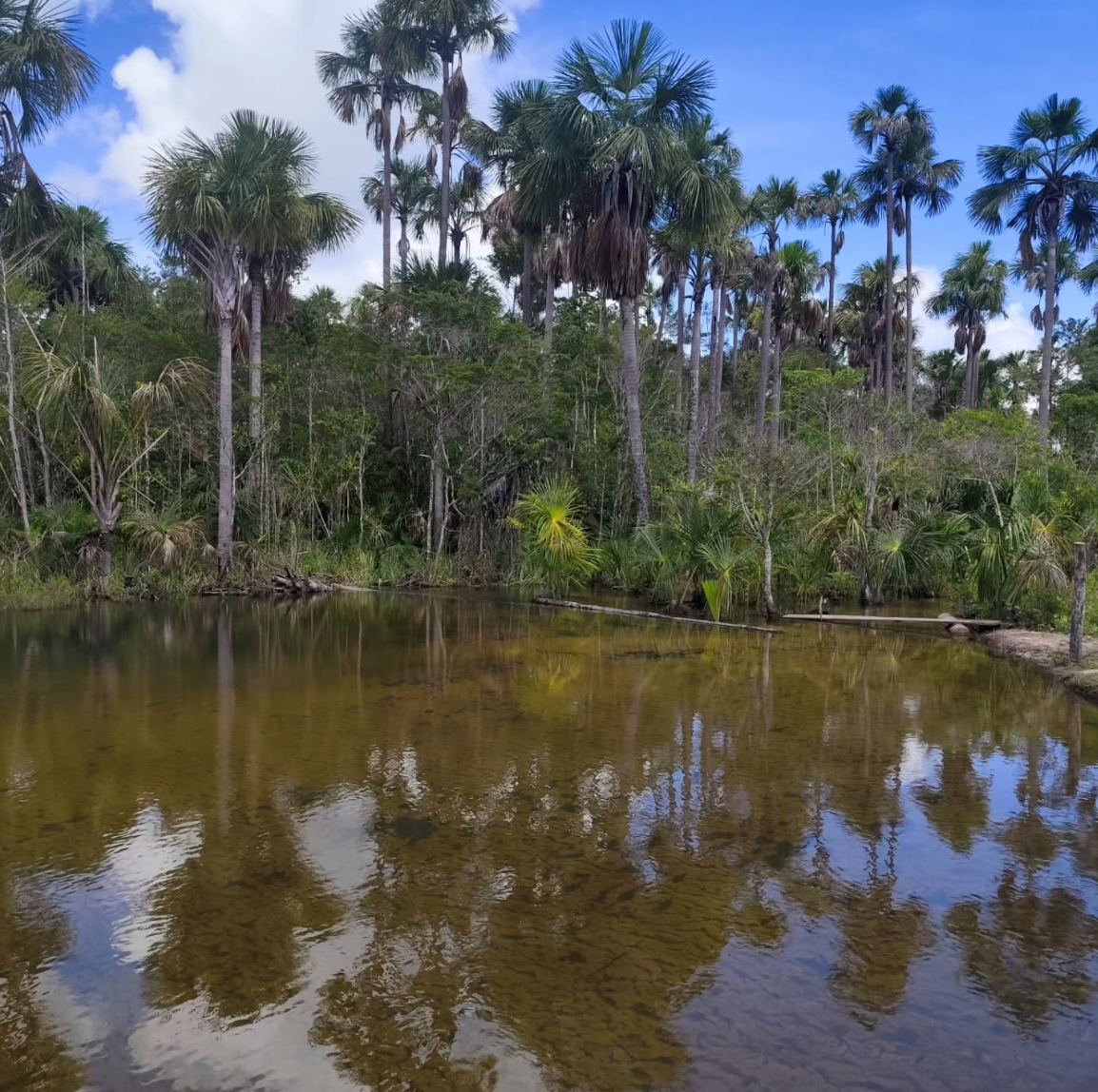
Photo from Fórum Carajás’ Instagram.