
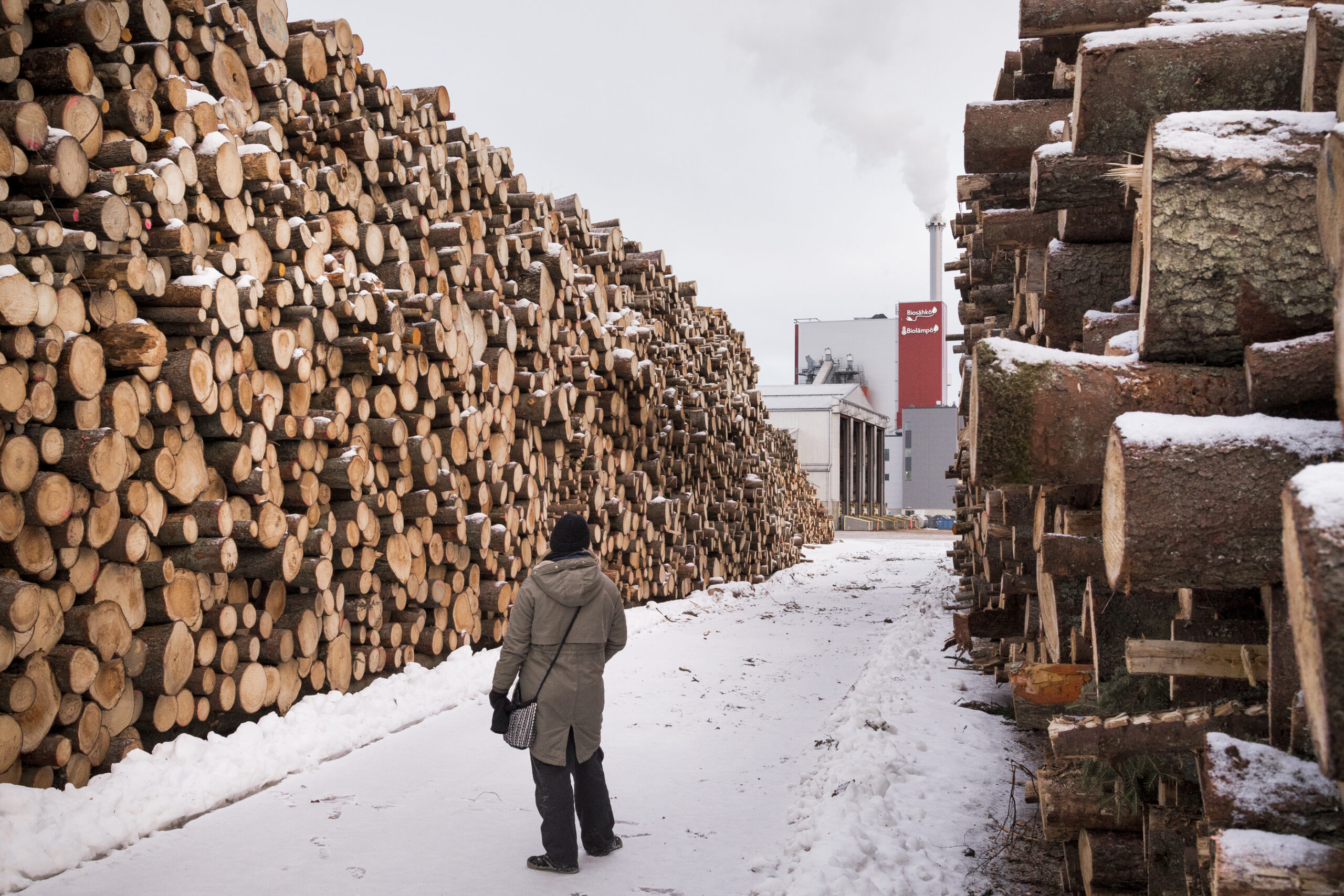
As world leaders wrapped up COP30 in Belém last year, a new climate roadmap was unveiled: one to transition away from fossil fuels, and another to halt and reverse deforestation and forest degradation by 2030. These goals are meant to work hand in hand. But there’s a growing problem: the rise of forest bioenergy threatens to undermine both efforts, putting forests and the climate at risk. Members of the Biomass Action Network are currently in Bonn for the UN’s mid-year climate meetings, to raise the alarm that bioenergy is nothing but a roadmap to destruction.
The False Promise of Forest Bioenergy
Burning wood and other forest materials for energy may sound renewable, but the science tells a different story. In fact, burning forest biomass releases more CO₂ per unit of energy than coal. The current carbon accounting system lets these emissions slip through the cracks, mistakenly treating bioenergy as carbon neutral. This loophole, along with subsidies and misleading definitions, allows the bioenergy industry to expand unchecked.
Far from accelerating the climate transition, bioenergy often prolongs the life of fossil fuels. This is exemplified by biomass co-firing, which extends the life of dirty coal power stations and diverts investment from genuinely clean renewables like wind and solar. Emerging biomass-based technologies such as BECCS (bioenergy with carbon capture and storage) have yet to prove effective and threaten to escalate land competition, potentially requiring more land than is available for food or natural ecosystems.
Forests and Communities Under Threat
Global demand for wood already exceeds what forests can sustainably supply. From 2010 to 2021, wood burning for energy soared by 50%, and wood pellet production has jumped by 250% since 2000. This surge intensifies logging, turning some forests into net carbon sources and eroding their role as carbon sinks.
The climate cost is clear: burning forests increases atmospheric carbon during the critical decades through 2100. Natural forests, far superior to plantations in storing carbon and supporting biodiversity, are irreplaceable once lost. Communities and Indigenous peoples are also at risk, facing land dispossession, resource conflicts, and health hazards from bioenergy production.
The Way Forward: Real Climate Solutions
To truly address the climate and biodiversity crises, we must:
- Exclude large-scale forest bioenergy from climate targets and roadmaps.
- Fix carbon accounting to count all emissions from bioenergy.
- Distinguish plantations from natural forests in global definitions and recognise forest degradation.
- Ban logging of primary and old-growth forests.
- Eliminate harmful bioenergy subsidies.
Genuine climate action means investing in low emission technologies like wind and solar, increasing energy efficiency and reducing consumption, and prioritising community-driven, ecologically grounded solutions. Protecting and restoring forests – not burning them – must be at the heart of a just and effective energy transition.
—
The Biomass Action Network is a coalition of more than 220 NGOs across 70 countries. Our position statement, The Biomass Delusion, outlines the significant harm large-scale forest biomass burning causes to the climate, forests, people, and the clean energy transition.