Paperwork: Why recycled content is crucial for printing and writing paper
This report explains why recycled content is crucial for printing and writing paper, examining the environmental benefits and industry opportunities.
Welcome to the Environmental Paper Network’s Reports & Publications page.
Find all reports, briefings, factsheets, and other publications authored, or co-authored, by the Environmental Paper Network or the Biomass Action Network. For additional resources on biomass, including from partner organisations, please see our Biomass Info Library.
If you have any suggestions for resources we should have in this library or any comments about it, please contact us.
This report explains why recycled content is crucial for printing and writing paper, examining the environmental benefits and industry opportunities.
Comprehensive report on the state of the paper industry in 2011.
Comprehensive report on the state of the paper industry in 2007.
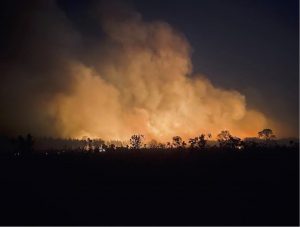
In the last two decades Brazil’s pulp and paper industry has tripled its pulp production capacity, from 6.7 to 21.5 million tons per year. This report examines the impacts of pulp and paper expansion in the Três Lagoas region, Brazil.
This briefing exposes how UNFCCC carbon accounting rules create a false perception of biomass energy as carbon neutral — fueling deforestation, climate harm, and global inequity while diverting resources from real renewable energy solutions. Unlike fossil fuels, biomass combustion emissions are not recorded in the energy sector of the country that burns them, externalizing responsibility onto the nations that supply the wood.
A 2023 follow-up scorecard tracking which major U.S. grocery stores and retailers continue to carry Fiora, LoCor, and Livi tissue products manufactured by Solaris Paper using fiber supplied by Asia Pulp and Paper. Ten years after APP’s Forest Conservation Policy, documentation confirms ongoing deforestation, climate harm, and social conflict in Indonesia — and too many retailers have yet to act.
Nine years after Asia Pulp and Paper’s highly publicized Forest Conservation Policy, monitoring by Indonesian and international NGOs documents ongoing failures. EPN-North America and partners contacted 27 major U.S. retailers selling Fiora, LoCor, or Livi branded products — manufactured by APP-affiliated Solaris — urging removal of these high-risk products until meaningful reforms are implemented.
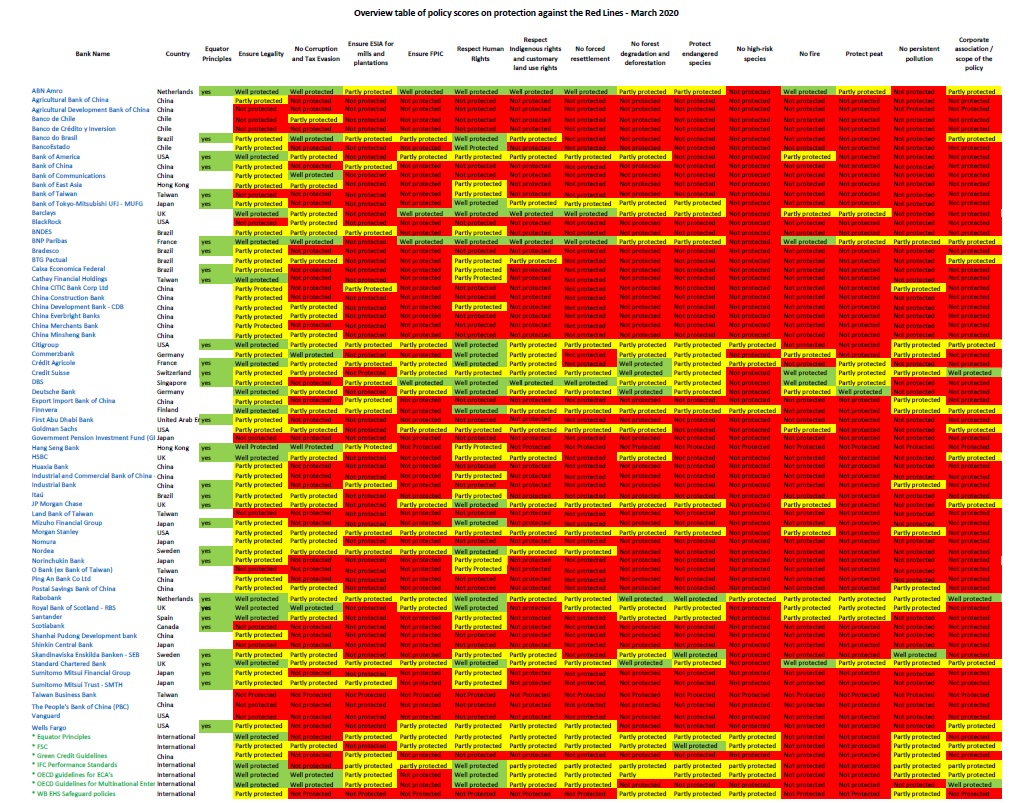
EPN evaluated the policies of 68 major financiers of the pulp and paper industry against 14 absolute minimum criteria — the “Red Lines” — that all financial institutions should require of their clients to reduce social and environmental risk. The assessment finds that most Red Lines remain very poorly protected, with only 6% of banks scoring “well protected” on average, though some improvements were recorded since the first assessment in 2017.