Skip to Content

EPN Reports & Publications

Welcome to the Environmental Paper Network’s Reports & Publications page.

Find all reports, briefings, factsheets, and other publications authored, or co-authored, by the Environmental Paper Network or the Biomass Action Network. For additional resources on biomass, including from partner organisations, please see our Biomass Info Library.

If you have any suggestions for resources we should have in this library or any comments about it, please contact us.

Conflict Plantations Chapter 4: Scorching the earth

In the last two decades Brazil’s pulp and paper industry has tripled its pulp production capacity, from 6.7 to 21.5 million tons per year. This report examines the impacts of pulp and paper expansion in the Três Lagoas region, Brazil.

Date: December 2022

Topics: Brazil, Conflict Plantations, Deforestation, Pulp and Paper

‘Cerrado’ project, Ribas do Rio Pardo: not aligned with IFC purpose

The Suzano ‘Cerrado Project’ in Ribas do Rio Pardo, Brazil, seeks $900 million in IFC funding but is criticized for environmental destruction, displacement of communities, and failing to deliver promised economic benefits.
Date: December 2022

Topics: Brazil, Community Displacement, Finance, IFC, Suzano
Papering over corporate control

Journalists and civil society groups have pointed out that Paper Excellence is a company controlled by the Sinar Mas Group, the parent conglomerate for pulp and paper producer Asia Pulp & Paper (APP). In Indonesia, APP and its wood suppliers have converted over 2 million hectares of tropical rainforests to establish pulpwood plantations.

Date: October 2022

Topics: Asia Pulp & Paper, Corporate Control, Indonesia, Paper Excellence, Sinar Mas

Paracel pulp mill in Paraguay: A risky project

This report summarizes the environmental and social costs of the Paracel SA pulp mill project near Concepción, Paraguay, including threat of expansion of forest plantations and risks to the livelihoods of smallholder subsistence agriculture in the area.

Date: September 2022

Topics: Deforestation, Paraguay, Pulp Mill, Smallholder Farmers

Flushing the Climate: Which U.S. Stores are Still Selling the World’s Most Destructive Toilet Paper?

Nine years after Asia Pulp and Paper’s highly publicized Forest Conservation Policy, monitoring by Indonesian and international NGOs documents ongoing failures. EPN-North America and partners contacted 27 major U.S. retailers selling Fiora, LoCor, or Livi branded products — manufactured by APP-affiliated Solaris — urging removal of these high-risk products until meaningful reforms are implemented.

Topics: Indonesia, Media Release, Reduce Greenhouse Gases, Responsible Virgin Fibre, Social Responsibility, Transparency and Integrity

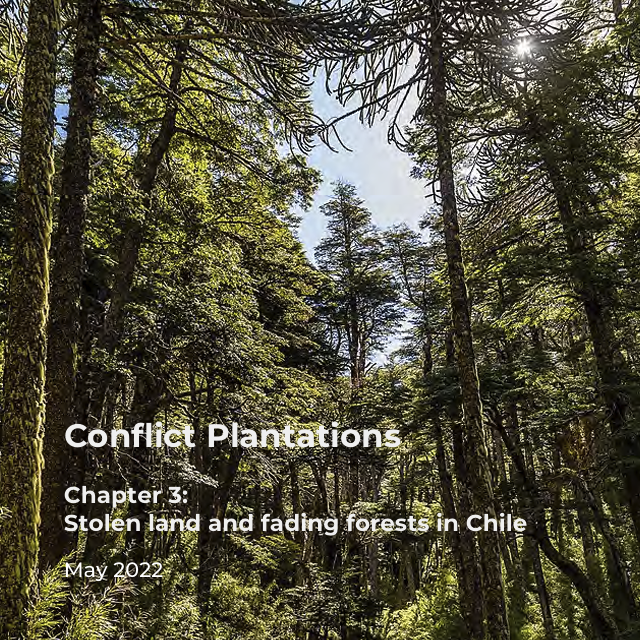
Conflict Plantations Chapter 3: Stolen land and fading forests in Chile

Chile is home to the second largest coastal temperate rainforest on the planet: the Selva Valdiviana. In recent decades, these forests have been largely replaced by timber plantations grown to supply the paper industry. This report examines the expansion of Celulosa Arauco y Constitución (Arauco).

Date: May 2022

Topics: Arauco, Chile, Conflict Plantations, Indigenous Rights, Rainforest

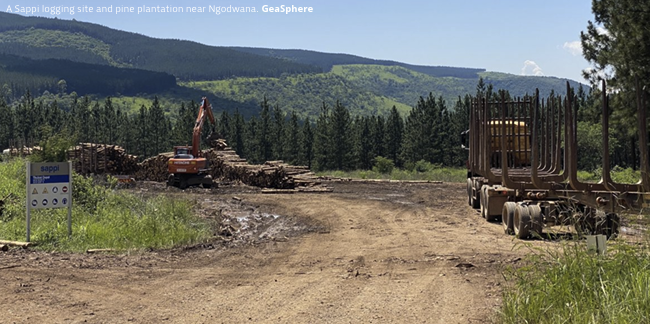
Ngodwana Biomass Energy Project: Can wood sourced from industrial timber plantations ever be sustainable?

This case study examines whether wood sourced from industrial timber plantations can be considered sustainable for biomass energy generation, using the Ngodwana project as a case study.

Date: March 2022

Topics: Biomass, South Africa, Sustainability, Timber Plantations

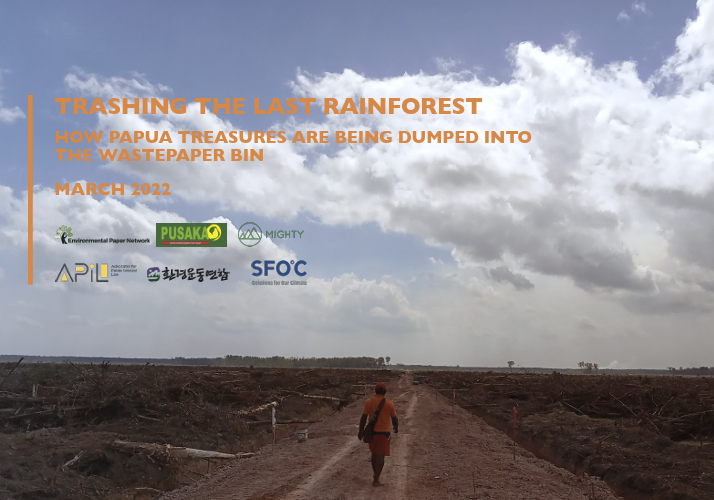
Trashing the Last Rainforest: How Papua Treasures are Being Dumped into the Wastepaper Bin

Until recently, the pristine forests in the remote province of Papua, Indonesia, remained relatively intact. Now, a wave of industrial plantations is carving up pockets of the region, clearing entire ecosystems as well as Indigenous Peoples’ lands to produce commodities for the global market.

Date: March 2022

Topics: Indigenous Rights, Indonesia, Papua, Plantations, Rainforest

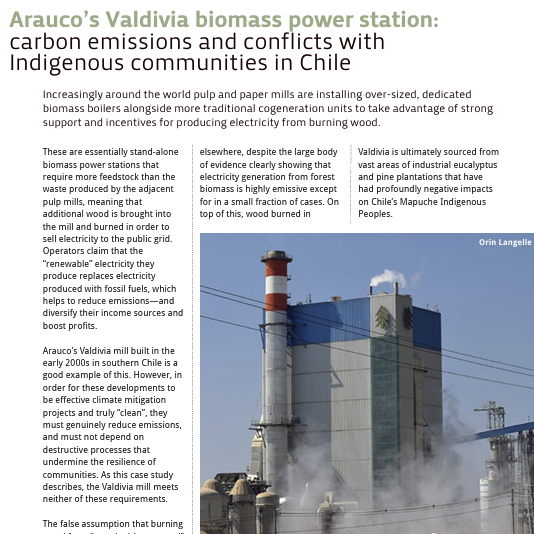
Arauco’s Valdivia Biomass Station: Carbon Emissions and Conflicts with Indigenous Communities in Chile

Pulp and paper mills are increasingly installing over-sized, dedicated biomass boilers alongside more traditional cogeneration units to take advantage of strong support for producing electricity from burning wood. This report examines Arauco’s Valdivia biomass station.

Date: October 2021

Topics: Arauco, Biomass, Carbon Emissions, Chile, Indigenous Communities