
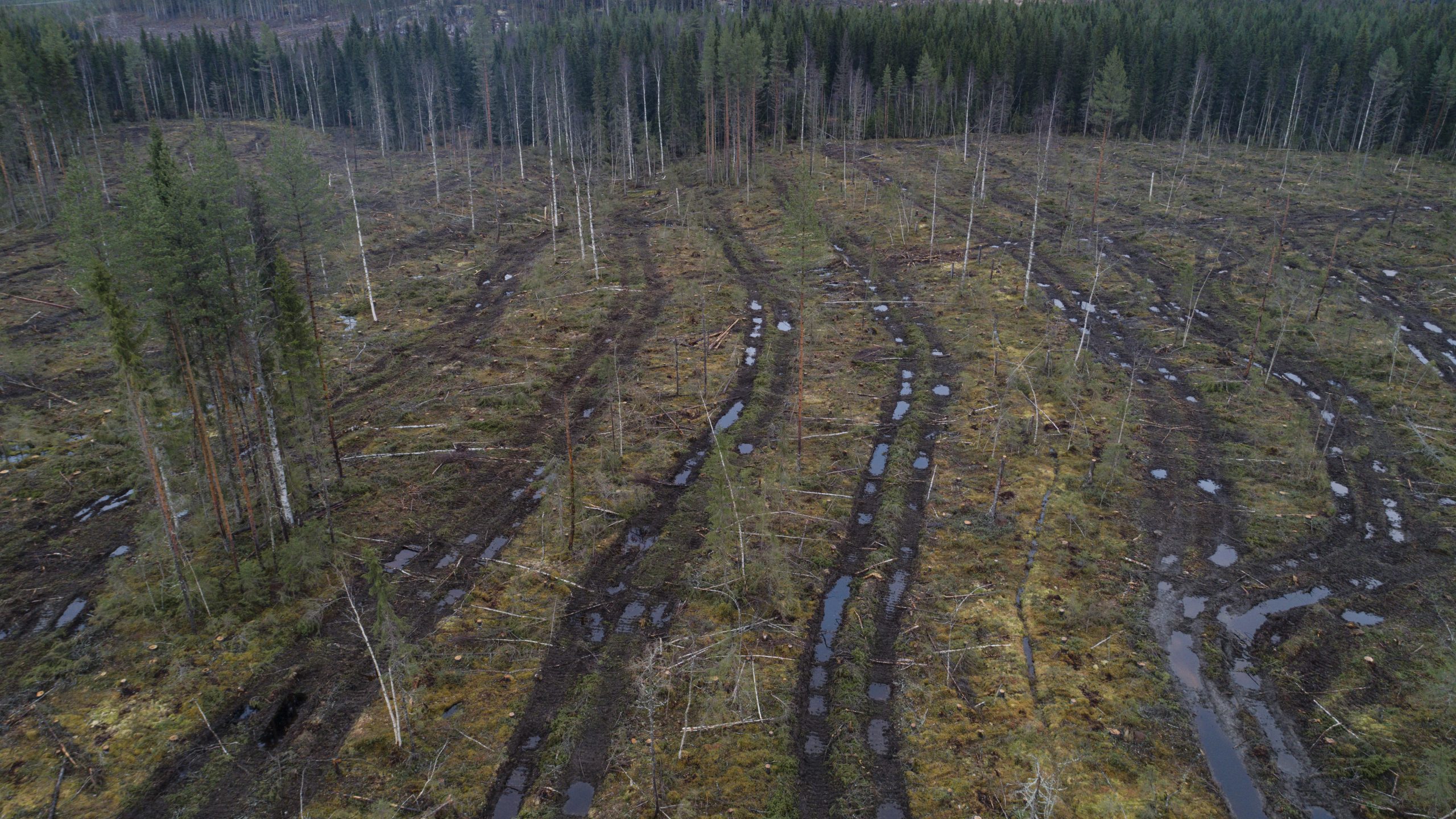
A month ago, a new #ForestScandal broke out in Sweden: Nestlé, Essity and DS Smith were exposed as buying pulp from operations destroying Sweden’s last unprotected natural forests and interfering with indigenous communities of the Sámi people, the only remaining European indigenous people. The culprit? The Swedish forest company Swedish Cellulosa AB (SCA), Europe’s largest private forest owner. SCA has been repeatedly criticised by environmental and Indigenous organisations, with reports and testimonies about systematic logging of forests with high conservation values and that threaten important reindeer grazing lands for the Indigenous Sámi.
EPN member organisations Skydda Skogen and Greenpeace Sweden launched their campaign to pressure these companies to drop Swedish pulp multinational SCA from their supply chain, and launched a petition on October 27th to increase the pressure on Nestlé, Essity and DS Smith to act.
Nestlé: the first domino to fall
After just one week of campaigning, Skydda Skogen and Greenpeace Sweden were informed that Nestlé would be dropping SCA as its supplier for good – a major victory for campaigners and Swedish forests. Nestlé had been sourcing cardboard from Europe’s largest private forest owner SCA for many years, making this an especially big victory.
It is unacceptable for consumer goods multinationals continue to buy pulp and paper products from SCA while knowing about their devastating impact on nature and indigenous communities. That is why we call on these powerful companies to follow Nestlé’s example and suspend their trade with SCA.
500 Single Mistakes, and their enablers
Despite SCA’s claims that accusations of logging of unprotected natural forests are a “single mistake”, reality proves otherwise. A report developed by Skydda Skogen shows at least five-hundred of those “mistakes”, indicating enough evidence for systematic operations with intent to acquire cheap wood regardless of its consequences for Swedish forests, biodiversity, climate and indigenous people.
This report shows that the risk is extremely high, almost to the extent of a guarantee, that buyers from Essity, Nestlé and DS Smith will receive products which originate from conservation value forests or infringe on indigenous Sámi rights. The report also uncovers the fact that existing certification schemes in Sweden such as FSC/PEFC do not guarantee socially or environmentally responsible forest management.
Moreover, these unsettling findings show that over a third of all logging notifications on SCA’s own land holdings are in probable and potential continuity forests. The study further shows that SCA has and is planning to log within planned nature reserves, registered Woodland Key Habitats, internationally unique valuable natural forests in the Scandinavian Mountains Green Belt, and other areas with documented conservation values across the boreal region of Sweden.
Essity and DS Smith: what are you waiting for?
As the campaign grows, the pressure is on Essity and DS Smith to remove SCA from their suppliers. Essity, with its many brands of hygienic products, such as well-known brands like Zewa, Tena, Lotus, Tork, Libero and Libresse presents 60% of its turnover from the European market, where Germany, France and the UK are the largest consumer countries. Meanwhile, British packaging company DS Smith merged with International Paper, making it the global market leader for paper based packaging. Well known companies such as Amazon, L’oréal, Zalando and Unilever are among the countless companies that rely on DS Smith for their supply of packaging material.
Sweden forests need everyone to chip in: sign the petition and urge companies to drop SCA as a supplier!