
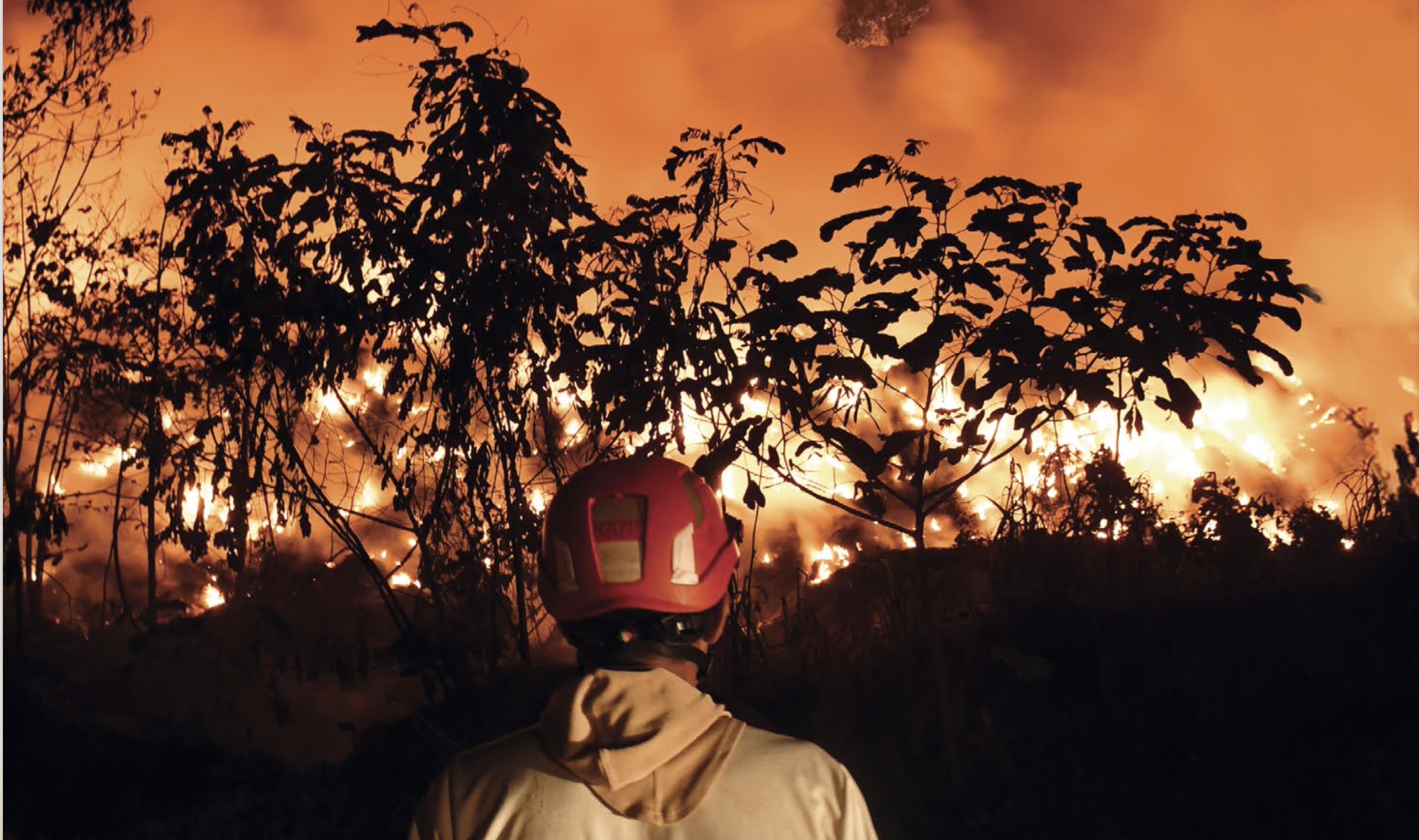
Behind Brazil’s global image as a land of natural abundance—and the host of this year’s international climate summit—lies a stark reality: centuries of violence, dispossession, and resistance in the countryside.
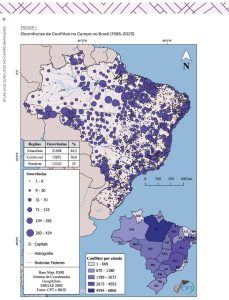
Occurrence of the land conflict in Brazil – Atlas of Conflicts in the Brazilian Countryside © Comissão Pastoral da Terra
The Atlas of Conflicts in the Brazilian Countryside, published by the Pastoral Land Commission (a Catholic Church-affiliated organization), documents more than 50,000 land and water disputes and cases of slave labor between 1985 and 2023.
More than 50% of Brazilian municipalities have been affected by conflicts. 84% of them refer to land disputes, 8.9% to cases of slave labour, and 7.1% to conflicts over water.
Unfortunately, conflicts and violence are increasing. “The last period (2015-2023) is marked by political turmoil, with a sharp increase in conflicts and the intensification of violence by both public and private authorities, especially against traditional peoples and communities. It is the period with the highest annual average number of conflicts in rural areas, 1,806,” said Luiz Jardim Wanderley, professor in the Department of Geography at the Universidade Federal Fluminense, who organised the project.
The Atlas of Conflicts in the Brazilian Countryside reveals the weight of the Amazon in the geography of agrarian violence in the country. Between 1985 and 2023, the region accounted for almost half (44%) of the 50,950 cases.
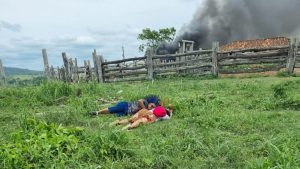
Chief Nailton and Nega Pataxó lie dead after being shot in an attack © Povo Pataxó Hã Hã Hãe
The state of Maranhão has the highest concentration of Quilombola communities, descendants of formerly enslaved Africans. These communities are mostly concentrated in the states of Maranhão (2,025 areas) and Bahia (1,814 areas). Unfortunately, these states also suffer the highest number of conflicts against these communities, 977 reports in Maranhão and 339 in Bahia.
Only a tiny part of their population can enjoy security on their land. The census [by the Brazilian Institute of Geography and Statistics] reveals that just 4.3% of this population resides in territories already titled in the land regularisation process. The remaining 95.7% is at risk of eviction.
The state of Maranhão is also where 600 vulnerable families face eviction at the hands of paper giant Suzano.
The company, despite publicly committing to lift 200,000 people out of poverty in the regions where it operates, threatens the eviction of families who rely on subsistence farming. It claims ownership of the land based on property titles, which in Brazil are often considered legally disputable. Suzano itself has previously been convicted for holding land acquired through illegal means. Even after the National Institute of Colonisation and Agrarian Reform proposed purchasing the contested land for redistribution to the communities, Suzano has continued to assert its property rights.
As powerful corporations assert their claims and the state falters in protecting vulnerable populations, the Atlas leaves no doubt: the fight for land in Brazil is not just about territory—it’s about the future of justice, identity, and survival itself.