- 9 years after their highly publicized Forest Conservation Policy was announced, monitoring by Indonesian and international NGOs finds Asia Pulp and Paper is failing to keep its promises, damaging the climate and harming local communities in Indonesia.
- EPN-North America and partners contacted 27 major U.S. grocery stores and retailers who currently or have recently sold Fiora, LoCor or Livi branded products manufactured by Solaris, an APP affiliated company, asking them to provide their customers with more sustainable options and remove these high-risk products until reforms are implemented.
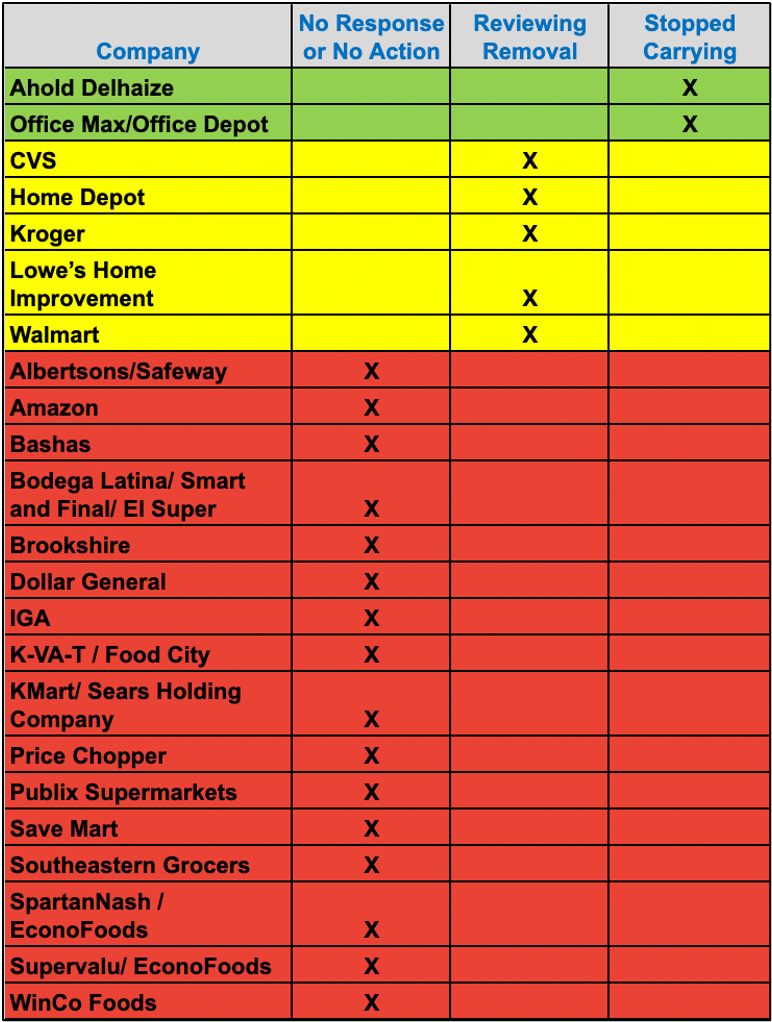
- Companies including Office Depot, Ahold Delhaize have taken steps to remove rainforest destruction and social conflict from their shelves and online stores, while CVS, Kroger, Home Depot, Walmart and Lowe’s are reviewing removal of the products, but action by more companies is needed.
It’s been nine years since Asia Pulp and Paper announced their highly publicized Forest Conservation Policy. Unfortunately, monitoring by Indonesian and international NGOs has repeatedly documented the company’s failure to keep its promises while damaging the climate and harming local communities in Indonesia.
In a review of U.S. supermarkets and retailers by a coalition of conservation groups, many were found to be prematurely selling the tissue products of Asia Pulp and Paper affiliated companies, which prompted an education and outreach effort. In 2022, Indonesian and international organizations have made it a global priority for biodiversity and the climate to address the damaging legacy and ongoing practices of Asia Pulp and Paper, and to support the stated demands of local and indigenous communities.
A recent report by the Environmental Paper Network (EPN) shows that, despite its 2013 commitment to end deforestation and expansion on peatlands, respect human rights and resolve social conflicts, the company has recently been linked to deforestation fibers and to forest and peat fires in lands under its control, and has failed to adequately address widespread social conflicts. These conflicts stem from its failure to ensure respect for Indigenous Peoples and the rights of communities to refuse development on their lands.
The EPN’s report highlights that Asia Pulp and Paper continues to source much of its fiber from carbon rich peatlands that are drained and emit huge climate emissions and cause massive forest and peat fires directly threatening public health. The company currently has plans to triple the pulp capacity of its OKI mill in South Sumatra, which will compound these problems. Without active steps to transition wood supply away from peat soils, the Indonesian pulp sector will continue producing globally significant levels of carbon emissions and endangering the health of millions of Indonesians for decades to come.
Asia Pulp and Paper has also been disassociated by the Forest Stewardship Council (FSC) since 2007, which is widely considered as the most robust certification system to ensure environmentally responsible, socially beneficial and economical viable management of forests. This means that Asia Pulp and Paper is not allowed to have any association of any kind with FSC, including use of any of its certificates and trademarks. Asia Pulp and Paper is the first among only six companies in the world that FSC remains disassociated from. Furthermore, WWF, a leading conservation organization, has issued an Advisory to avoid doing business with Asia Pulp and Paper or any of its subsidiaries or affiliates, noting that the company has “failed to provide any transparency on a wide range of key issues.”
Yet, thanks to misleading “green” marketing, seductively low prices, and a complex and obtuse web of affiliated companies and brands, products from Solaris, an Asia Pulp and Paper connected supplier importing fiber from Indonesia, have begun to creep back onto the shelves and online offerings of major U.S. retailers. These products are being sold under the brand names of Fiora, LoCor, and Livi, and come wearing visually appealing eco-labels. However, under scrutiny these labels do not offer credible and rigorous third-party verification of the environmental leadership or sustainability of paper products. Using its own assessment criteria, NRDC’s Issue with Tissue 2021 scorecard graded Fiora tissue paper an “F.”

Research by EPN-North America and partners identified leading retailers in the U.S. who are selling Fiora, LoCor and/or Livi brands. These 27 retailers, some of which have existing policies and pledges to avoid paper with risks such as those associated with Fiora, LoCor and Livi, were contacted by our organizations with current monitoring information and a request that they offer their customers more sustainable options. A few of the retailers had discontinued selling these products already, prior to our success in making contact. The responses, action, and non-action of the remaining companies that we contacted are summarized in the table below.
We applaud the companies who have shown leadership and have chosen to remove these socially and environmentally risky products from their shelves and online stores in order to offer more responsibly sourced options. Supermarkets and retailers who have not taken action should promptly review the information provided and assess the risk of carrying these products and their impact on Environmental, Social and Governance concerns. We encourage companies to contact us if they have additional information to update the chart. The chart will be periodically updated, dated and shared with our members and the public in the coming year.
In order to safeguard our climate, the extraordinary biodiversity of Indonesia‘s rainforests, and the rights and livelihoods of local and indigenous communities, it is time for supermarket retailers and others to clean up their shelves and replace the tissue products made by all subsidiaries and affiliated companies of Sinar Mas/Asia Pulp and Paper, until reforms are made and their promises are kept. We urge companies to offer their customers some of the many products identified as Environmentally Superior on the EcoPaper Database.
What’s in your paper?