
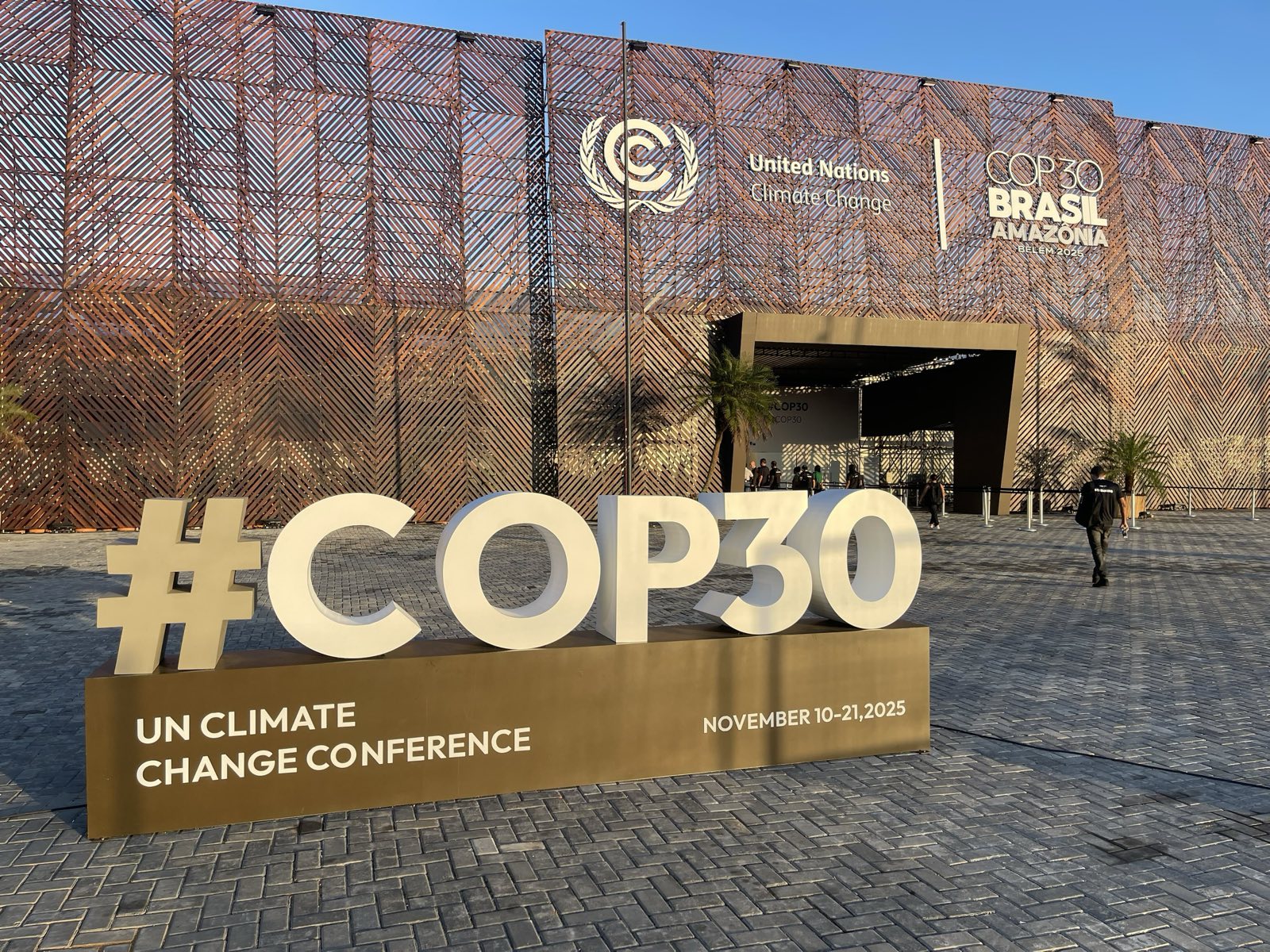
Taking place at the gateway to the Brazilian Amazon, The UNFCCC COP 30 in Belém has been heavily sold as the “Amazon” and “Forests” COP by the Brazilian government. What could be a unique opportunity to protect a tropical forest that is drastically reaching its tipping point, has instead seen the exact opposite in the run up to COP 30, with Nationally Determined Contributions falling short in their ambition to limit global temperature rise to 1.5°C. This alarming scenario demands Brazil’s COP Presidency to scale up their efforts in delivering stronger commitments from parties.
However, what the Biomass Action Network (BAN) is seeing from the Brazilian COP Presidency, is an effort locked into an Action Agenda that detracts attention from the formal negotiations and risks intensifying pressure on forests. Of particular concern is the Belem 4X Pledge on Sustainable Fuels which seeks to expand so-called ‘sustainable’ fuel use globally by at least four times by 2035 from 2024 levels, and the associated Global Renewables and Energy Efficiency Pledge of COP 28 to triple renewable energy generation capacity by 2030.
The problem is that these pledges rely on the substantial use of wood as a feedstock to underpin them. This will significantly intensify pressure on forests, dramatically exacerbate climate change during the critical period requiring emissions reductions, and harm communities reliant on forests and those affected by manufacturing processes throughout the supply chain.
A 2024 report by BAN, “Burning up the Biosphere: A Global Threat Map of Biomass Energy Development,” documents the many adverse impacts of using modern solid woody biomass (e.g. wood pellets, wood chips) for stationary heat and power production. The IEA in its Net Zero Scenario provides for tripling the woody biomass supply for stationary bioenergy between 2021 and 2030, including an up to thirteenfold increase in supply of wood from monoculture plantations and woody crops and continued expansion in production from natural forests.
Current levels of biomass use are already having serious adverse impacts. If logging for bioenergy intensifies in line with predictions, the repercussions will be devastating; such as contributing to the decline of the forest carbon sink in the EU, the deforestation and degradation of climate-critical forests worldwide (including old-growth and primary forests in North America, Europe and Asia), and human rights violations such as long lasting impacts on human health and the grabbing of Indigenous and local communities’ land in the Global South.
The conversion of forests and biodiverse agriculture into monocultures of crops for biofuel production and deforestation undermines forests’ ability to deliver ecosystem services like clean drinking water, flood protection, and clean air. It also displaces rights-based protection (under the auspices of Indigenous owners) and ecological restoration, which improves the health and well-being of forests and makes them more resilient to climate change and other environmental disturbances.
The Belem 4X Pledge on Sustainable Fuels proposes accelerating the deployment of liquid and gaseous fuels, committing to “expand sustainable fuels use globally by at least FOUR times by 2035 from 2024 levels”. The IEA Report that underpins this pledge makes clear that it involves substantial reliance on wood-based emerging technologies.
The Biomass Action Network shares a vision of a world in which thriving natural forests play a significant role in tackling climate change and contribute to a clean, healthy, just and sustainable future for all life on earth. The important role of forest protection and restoration in mitigating climate change is set out in IPCC AR6 WG 3 on mitigation, which states that protection of forests has the highest mitigation value. The exploitation of natural forests, monoculture plantations and woody crops for bioenergy at current levels, and which are to be greatly increased by the expansion plans contained in these pledges, undermines this priority. In fact, most approaches to bioenergy risk harming the climate more than they do mitigating climate change – see the Climate Action Network International Position on Bioenergy, developed in response to Brazil’s emphasis on the bioeconomy.
The first impact of burning woody biomass for energy is the release of CO2, worsening global warming over the critical period to 2100. IPCC emission factors show that burning wood emits at least as much CO2 per unit of energy as burning fossil fuels and multiple lifecycle assessments have demonstrated that net emissions from burning woody biomass frequently exceed those from fossil fuels for decades to centuries, for the simple reason that burning wood emits carbon faster than trees can regrow to sequester it. This is well beyond time frames set by the Paris Agreement for action by 2030 and 2050.
Declaring biomass energy to be carbon neutral wrongly assumes that forests regrow quickly and fully offset the emissions from biomass production and consumption. Yet the true carbon cost of biomass burning rarely appears accurately on any country’s balance sheet, as a result of flawed carbon accounting methodologies.
The industry creates a false impression of using small amounts of leftovers when it refers to being based on ‘wood waste’ and ‘residues’, when in actuality the volumes are huge and frequently comprise the majority of wood extracted in logging operations. It has also provoked intensification of logging and extension of logging areas, in part encouraged by deployment of generous subsidies for renewable energy. This competes with the subsidies available for genuinely low emissions renewables such as solar and wind, and for implementing energy efficiency measures. Our recent report Burning Billions for Biomass found that nearly $250 billion has been spent on biomass subsidies since 2002 by just five major economies.
Even with the application of Bioenergy with Carbon Capture and Storage (BECCS – a colossally expensive process and largely unproven at scale), biomass energy produces higher emissions than alternative renewables do without BECCS. In 2023 Drax, the UK’s largest bioenergy supplier, was told by its own scientific advisers to stop calling biomass ‘carbon neutral’ and in 2021, the Dow S&P Clean Energy Index, decided to expel both Drax and Albioma (its French based equivalent) because their high emissions disqualified them. They have not been reinstated since.
A report by Trinomics Consultants, energy advisors to the European Commission, calls for an end to subsidies for commercial scale bioenergy and BECCS, and for these to be reallocated to three costed alternative approaches: genuine renewables (wind, solar, heat pumps), demand suppressing enterprise (recycling, insulation, fuel efficiency and sector decarbonisation) and investment in conservation of carbon absorbent ecosystems. As well as enabling the achievement of 26% of European Union net zero targets by 2050, these alternatives are far superior for the economic ‘competitiveness’ and counter-inflationary agendas, and could create an extra £94 billion pa in Gross Value Added and £1.6 million high tech jobs in Europe by 2050. Similar arguments apply outside Europe.
Woody biomass is dirty energy, undermining progress to limiting global warming to 1.5 degrees. Its sourcing and burning release dangerous levels of emissions, while also eroding critical carbon sinks and stocks. It threatens human rights, interests, lives, livelihoods and the cultural values of Indigenous and tribal peoples and local communities, while also impacting food security for the wider populace in the long term.
The current industrialised use of woody biomass for energy is already too much, exhibiting serious adverse social and environmental impacts in North America, Europe, Asia, and Latin America, and undermining forest protection and restoration as priority actions to tackle the climate and biodiversity crises.
Therefore, the Biomass Action Network requests that Parties:
- Reject bioenergy derived from woody biomass as a climate solution – both for stationary energy generation and for gaseous and liquid biofuels – excluding it from international and national targets
- Rule out future use of woody biomass with carbon capture and storage, since it will not provide real negative emissions
- End subsidies for production and consumption of woody biomass energy
- Prioritize forest protection as a mitigation measure, and promote halting and reversing deforestation and forest degradation by 2030 through robust, harmonised transparency practices and consistent standards
- Ensure the COP truly focuses on all aspects of a just transition to genuinely low-carbon renewable energy, including addressing the impacts of bioenergy on those reliant on forests, and throughout the supply chain.
- Reform flawed carbon accounting in relation to biomass combustion so that smokestack emissions appear in Energy sector accounts of the consuming Party in the same way as the combustion of fossil fuels does, and reform land sector accounting to explicitly show carbon stock quality and changes rather than netting them out.
- Recognise that co-firing woody biomass with coal is not abatement
Related Links:
Press release: Biomass Action Network sounds alarm on bioeconomy false solutions in belem 4x pledge at leaders summit ahead of cop30 issues open letter to parties.
Back to News