
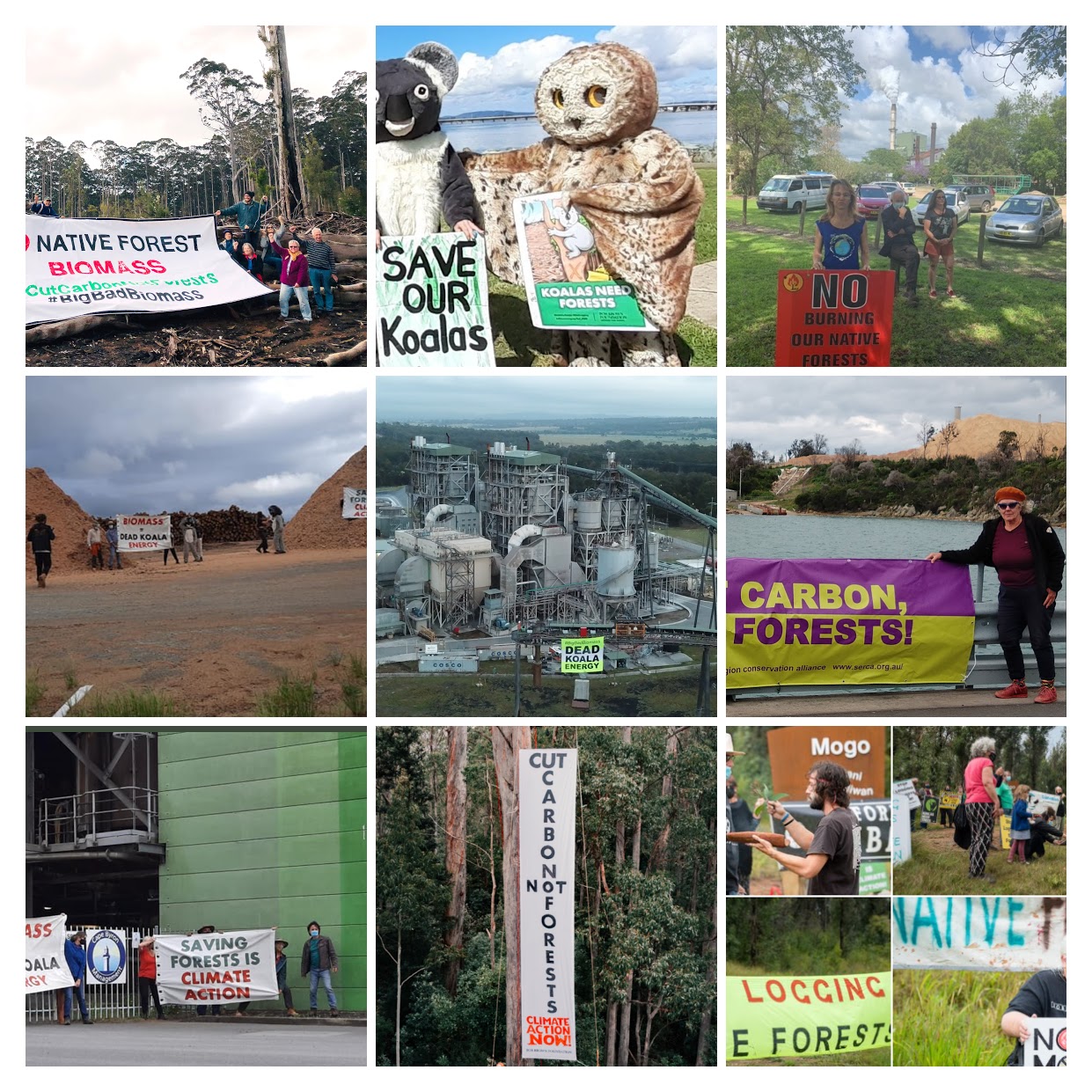
In a world leading move, Australia has excluded native forest biomass from eligibility as renewable energy source under the national Renewable Energy Target, and electricity it generates cannot be used to create tradeable Large-scale Generation Certificates.
This decision recognises community concern about the impacts on forest biodiversity. Australia has the highest rate of mammal extinctions in the world and many forest dependent species such as the koala are increasingly endangered, some in the critically endangered category. But this also recognises community concerns about immediate loss of large intact carbon stores (the forests and their soils) to the atmosphere as well as loss of the ongoing sequestration potential of those forests. Sequestration rates are much lower in places recovering from logging. The scientific narrative about this ‘green carbon’ has been part of community dialogue since 2008, especially because the natural forests of south-east Australia are the most carbon dense in the world.
How it happened and what it means for biomass burning around the world
As the Australian government statement said, the decision takes into account strong and long standing community views. Over 2900 submissions were received during a brief government consultation process late this year. The Minister for Climate Change and Energy said the Australian Government is committed to ensure public confidence that the Renewable Energy Target is delivering genuinely renewable and sustainable forms of energy.
The decision demonstrates the political will to end access to subsidies and incentives for wood from native forests, including wood wastes from sawmilling that utilises native forest wood. It doesn’t end the prospect of burning all wood as “renewable” energy, leaving open the use of plantation grown material. However the established plantation estate in Australia is already used for sawn timber and other wood/paper products with well-established markets, and there is a national prohibition on converting native forests to plantations.
Political will such as that demonstrated by Australia has been in short supply elsewhere. The EU has thus far rejected strong community demands to cease subsidising forest biomass energy under the Renewable Energy Directive. The UK will cease subsidies for energy creation from woody biomass, but are gearing up to instead subsidise Bioenergy with Carbon Capture and Storage (BECCS) – specifically the CCS component – as they retire the bioenergy subsidy. Snouts still firmly in the subsidy trough!
Japan and South Korea are also heavily into using woody biomass for energy, with subsidy regimes that pay more for this dubious “renewable” than for wind or solar power. It is important to understand that government supports for biomass energy not only assist an emissive and ecologically damaging form of energy, they also undermine the capacity to support genuine low emissions energy such as wind and solar, or invest in energy efficiency.
The big biomass burning jurisdictions have been taking advantage of a carbon accounting anomaly that gives an exaggerated sense of emissions reductions, simply because the large GHG emissions of burning wood do not appear in energy sector carbon accounts, whilst fossil fuel emissions do. The wood burning emissions impact the atmosphere regardless, but are hidden in notoriously flawed land sector carbon accounts – often in a different country than the one consuming the wood for energy.
What is next
At last we have a precedent with which to pressure these recalcitrant governments whilst we continue to press for change so that the UN’s carbon accounting for biomass energy reflects the actual situation. We also have an important example of working on the nexus between the climate and biodiversity crises, with action that tackles both of these concurrently.
The EU’s fraught Trilogue deliberations on how to treat forest biomass in RED II are continuing into next year. It can no longer claim global leadership on the renewable energy transition while such a large proportion of its so-called renewable energy is burning forests. Australia’s example of genuine policy reform, in which the Greens Party has played an important role to press the Labor Party for this resolution, should be particularly instructive for Europe. Forest biomass is not renewable and its use for large scale energy should not be subsidised. Australia’s recognition of impacts on natural values and of strong community opposition to burning forest biomass is the course that Europe should also take in response to the same strong community concerns.
Australia’s decision will also put pressure on Enviva, Drax, and other companies in the biomass business over their appalling wood sourcing from old growth and biodiverse natural forests, including the old growth forests of Canada and the biodiverse swamp forests of the southern US. Romanian forests of immense natural value have been illegally logged and then burnt elsewhere in Europe.
Frantic greenwashing has been unable to hide these travesties which are regularly unmasked by investigative journalism. Governments must step in to put an end to this, rather than being part of the problem.
Financiers should also be alert to this important decision and its implications for their investments. Funding large-scale burning of forest biomass is increasingly unacceptable and could lead to reputational damage.
Back to News