
PRESS RELEASE:
- New analysis by RSPB (Royal Society for the Protection of Birds) shows that since 1990 over 6 billion tonnes of carbon dioxide emissions from bioenergy have been counted as zero in countries’ reports to the UNFCCC.
- These emissions may be counted in the forest sector instead, but their true climate impact is lumped in, and thereby hidden with a much bigger set of forest emissions.
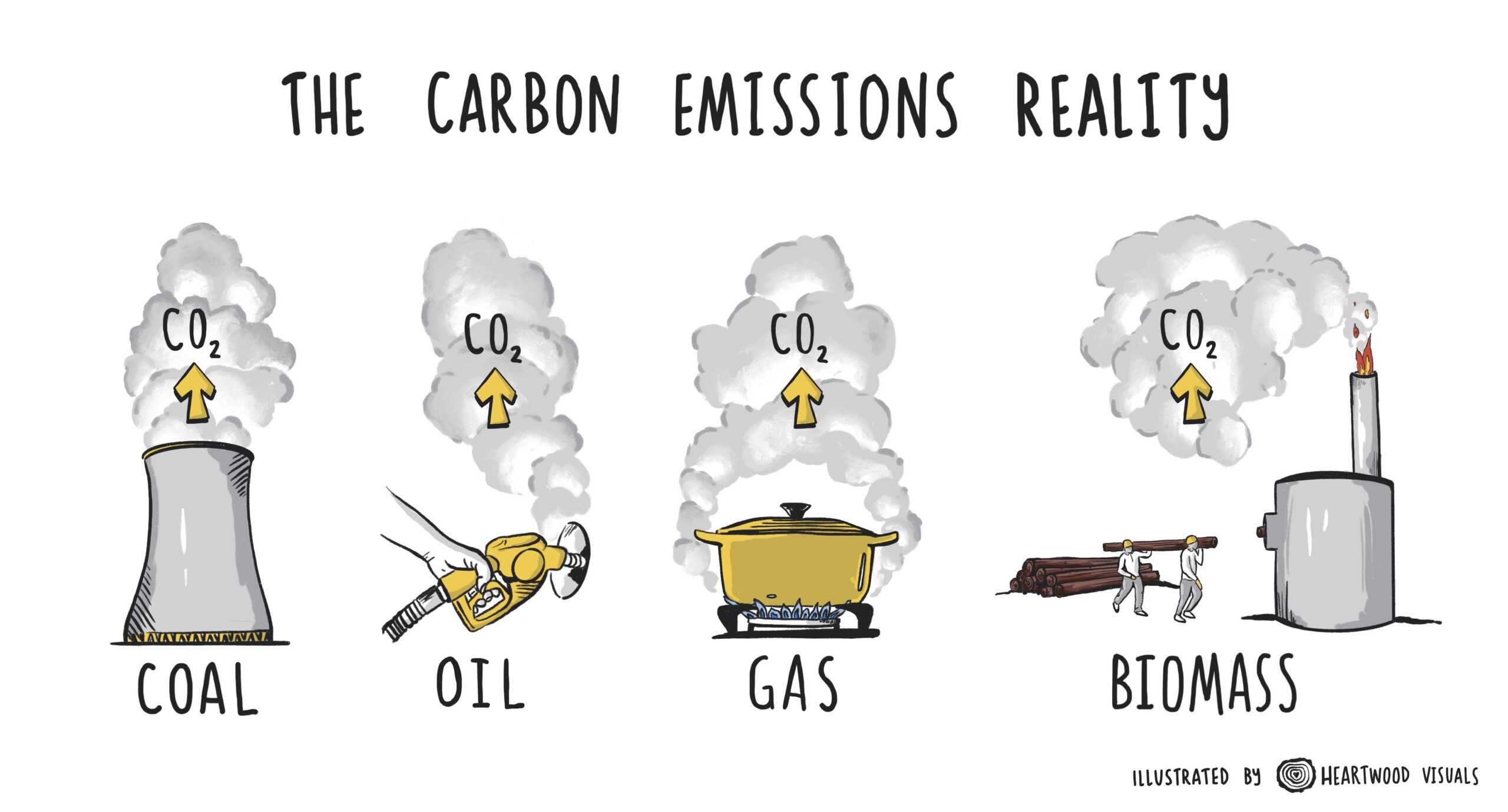
- Bioenergy is classified as instantly carbon neutral by many countries, regardless of whether it is reducing or increasing carbon stored in forests in reality.
New analysis of Parties’ Common Reporting Tables (the reports they submit to the UNFCCC of emissions) show that since 1990 the total amount of bioenergy emissions quantified, but reported only as a “memo item” (i.e. accounted as zero) in their energy sector is over 6 billion tonnes of carbon dioxide. This is the same as the annual emissions from the United States. The study looked at biomass (wood, agricultural residues and other types) used for “public heat and electricity” installations producing energy.
Parties are allowed to report bioenergy as a memo item, assuming the emissions from biomass are accounted for in the land sector of the country the biomass comes from. This is often a different country – since a large international trade in biomass exists. Much of this biomass is in the form of wood pellets or chips, made from trees.
Many governments classify bioenergy as instantly carbon neutral, lumping it in with solar and wind and awarding it billions in subsidies every year.
But the true impact on the climate is less simple. Bioenergy emissions are instead assumed to be counted in the land sector of the country where it is harvested. In forests, this means the emissions are mixed in with much wider carbon gains and losses in forests. Bioenergy may actually be adding to the loss of carbon stocks in forests, resulting in an increase in carbon dioxide in the atmosphere. But this has no impact on bioenergy’s zero rating in the energy sector.
The approach countries are allowed to take under the UNFCCC is based on guidance from the IPCC. The IPCC have tried to course-correct – they have issued clarifications that this accounting convention does not automatically mean bioenergy is carbon neutral. But that seems to have fallen on deaf ears.
Matt Williams, nature and climate expert behind the analysis, said: “Governments continue to assume that with bioenergy they’ve discovered a magically carbon neutral energy source that releases millions of tonnes of carbon dioxide that somehow don’t count. With climate change, there’s no free lunch.
“Burning the world’s forests will only make climate change worse. The accounting rules on bioenergy need urgent reform, and only the IPCC and UNFCCC working together can do that. But governments can opt out too – we urgently need a bioenergy phaseout before billions more are wasted on this dangerous distraction.”
Katie-jo Luxton, the RSPB’s director conservation, said: “Massaging the figures and making the burning of wood for energy more sustainable on paper doesn’t change the facts. Nature and the climate are paying a heavy price while energy companies pocket their subsidies, and governments are allowed to mask their country’s actual emissions and the environmental impacts of bioenergy.
“It is scandalous that emissions equivalent to 170 Jackdaw gas fields could potentially have been struck from the records. We must have honest accounting of the true impact that burning forests for bioenergy has on the planet, and in turn direct investment towards a genuinely low carbon transition in harmony with nature.”
Reija Mikkola, from the Biomass Action Network, said: “As countries take important steps in the transition away from fossil fuels by creating national roadmaps, there seems to be a complete blind spot regarding bioenergy. In addition to being harmful to the atmosphere and forests, bioenergy is costly and subsidy-dependent. By redirecting subsidies to genuine renewables, great steps could be taken toward an energy transition in line with climate science while safeguarding forests and people.”
Notes for Editors:
Download this press release as PDF
Link to published report: https://www.rspb.org.uk/whats-happening/news/the-energy-transitions-dirty-secret-why-we-are-calling-time-on-bad-biomass
Contact Matt Williams, mattadamwilliams@gmail.com, +44 (0) 785 457 5690
Or Ruairi Brogan, RSPB, ruairi.brogan@rsbp.org.uk, +44 (0) 7725 216483
Back to News