
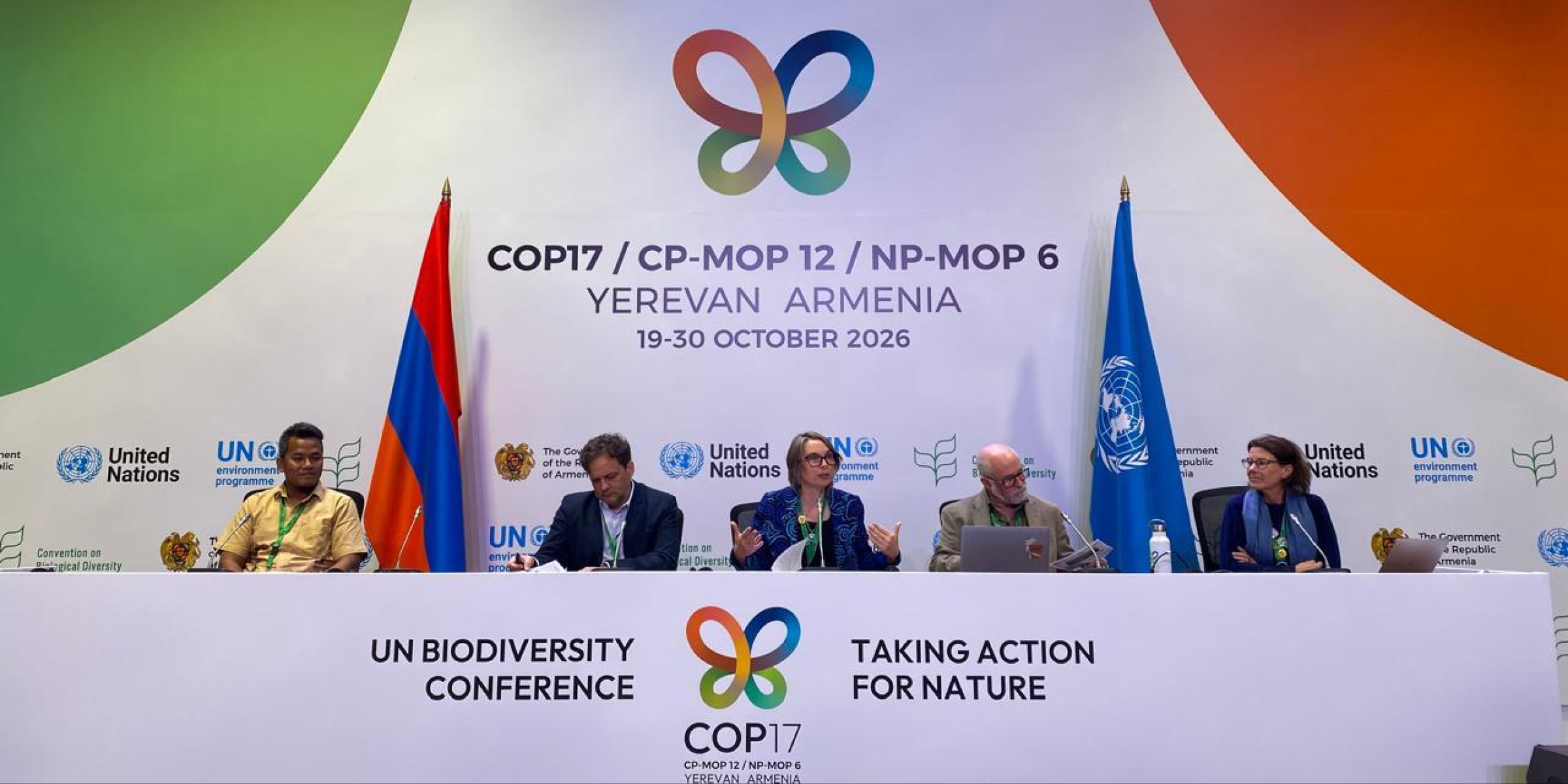
The UN Biodiversity meeting took place over the last two weeks in Armenia. Expectations were high. Some reports called this a “reset” for the global nature process. Armenia, which holds the COP presidency, rightly set ambition for the meeting high. But for a reset moment, the lack of progress and tired old objections from the usual suspects felt awfully familiar.
Bioenergy subsidies
This global meeting of countries is particularly important because it included a global review of progress towards 2030 goals on nature. The diagnosis: the world is off track. If things don’t change, we’ll miss the targets for saving nature by 2030. Among the Goals being missed: Target 18, to reduce subsidies and incentives that are funding activities that harm nature. Bioenergy is not a small element of this – over the last 20 years, just five economies have funnelled a quarter of a trillion dollars into subsidies harming bioenergy. Every year governments are spending around $1.8 trillion on harmful subsidies – countries are struggling to agree on funding action to save nature, but redirecting harmful subsidies would be a great place to start. A handful of countries have joined the informal “friends of target 18” to take forward action unilaterally outside the negotiations.
"Bioenergy is not a small element of this - over the last 20 years, just five economies have funnelled a quarter of a trillion dollars into subsidies harming bioenergy."- Matt Williams, Senior Forest Protection Advocate at NRDC
Forest protections
Forests are on the front line of the impacts of biodiversity loss. The bioenergy industry is driving a large share of that forest loss. It uses tens of millions of tonnes of wood every year in power stations to produce heat and electricity. This has grown from logging forests in North America and Europe and is now expanding, with forests in Indonesia being cut down to provide wood pellets for other countries in Asia.
A lot of focus is on tropical deforestation – rightly so. But forests are being damaged at an alarming rate in the global north as well – through degradation. By the second half of this century forests in the global north are on track to stop absorbing carbon and become overall emitters. Bioenergy using wood is a major driver of this loss of forests in the global north.
However, forests proved to be another tricky area of the talks. Some countries (Russia, Argentina and others) resisted strong language on protecting forests. Others, including Brazil, pushed for the inclusion of the “bioeconomy”. The bioeconomy is the concept of finding more uses for what nature produces, including wood from forests used as energy. The EU wanted to limit this reference by adding the phrase “sustainable and circular”, but this was rejected by Brazil, among others. Promoting the bioeconomy, while weakening language to protect forests is not a good outcome.
Climate change and biodiversity
Another area that met resistance was biodiversity and climate change. At the last biodiversity COP in Colombia, there was progress on this. But things went backwards in Armenia. There is growing momentum for ensuring that this biodiversity process supports and complements the other UN processes on climate change and on desertification, and vice versa. But some countries don’t like this – they see it as a way of imposing obligations via the back door. Bioenergy is disguised as a climate solution, but in reality makes emissions worse. At the same time, it clearly harms biodiversity. Greater join-up between these two areas would help to make the impacts of bioenergy clearer.
UN Climate Talks are just around the corner
Now attention turns to the UN climate talks, in Antalya, Turkey. In the climate negotiations, there are a number of risks – a range of initiatives and targets could increase the use of bioenergy, and pose risks to the climate and biodiversity:
- A global goal to triple the use of renewables – which currently includes bioenergy
- A new Forest Roadmap for 2030 – which may include Sustainable Forest Management – a greenwashing approach used to hide serious harm, especially in the Global North
- A new target to electrify more energy for transport, industry, and heating, including by using bioenergy
- A Roadmap to phase out fossil fuels, including by moving to transitional fuels (which include bioenergy)
The Biomass Action Network will be working hard at the UN Climate Talks to ensure bioenergy is not promoted and to put safeguards in place for forests.
Back to News