
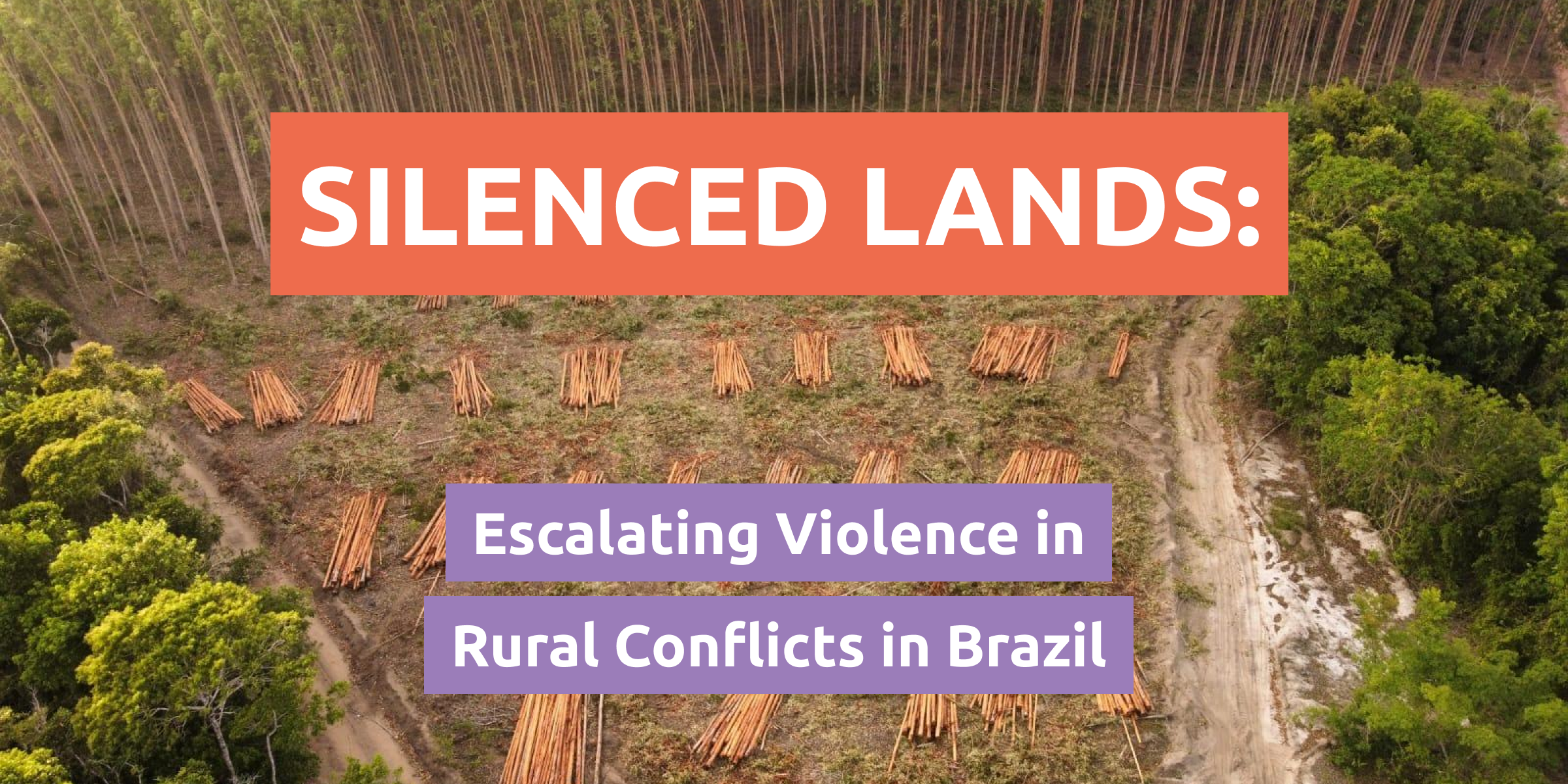
Escalating Violence in Rural Conflicts in Brazil
In 2025, there have been fewer conflicts, if you count them. However, violence is rising, including land disputes. In short, this is the conclusion of the report released last week by Brazil’s Pastoral Land Commission. The report paints a troubling picture of rural life in 2025. While the total number of recorded conflicts has declined, the intensity of violence—particularly lethal violence—has sharply increased, underscoring ongoing struggles faced by communities tied to land, water, and forests.
A Decline in Numbers, but Murders Double
According to the latest report Conflicts in Rural Brazil, land conflicts are becoming more and more dangerous. Even as total conflicts decreased, the number of murders linked to rural disputes doubled: from 13 victims in 2024 to 26 in 2025. This stark rise highlights a shift toward more severe and deadly confrontations.
Additionally, the number of cases of rural slave labour increased, along with the number of workers rescued from such conditions—further evidence that exploitation remains deeply entrenched.

Land Disputes Dominate
Land-related conflicts continue to account for the overwhelming majority of incidents, representing 75% of all recorded cases (1,186 incidents).
In total, 1,286 land disputes were documented, including:
- Violent conflicts over land ownership and occupation: 1,186 cases
- Acts of resistance such as encampments and occupations: 100 cases
Dangerous North
Conflicts have become more fatal in the north of the country, with the state of Maranhão leading in cases of land-related violence, with 190 incidents. In this Brazilian state, an opaque network of soy and eucalyptus producers (both for pulp&paper and ‘green charcoal’) is methodically encroaching into communities’ lands.
A high number of conflicts (101) has been registered in the Brazilian state of Bahia, where indigenous communities try to regain a fragment of their traditional land, most of which has already been demarcated, and face the violence of the fazendeiros. Among the areas under conflict, large extensions have been converted into Eucalyptus plantations to supply the paper producer Veracel, a joint venture between Stora Enso and Suzano. The legality of acquisition for some of this land has been questioned by a Public Prosecutor’s investigation as being obtained through illegal appropriation. Land acquisition is often associated with land grabbing. As an example, Brazil’s Ministry of Agrarian Development estimated that a 100 milllion hectares of the country’s land had been acquired using forged land certificates.
Resistance to protect land rights
Despite ongoing violence, resistance movements remain active across Brazil. In 2025, 502 protests were recorded, mostly led by Indigenous communities. These protests targeted major legislative and development threats, including two controversial (and possibly anti-constitutional) laws approved by the Brazilian Congress. These are:
- The so-called ‘Devastation Bill’: a law allowing companies to self-license in many cases, including for most activities in the agricultural sector.
- And the controversial ‘Time Limit Trick’ (Marco Temporal), restricting Indigenous peoples’ constitutional rights to their ancestral lands.
Restoring accountability, protecting land rights
The 2025 data released by Brazil’s Pastoral Land Commission makes one thing clear: a reduction in the number of conflicts does not equate to justice or safety for rural communities. Violence remains embedded in the structures that govern land use, resource extraction, and rural labour in Brazil. Without meaningful intervention, these patterns are unlikely to change.
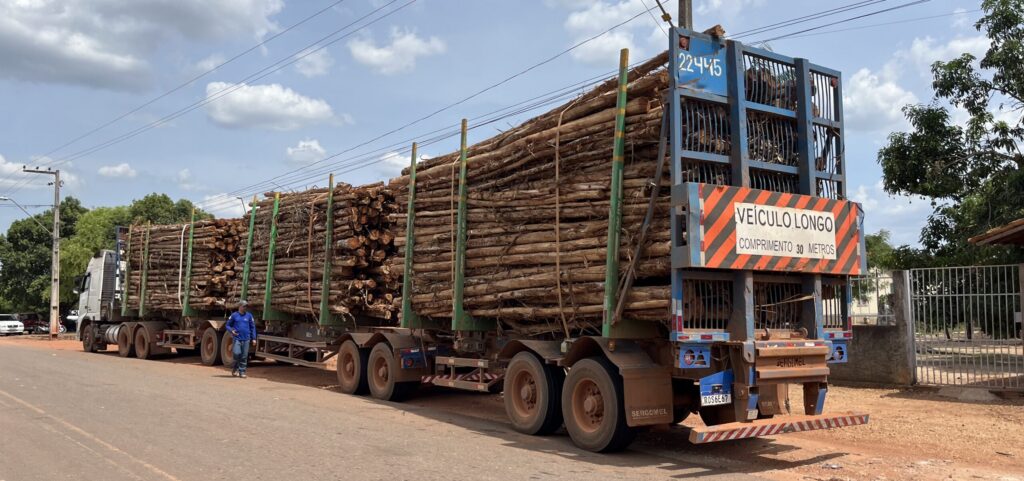
This reality also raises urgent questions for global supply chains—including the pulp and paper industry, which depends heavily on land and water, consuming large-scale monoculture plantations. Expansion of timber plantations has frequently overlapped with territories claimed by Indigenous peoples, Quilombola (Afrodescendants) communities, and small-scale farmers, intensifying disputes and, in some cases, contributing to the displacement of people and environmental degradation.
If the industry is serious about sustainability, its commitments must go beyond certification labels and corporate pledges. Concrete action is needed:
- Zero tolerance for land-grabbing and violence: Companies must ensure their operations and suppliers are not linked to land conflicts or human rights abuses, including intimidation, criminalisation and retaliation.
- Full traceability and transparency: Supply chains should be publicly traceable down to the plantation level, whose maps should be made public, allowing independent verification.
- Respect for land rights: Free, prior, and informed consent (FPIC) must be a non-negotiable standard before any land acquisition or project development. If FPIC has not been properly obtained at the time of land acquisition, the land must be returned to the traditional owners.
- Respect communities and nature: Retire plantations when water tables decrease, immediately stop the use of pesticide air spraying.
- Protection of workers: Strict monitoring is needed to eliminate conditions analogous to slave labour across all operations and suppliers, including among plantation workers and drivers working for paper companies.
- Restoration and reparations: Where harm has occurred, companies must take responsibility through remediation, compensation, and ecosystem restoration.
Ultimately, addressing rural violence in Brazil requires more than policy—it demands accountability from governments, corporations, and consumers alike. Until then, the apparent decline in the number of conflicts risks masking a deeper and far more dangerous reality.
Back to News