
This is Part 1 of a story documenting EPN International Program Coordinator, Sergio Baffoni, during his month-long journey across Brazil, where he met with communities defending their customary rights and seeking support to make their struggles visible.
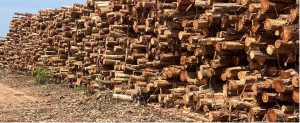
The road is dusty. Deep ruts run in both directions, worn by trucks that thunder past all day — full of eucalyptus logs on their way out, empty as they race back. This is the supply chain of Suzano’s pulp mill in Imperatriz.
A ten-hour journey from the coast to the interior takes you from the fragile, seasonal habitats of alluvial mangroves and the vast sand dunes of the Lençóis, across the Cerrado and the Babaçu Forests, and finally — climbing onto the plateau — into the Amazon biome. It feels like a condensed portrait of Brazil’s extraordinary ecological diversity.
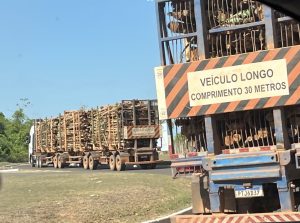 Yet this is the same route — now retraced by train — traveled by the cellulose produced in Imperatriz on its way to the port of São Luís and, from there, into global markets.
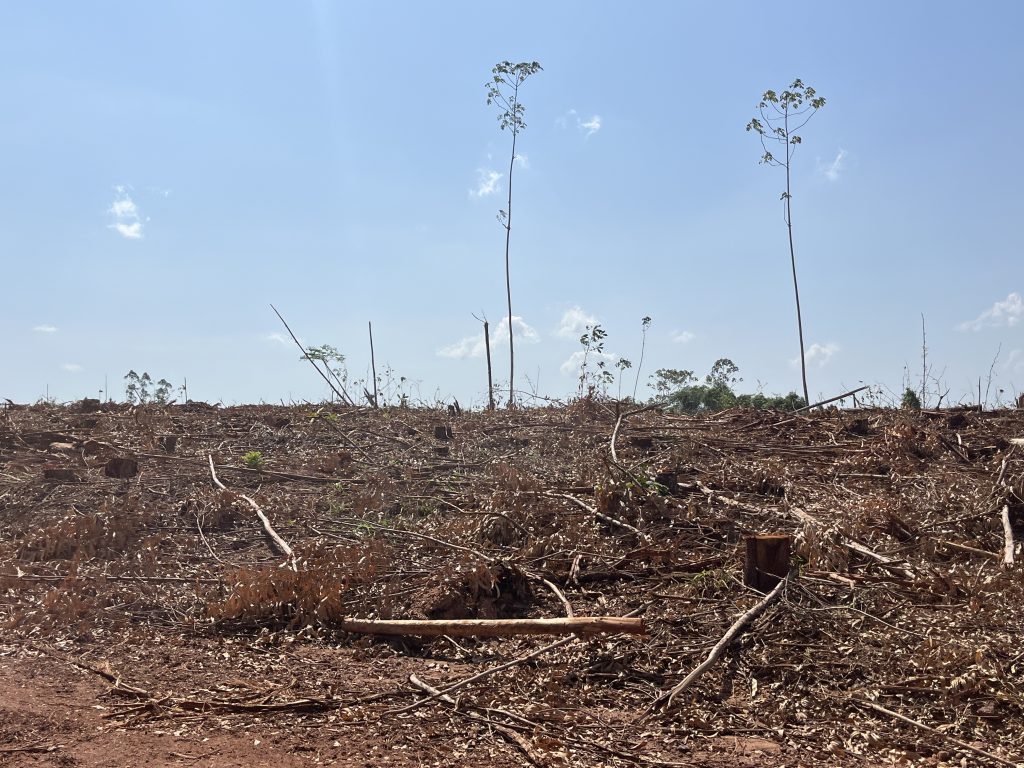
Much of the region’s original beauty has disappeared. In its place are plantations, cattle pastures, monoculture crops, and wide expanses of land abandoned after rapid exploitation. Only place names remain as reminders of what was once here, like the town of Bom Jesus das Selvas, “Good Jesus of the Forest.” The forest is gone.
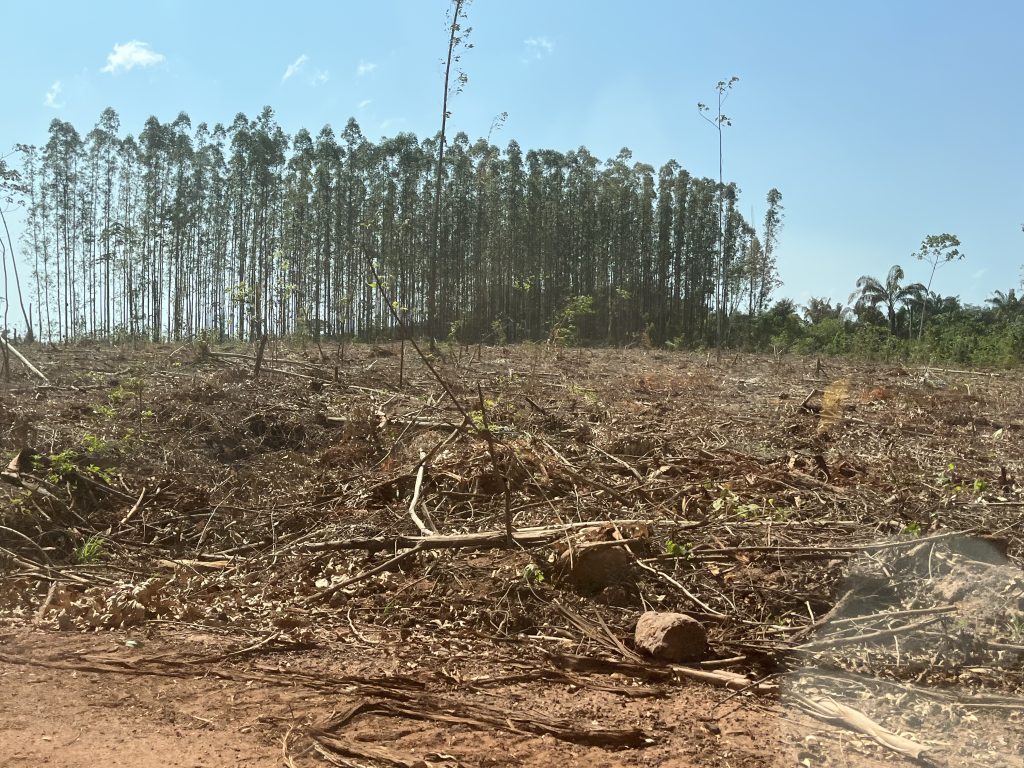
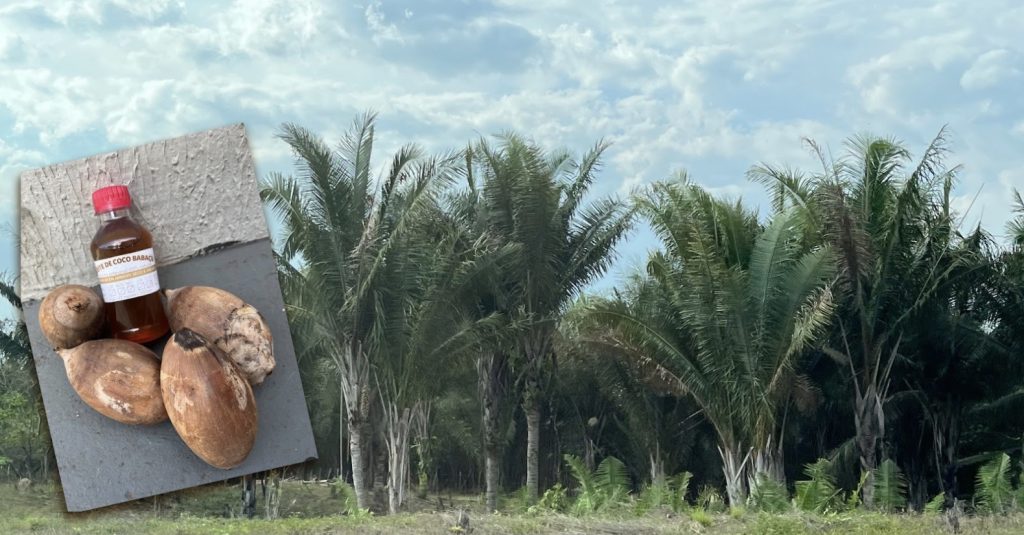 Scattered patches of babaçu palms hint at what once connected the Amazon rainforest to the drier plains to the west. Babaçu still sustains entire communities, especially women who collect and crack the fruit to produce valuable oil used in food and cosmetics. But much of this rich landscape has been replaced by the long, dark silhouettes of eucalyptus plantations that dominate the horizon, broken only by stretches of exposed, exhausted soil.
A Patch of Green
In this degraded environment, the land suddenly opens onto a small oasis of green. Straw-and-mud houses line the edges of carefully cultivated fields. This is Fazenda Eldorado. Once abandoned, the land was purchased by the mining giant Vale — and then abandoned again.
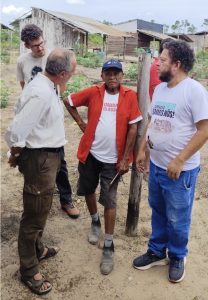 Under Brazilian law, later reinforced by a presidential decree in 2014 that recognized the right of landless families to make productive use of idle land, several communities began cultivating Fazenda Eldorado nearly twenty years ago. Little by little, they brought the land back to life.
Later, Vale sold the farm — along with the communities living there — to Suzano, which began planting eucalyptus across the area. Since then, security forces, police, and unidentified groups posing as law enforcement have repeatedly harassed the families here. Sudden raids leave people beaten, houses destroyed, and tools stolen or smashed. Each time, the residents of Fazenda Eldorado rebuild and replant.
Among the small plots, young native trees donated by the local NGO Fórum Carajás — açaí, ipê, mango, babaçu — are taking root. They represent the hope of restoring life to this land, offering fruit for both wildlife and the families who care for them.
Living Under Threat
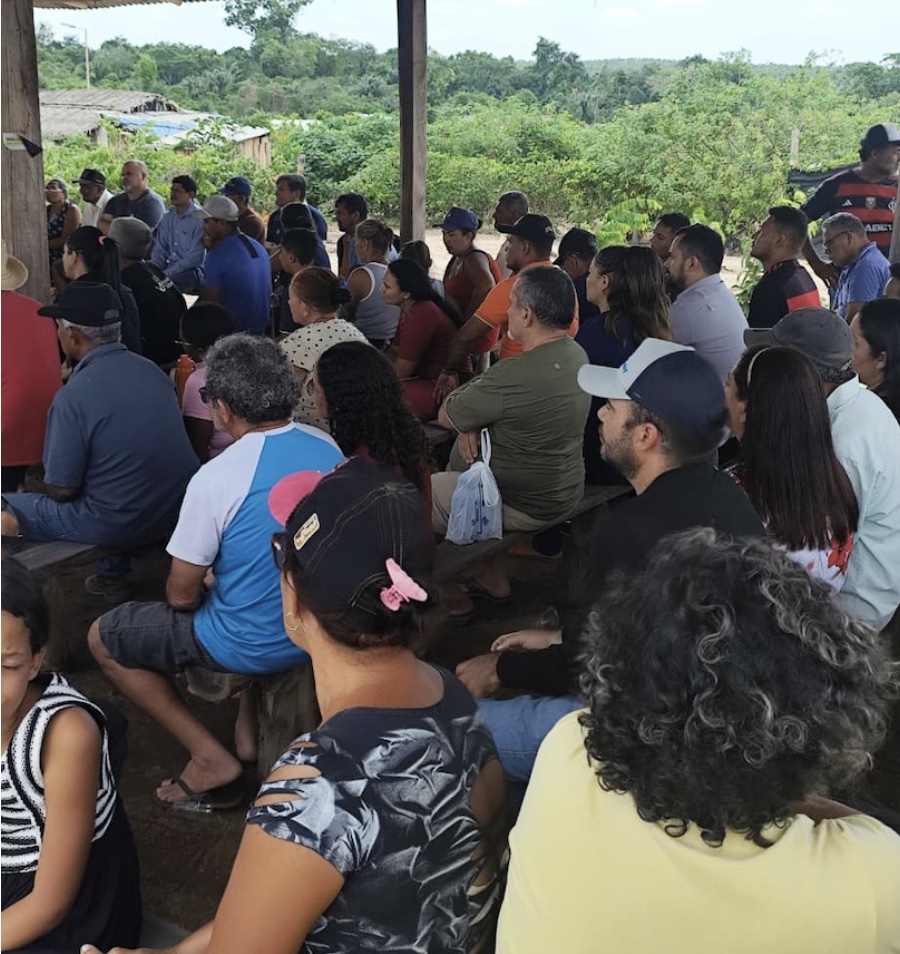
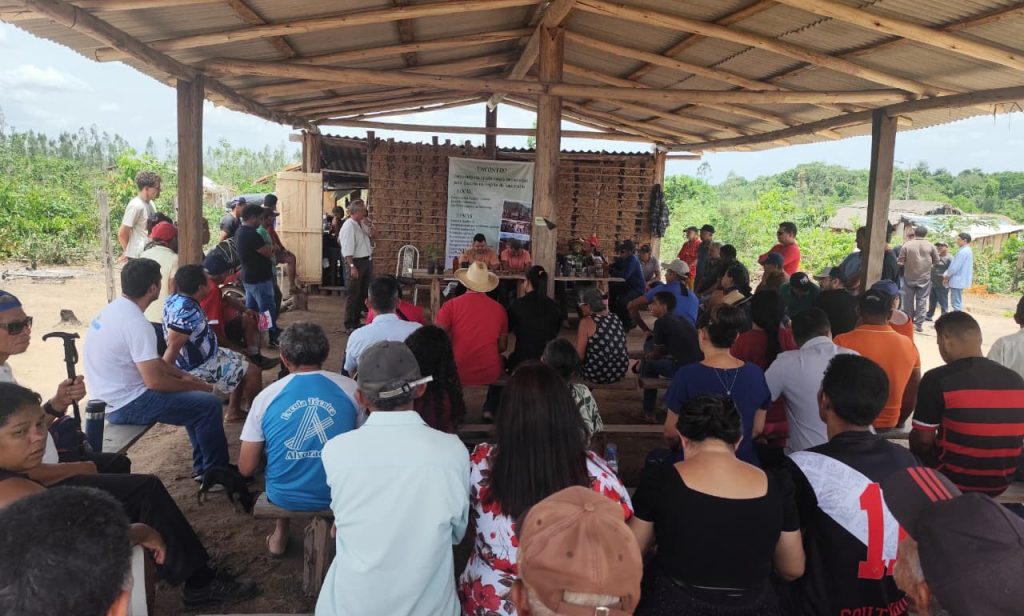
 Dozens of people gather as we arrive. There is no electricity. There is no clean water. People here are forced to live with almost nothing, because anything that could make life safer or more dignified is destroyed during raids by masked men. Even the sound system for the meeting runs off a motorcycle battery. A solar panel would be a lifeline — but also a target.
This is the daily reality of the community: living with nothing that can be easily stolen or destroyed. Years of asking for help have led nowhere. The residents no longer trust the authorities in Imperatriz, who they say listen only to the most powerful actor in the region: Suzano. This is the human cost behind Suzano’s operations, a reality that rarely appears in the company’s glossy sustainability reports but is well known to the communities who endure it. They ask us for support — or more precisely, to carry their voices beyond the borders of the municipality.
Carrying Local Voices to Global Power
This is the work of a network like the Environmental Paper Network: connecting local communities defending their rights with global advocacy. Ensuring that the voices of communities like Fazenda Eldorado reach the banks and investors who finance Suzano, a company celebrated worldwide for its polished sustainability claims. But the droughts, fires, land conflicts, and water depletion associated with its eucalyptus plantations are anything but green.
 In contrast, the work of local communities restores vegetation, trees, and water. Wells, springs, and ponds that were once dried after the arrival of eucalyptus begin to flow again where the land is tended and respected. It is a promise of life. And for all of us who care about forests and justice, it is a source of hope.
Back to News