
Download the briefing: How UN carbon accounting for biomass has created a biomass delusion
Carbon emissions from energy production
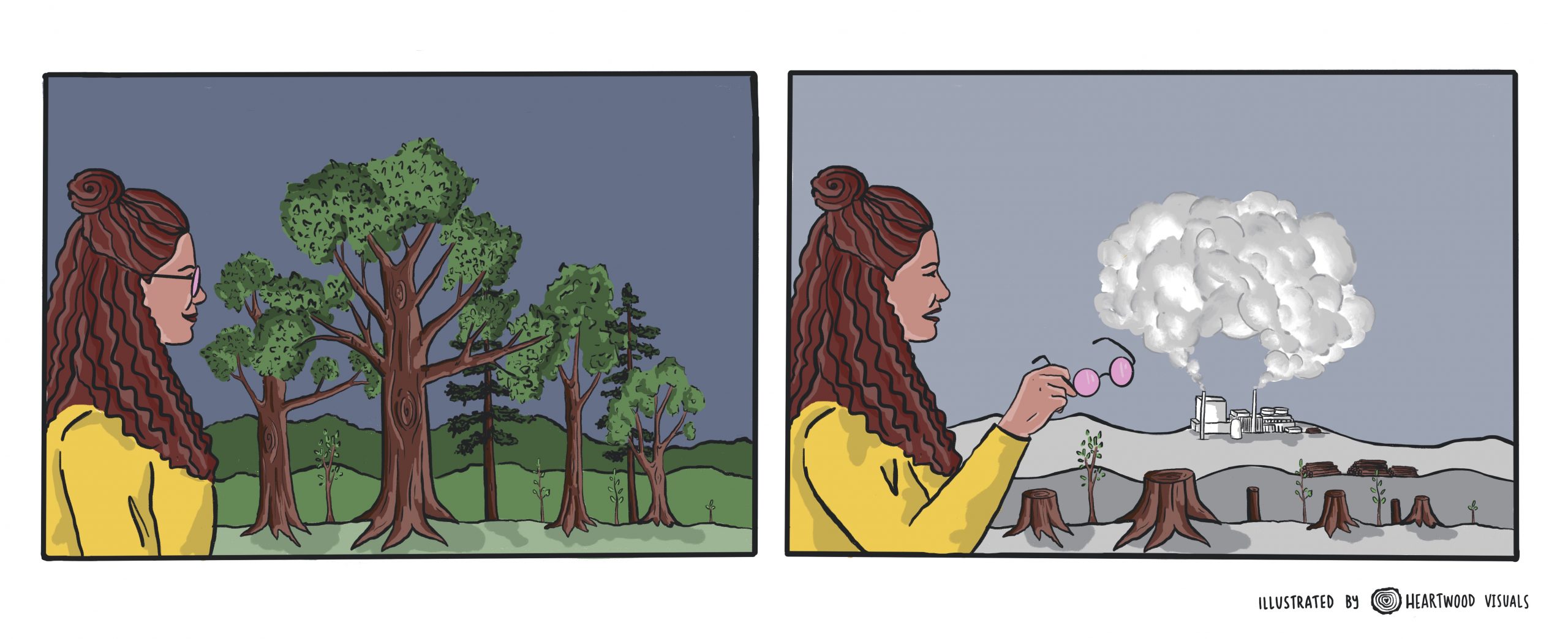
Burning wood (biomass) in huge volumes for energy releases greenhouse gases (GHG) into the atmosphere. In fact, burning wood for energy produces at least as much CO2 as burning coal per unit of energy produced, and usually more. Yet many countries treat biomass energy as zero carbon or carbon neutral and therefore give it financial and regulatory support as a ‘renewable’ energy.

What energy sector carbon accounts say
 The carbon emissions released when biomass is burned to produce energy are not reported nor accounted for in the energy sector accounts of the country where the biomass is consumed. This is in stark contrast to how emissions are recorded for all other energy sources, which are accounted for in the energy sector of the country where they are consumed. Treating biomass differently creates a false impression of zero emissions for biomass energy, in comparison to emissions from burning fossil fuels.
Look at the land sector accounts
Instead of counting biomass emissions at the smokestack, the GHG emissions from biomass energy are supposedly accounted for in the Land Sector where the biomass is logged. However, in the land sector, the emissions sources are never broken down to show emissions resulting from biomass burning for energy, instead they show only the overall change in forest cover from all causes. If a country imports biomass for energy production then information about, and accountability for, the emissions are meant to be found in the Land Sector accounts of another country!
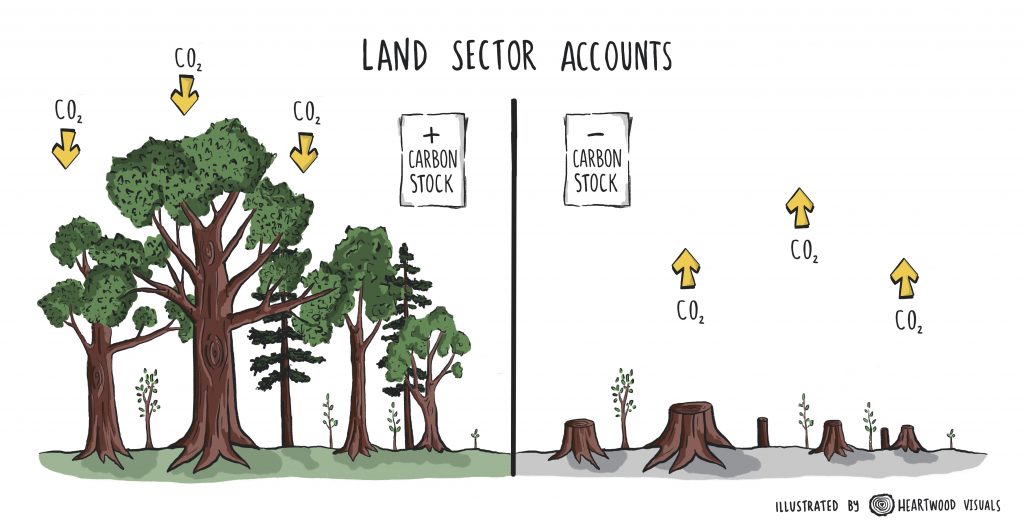

There are many cases where biomass emissions are not counted at all. Emissions impacts in the land sector are themselves often grossly understated. Also when raw wood is processed into pellets, the associated emissions usually aren’t assigned to biomass. When the woody biomass is imported from a country that does not account for land sector emissions under the Paris Agreement, this also creates an accounting loophole.
Regrowth is uncertain and much too slow
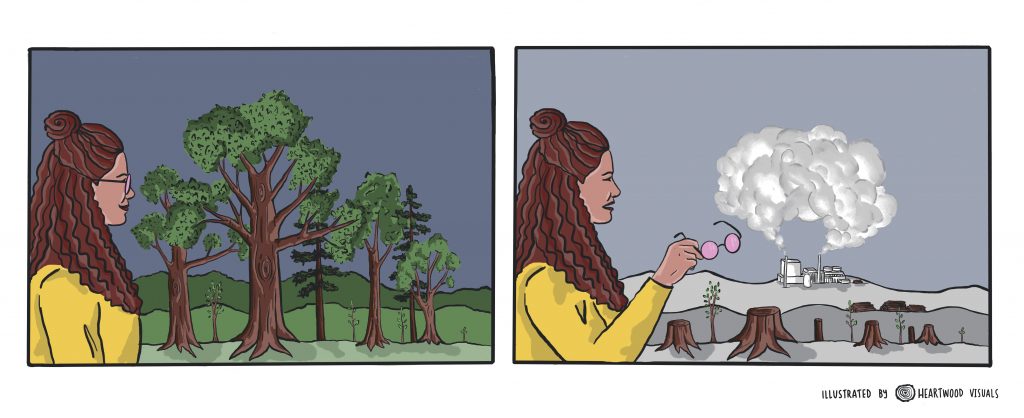
The assumption is often made that trees and forests will grow back and, in doing so, reabsorb the carbon emitted from burning as part of the natural carbon cycle. At that point biomass energy would become carbon neutral, but this is a false assumption.
A carbon debt is created as soon as the biomass is burned. If the expected regrowth happens it will take anywhere from decades to centuries to pay back that carbon debt, depending on the type of wood that was burned and the ecosystem or manmade plantation from which it was logged. In the meanwhile, the GHGs emitted are in the atmosphere contributing to climate change.
The Paris Agreement contains important timelines for action in reducing emissions that must be met if we are to have any hope of limiting climate change to 1.5 or 2 degrees of warming. These targets are for 2030 and 2050 – too short a timeframe for the volume of emissions from biomass burning to ever be captured through forest regrowth (sequestration). And the burning continues year on year.
It’s not good science for proponents of biomass to claim that forests growing somewhere else will make up for the emissions from burning biomass. Those forests were growing anyway, whether or not wood was logged and burned for bioenergy. The IPCC was very clear about this when it stated:
“If bioenergy production is to generate a net reduction in emissions, it must do so by offsetting those emissions through increased net carbon uptake of biota and soils”
There is no claim from industry, nor effort to quantify, any such additional uptake of carbon. They simply rely on a free ride contributed by an undefined forest, ignoring that every bit of carbon sequestration offered by such forests is already valuable in removing carbon from the atmosphere and increasing terrestrial carbon stocks. It is not sound policy to trade off valuable forest carbon sequestration against wood-fired power.
And do logged forests really grow back? Nobody is officially checking the assumption that the forests or plantations will grow back to what they were before. Observations from on the ground, are that they often are not.
The consequences
Failure to account for emissions from burning biomass in the energy sector is resulting in:
Dramatic expansion of the biomass energy industry with wood pellets comprising the major commodity supplying it. Having already doubled to 14 million tonnes in the preceding decade, global supply and demand for biomass is likely to exceed a 250% increase by 2027, to over 36 million tonnes.
Harm to the clean energy transition. Biomass energy dominates ‘renewable’ energy production, dwarfing wind and solar and undermining their prospects by soaking up subsidies that should be applied to genuinely low emissions technologies.
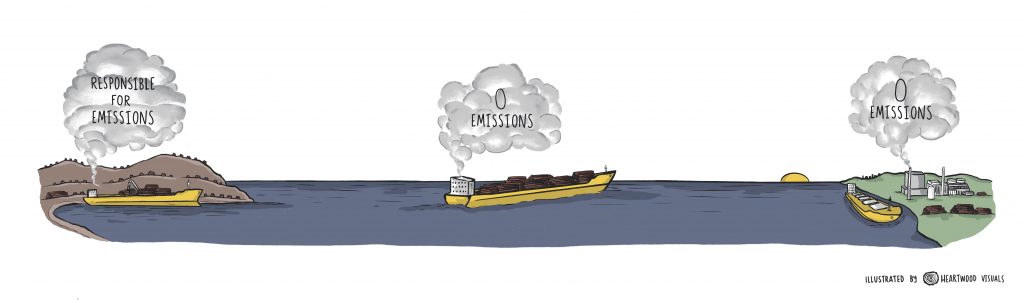
Global inequity and injustice. When biomass is traded from one country to another, responsibility for emissions is externalised from the biomass consumer to the biomass producer. This trend will escalate as biomass is increasingly sourced from outside the big biomass energy consuming blocs of Europe, the UK, South Korea and Japan and the Global South is drawn into the supply chain. In this scenario, countries in the Global South will bear responsibility for the emissions from biomass burned in the Global North, who in turn will be able to claim emissions reductions.
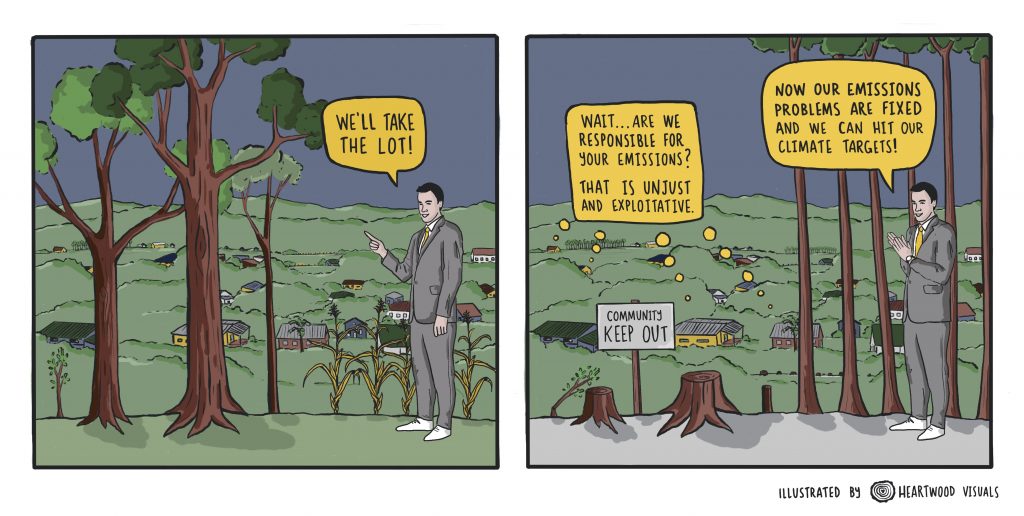
Expansion of monoculture plantations. Conversion of forests and other ecosystems to industrial monoculture tree plantations for biomass has serious impacts on communities, ecosystems, food production, water availability, and the climate.
Undermining of community rights. Demand for biomass and the associated increase in monoculture plantations, exacerbates conflicts over land and forest resources, including land grabbing. This threatens the rights and very existence of Indigenous and tribal peoples and local communities, as well as businesses relying on forest resources. The negative effects can also have impacts on food security for the wider populace.
Diminished ability of natural forests to remove carbon from the atmosphere. Using biomass for energy entrenches, intensifies and expands logging, which degrades forest ecosystems and results in large immediate emissions. It also diminishes the ability of those forests to sequester carbon. Biodiversity and soils are depleted, as are ecosystem services like clean drinking water, flood protection, and clean air. These impacts come at a time when we recognise that rights-based protection and ecological restoration improve the health and well-being of forests and make them more resilient to climate change and other environmental disturbances.

False claims that Bioenergy with Carbon Capture and Storage (BECCS) could be carbon negative when it relies on the premise that biomass energy is carbon neutral, which it is not. This is in addition to serious doubts over the feasibility of carbon capture and storage (CCS) technology.
Erroneous claims to abatement of coal-fired power via co-firing with woody biomass. Under the UNFCCC LULUCF accounting rules, co-firing coal with woody biomass increases energy efficiency by reducing emissions. Not because actual emissions are reduced, but simply because the emissions from burning biomass do not appear in energy sector accounts. Therefore biomass must not be a recognised method of abatement, a position already adopted by the OECD.
The solutions
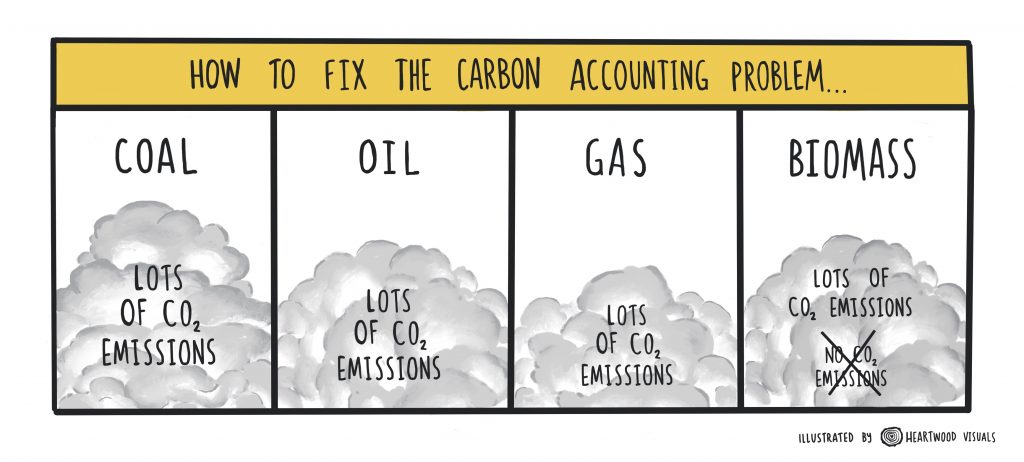 Energy sector accounts must record emissions from biomass combustion in the same way as they do for fossil fuels. This will resolve the false representation of biomass as being zero emissions or carbon neutral. This accounting solution should not interfere with accurate accounting of carbon sequestration in forests.
Consumers must take emissions responsibility. When biomass is traded from one country to another, the carbon accounts should show the emissions actually created in the consumer country. A process to reconcile these emissions against land sector removals in the producer country, is then required.
Alternatively, since a “harvested wood product” (HWP) provision already exists in LULUCF rules, biomass could be identified as a ‘harvested wood product’ and the atmospheric flow approach utilised to follow biomass to where it is burned. The combustion emissions are then recorded in that country. This is a less ideal, but more easily implemented, solution and does achieve the aim of consumer countries taking responsibility for emissions.
 Beware of false solutions!
“Sustainable Forest Management” – Sustainability is important for many ecosystem values, but it does not address the large, immediate emissions from biomass energy production or the substantial amount of carbon lost through logging natural forests. Impacts on climate change are not addressed by SFM.
Definitions of “waste” and “residues” – The scale of biomass energy production necessitates the use of large volumes of wood, much of which comes directly from forests. Use of whole logs has been documented in Europe, the US and Canada – all of which are defined as “residues.” Pellet manufacturers want the densest materials they can find, namely, whole trees.
Back to News