
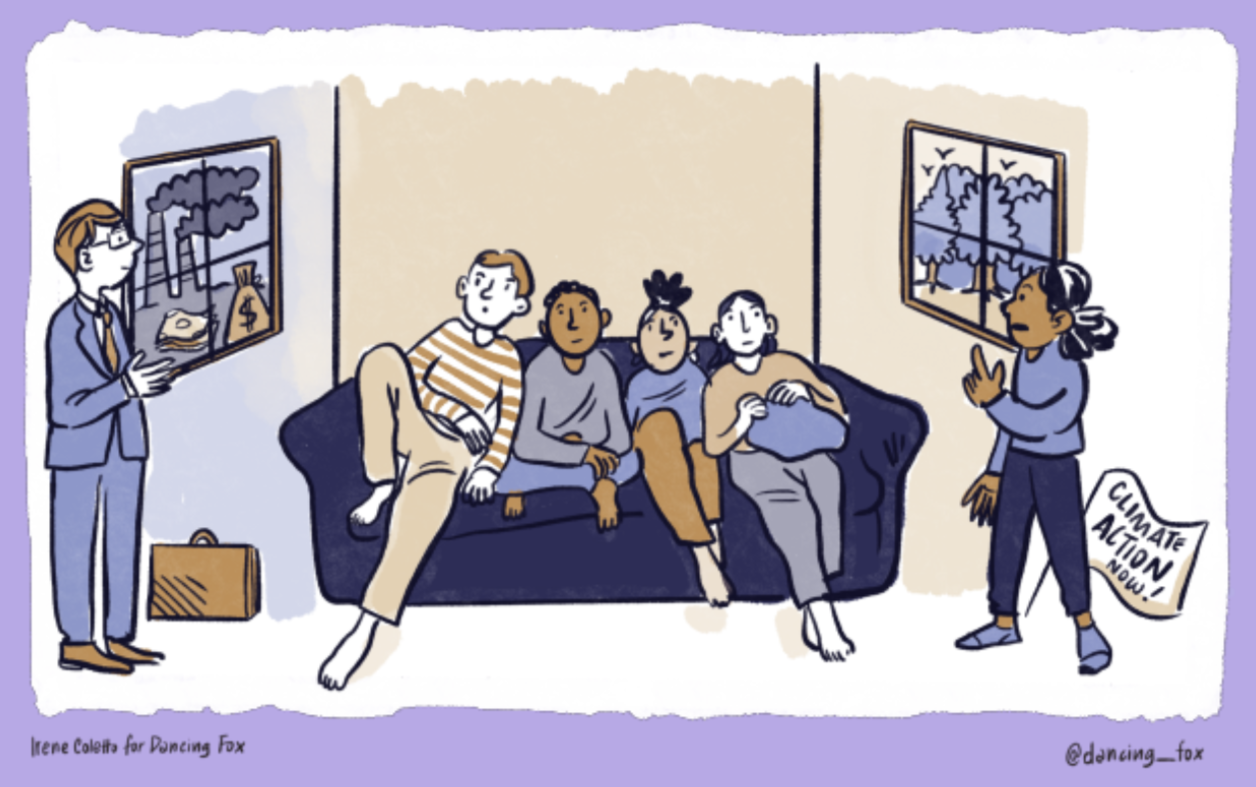
How is it that governments are encouraging the biomass industry to burn huge amounts of wood from forests as a “climate solution”, when it is a scientific fact that burning wood emits at least as much carbon as coal per unit of energy produced, and usually more?
Something has gone badly awry. What is it and how has it happened?
The answers are in our new briefing: The Biomass Delusion: How the UNFCCC carbon accounting system drives the biomass energy problem, and ways to fix it. Now also available in Japanese.
Anyone looking to quantify emissions from energy production will be able to find figures for fossil fuel emissions when they look at Energy Sector accounts, but none for biomass energy emissions. Not surprisingly, this has led to the claim that bioenergy produces zero emissions, which in turn has resulted in the development of policies which encourage biomass burning.
Biomass burning is not zero emissions, but it looks awfully like it is. To discover otherwise, you have to know how to navigate the convoluted accounting system.
There is no big flashing light saying “take a look at the Land sector accounts because that is where emissions from burning biomass are meant to show up instead”. That’s right, the emissions do exist and are meant to be counted – but they are accounted for in a completely different sector.
It gets even more complicated if you want to find out what climate impact is caused by the large, immediate emissions released by biomass burning in a particular place. Take Europe for example, where the majority of wood burned in power stations has been logged from forests on another continent (North America) and then shipped for burning. Then you have to not only look in the Land sector accounts – you have to look in the Land sector accounts of another country!
The hunt to find any emissions clearly attributed to biomass burning gets worse, because Land sector accounts don’t break down the information into which activity created which emissions. Further, the Land sector accounts net out carbon emissions against carbon removals – the sequestration of carbon by growing vegetation to remove carbon out of the atmosphere – creating another hurdle to understanding the impact of biomass burning.
The result is that we never get to see a number for emissions from biomass burning. Let alone a number which would allow a biomass consuming nation to compare this to their other emissive sources of energy production. A big number would deliver a message that burning biomass is not a way to reduce emissions, and that a genuinely low emissions energy source should be pursued instead.
A big number in hiding has turned out to be a heck of a problem.
We have some ideas about how to fix these carbon accounting failures, as well as the slew of other problems they have spawned. Here are 3 big issues that must be addressed:
Firstly, as biomass burning continues to increase, emissions responsibility will be externalised from the energy consumer to the forest producer as sources of wood expand to encompass the forests of the world and specially planted monoculture ‘energy’ plantations. In effect, countries of the Global South will bear responsibility for emissions when biomass sourced from them is burnt in countries of the Global North. Ironically, in this scenario, countries of the Global North will be able to claim that they are reducing their emissions. This is already happening and will exacerbate global inequity and injustice in the climate realm.
Secondly, a misapprehension that Bioenergy with Carbon Capture and Storage (BECCS) could result in negative emissions has been created by the notion that biomass burning could be carbon neutral. Our exposé shows why the carbon neutrality claim is as dubious as the zero emissions mistake. Hence, BECCS has no chance of being carbon negative, and this is in addition to serious questions over the feasibility of carbon capture and storage (CCS).
Third, are erroneous claims to abatement of coal-fired power via co-firing with woody biomass. Under the UNFCCC accounting rules, co-firing coal with woody biomass increases energy efficiency by reducing emissions – not because actual emissions are reduced but simply because the emissions of combustion of biomass do not appear in energy sector accounts. Therefore forest biomass must not be a recognised method of abatement, a position already adopted by the OECD.
Read the briefing to find out more, as well as ways to fix the accounting problem.
Our Biomass Delusion Statement calls on governments to end biomass burning and has been signed by over 170 international organisations.
Back to News