
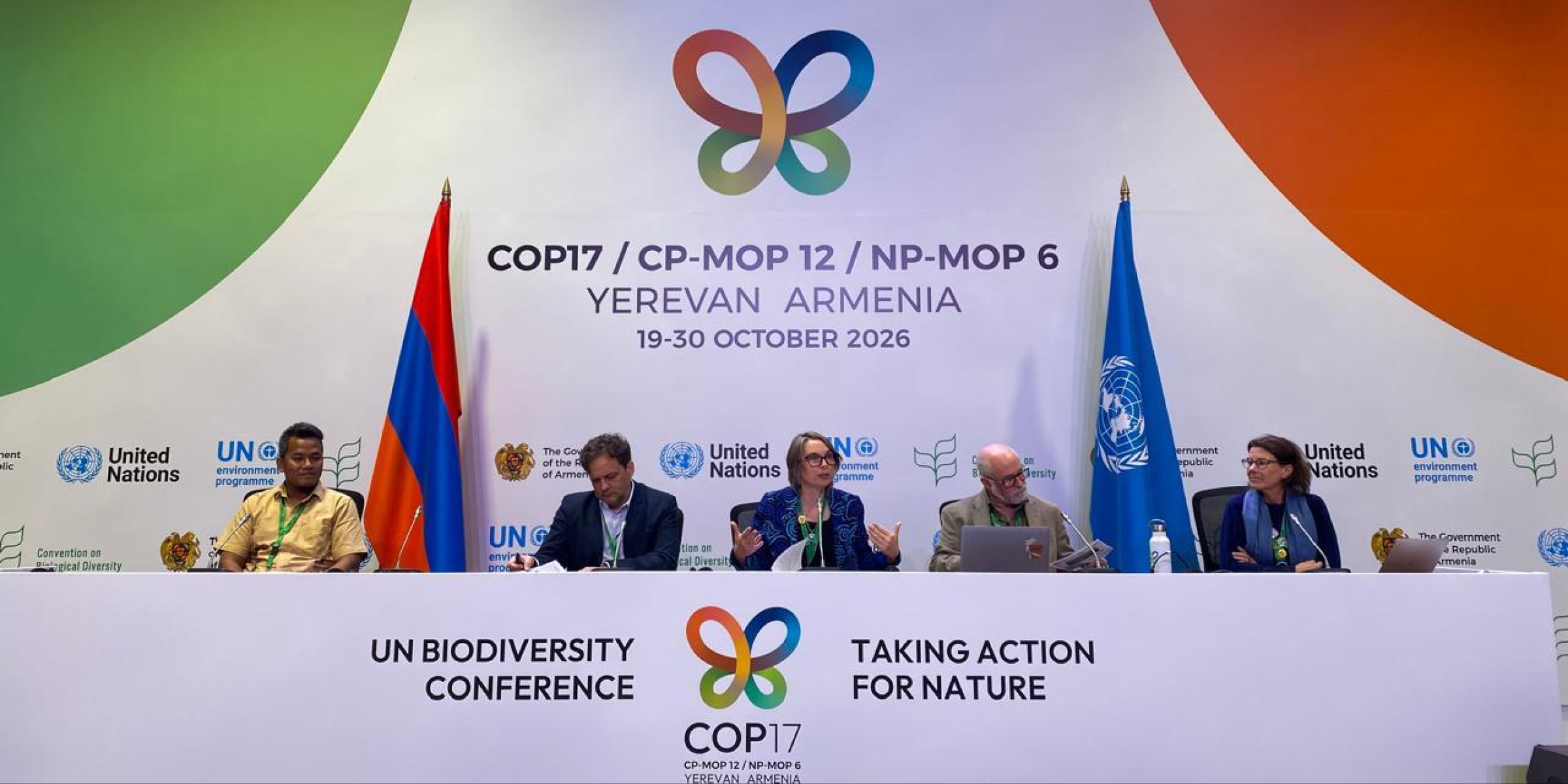
As delegates gathered in Yerevan for the second week of CBD COP17, Friends of the Earth and Third World Network launched the Corporate Destroyers of Biodiversity campaign at a press conference highlighting the corporate actors driving biodiversity loss. The campaign published the first six of a series of factsheets examining how different business sectors contribute to biodiversity destruction and related human rights impacts. EPN and BAN joined the initiative by contributing factsheets on the impacts of the pulp and paper and biomass industries.
Biodiversity destruction is a predictable outcome of economic systems that prioritise profit and trade over nature and human rights. For years, the CBD process has focused on pledges and frameworks while the drivers of biodiversity loss remain obscured through global supply chains, cross-border trade, harmful subsidies, and misleading accounting practices.
Representing EPN and BAN at the press conference was Agung Ady Setyawan of Forest Indonesia. For Agung, these issues are not abstract. In Indonesia, the expansion of industrial plantations and biomass production continues to drive forest loss and biodiversity decline.
“Forests are increasingly treated as industrial feedstock rather than living ecosystems that sustain biodiversity, climate resilience, and local communities. Behind every hectare of forest converted for biomass or industrial plantations, there is a company making profit, a bank providing capital, and an overseas buyer claiming to be generating green energy. Biodiversity destruction is not an accident. It is a business model.”
Reversing biodiversity loss requires cutting harmful subsidies, ensuring corporate transparency and traceability, and strengthening the rights and roles of Indigenous Peoples and local communities.
For the Corporate Destroyers of Biodiversity campaign, this is just the beginning. One of its main messages is to encourage civil society to keep documenting, keep publishing, and to keep pushing until the impacts described in the factsheets are not merely condemned but actively tackled and reversed – within the affected ecosystems, in the law, and crucially in the lives of the people who are currently paying for them.
Back to News