
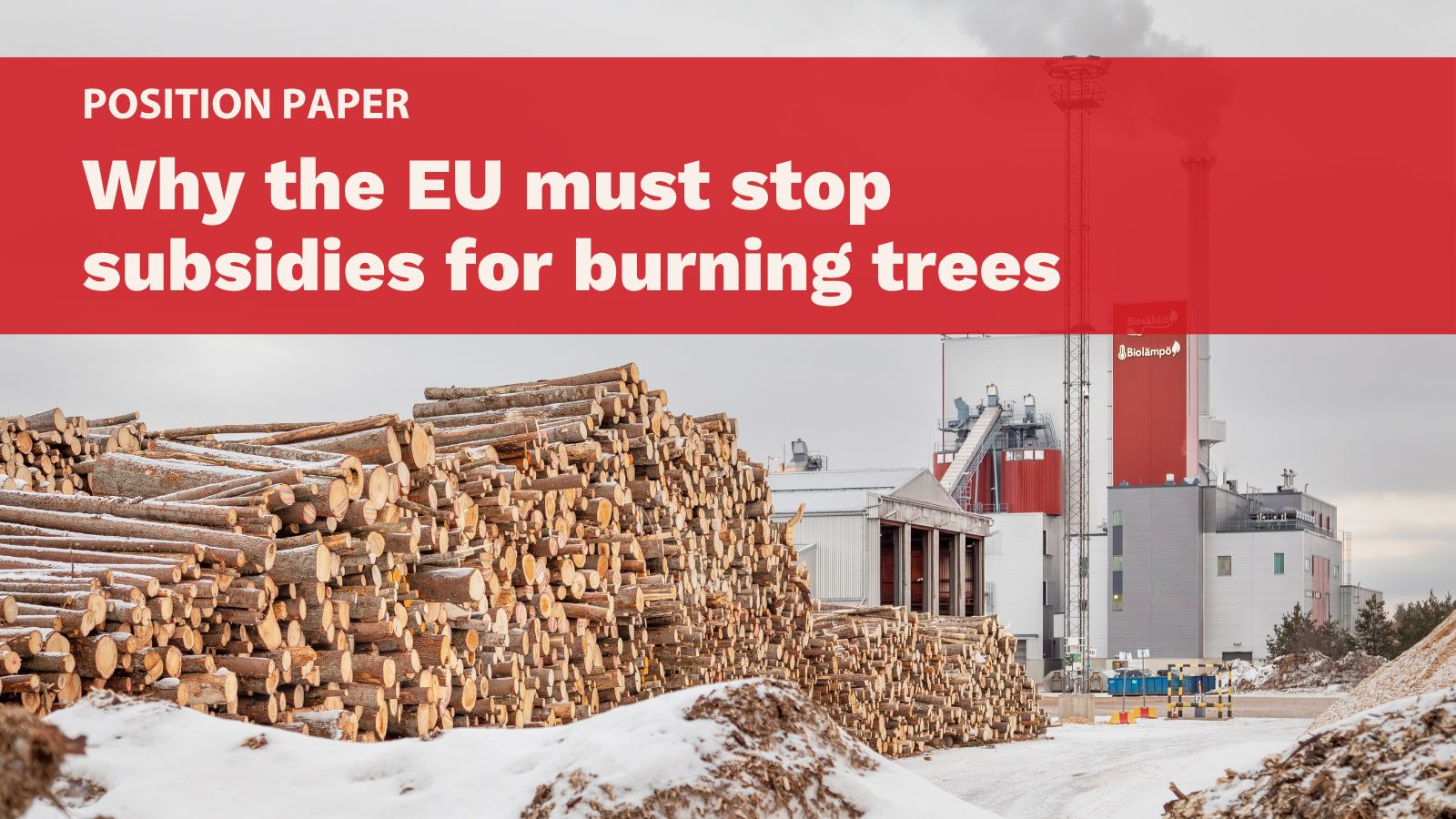
More than 40 NGOs have come together to call on the EU to stop incentivising biomass in the Renewable Energy Directive (RED) and the EU Emissions Trading System (EU ETS). They have produced a shared position paper calling on the EU to stop incentivising biomass in EU renewable energy and climate legislation because it:
- Makes the climate crisis worse: burning woody biomass releases more carbon dioxide (CO2) than coal at combustion, but this is still incorrectly treated as zero emissions in the EU ETS.
- Damages the economy and undermines energy security: wood is a scarce and precious resource, but EU wood-burning incentives are distorting the wood market by pushing wood prices up for competing industries and households alike (especially those relying on it for heating).
- Increases biodiversity loss and the destruction of forests: because any wood can be burnt, treating – and subsidising – wood-based energy as renewable in EU legislation rewards the logging of any tree in a forest, including those that didn’t previously have a market value.
- Worsens air pollution: EU subsidies and incentives for wood burning are making air less breathable in cities and mountainous regions, but also in rural areas.
To correct this policy mistake inherited from the early 2000s, the EU must phase out policy incentives for wood burning as soon as possible by:
- Excluding woody biomass (wood burning) from the list of renewable energy sources in the EU RED; and
- Ending the zero-rating of woody biomass emissions in the EU ETS, accounting for the real emissions from burning woody biomass instead.
The billions of euros of public funding saved will then be available for:
- investing in energy savings (in particular insulation), energy storage and grid upgrades;
- restoring forest ecosystems and increasing their robustness and ability to buffer the worst impacts of the climate crisis; and
- incentivising foresters to use continuous cover forestry rather than clear cuts.