
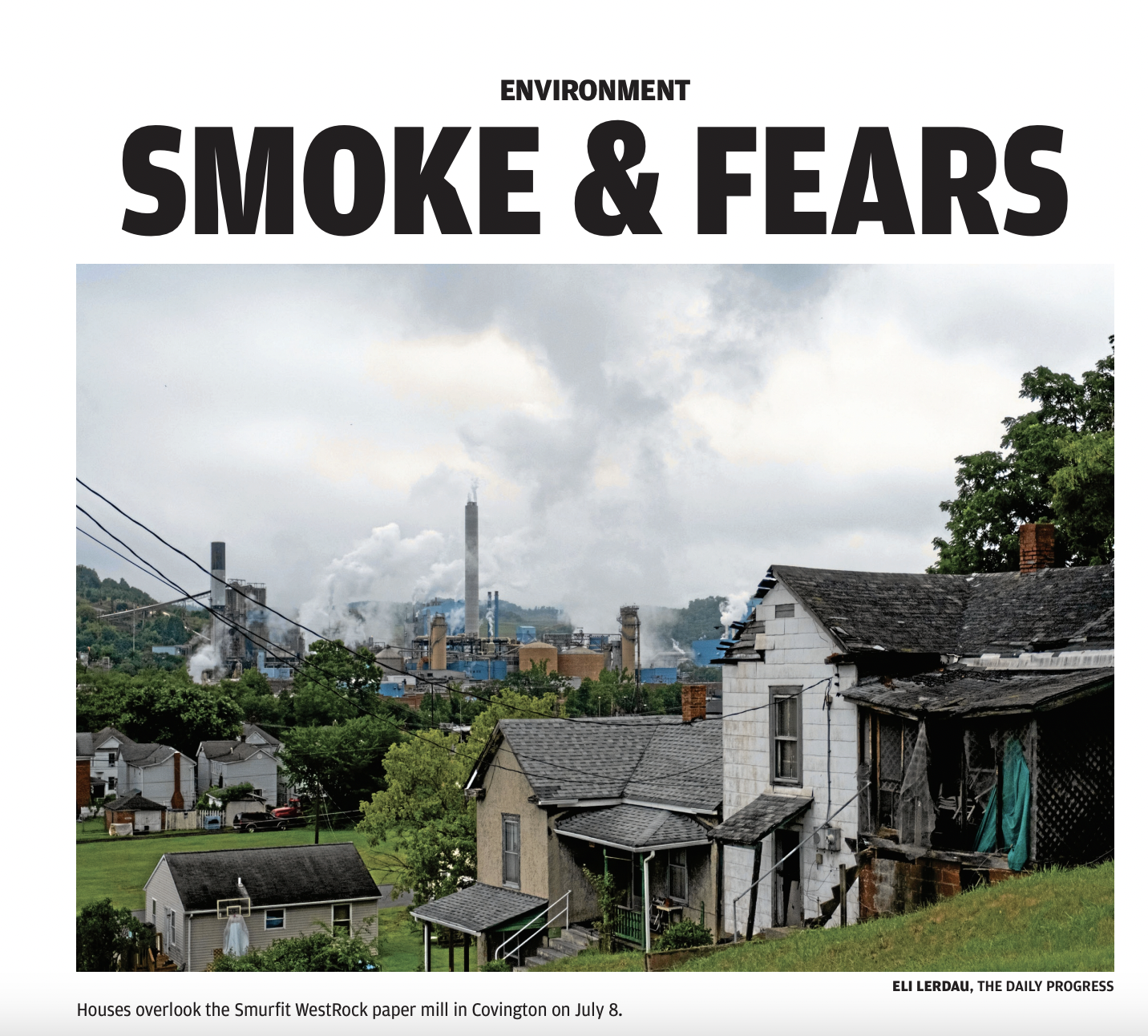
A new investigation by The Daily Progress takes readers inside Covington, Virginia, a small Appalachian community where a 126-year-old paper mill has been at the center of residents’ concerns about air pollution, water pollution and health.
It is a disturbing story, but it is also a familiar one.
The Smurfit WestRock mill dominates the landscape of Covington, where about 5,600 people live in the shadow of its smokestacks. Residents interviewed by The Daily Progress describe persistent odors, ash and soot, and pollution that affects their daily lives. One resident, who has asthma, told the newspaper that she had never needed an inhaler before moving to Covington and has since been hospitalized multiple times.
The pollution does not stop at the mill fence.
The Jackson River, a popular trout-fishing destination, has been affected by repeated discharges from the facility. Fishermen describe discolored water, foam and periods when the river is essentially unusable for fishing. The article also reports on a 2024 fish kill following a disruption to the mill’s wastewater treatment system.
And then there is the climate pollution.
According to the Environmental Integrity Project, the Covington mill reported about 970,000 metric tons of greenhouse gas emissions in 2023. But that figure does not include emissions from burning wood, which are exempt from federal greenhouse gas reporting requirements. When those emissions are included, EIP estimates the mill’s total climate pollution at approximately 2.5 million metric tons.
That is not a small accounting difference. It is a reminder that what gets reported is not always the same as what is actually emitted.
The Covington mill is an extreme example, but the underlying problems extend far beyond one facility. Paper and packaging production has significant environmental impacts throughout its lifecycle, from harvesting and processing wood to manufacturing, transportation and disposal. When some of those impacts are excluded from reporting or receive less public attention, the environmental cost of the products can appear much smaller than it really is.
That matters even more when we consider how much paper and packaging is produced for uses that are extremely short-lived.
A paper cup, takeout container, shipping box or other piece of single-use packaging may be used for minutes or days. The industrial infrastructure required to produce it, however, can operate for decades. Communities like Covington live with the consequences of that infrastructure every day.
The Daily Progress investigation also raises an important question about accountability. Residents have repeatedly reported pollution concerns, while regulators and the company have offered explanations that have left many people dissatisfied. The newspaper found that some complaints were dismissed, and community groups have had to use public-records requests to piece together basic information about pollution and enforcement.
People should not have to live next to a paper mill to understand what goes into making paper and packaging.
At Environmental Paper Network, we work to make the paper system more sustainable and to bring greater attention to impacts that are too often overlooked, including greenhouse gas emissions, air and water pollution, forest impacts and the consequences of unnecessary consumption.
The story from Covington is a powerful reminder that these are not abstract issues. They affect real communities, real waterways and real people.
Read the full investigation by The Daily Progress: “A paper mill is suffocating a small Virginia town, and officials are dismissing concerns” Shared with permission.
Additional reading
The Environmental Integrity Project’s 2025 report, The Paper Trail of Pollution, examines how pollution from the U.S. paper industry is vastly underreported, including greenhouse gas emissions that are not captured by federal reporting requirements.
Read EIP’s report: Pollution from the U.S. paper industry is vastly under-reported, new study reveals
Back to News