
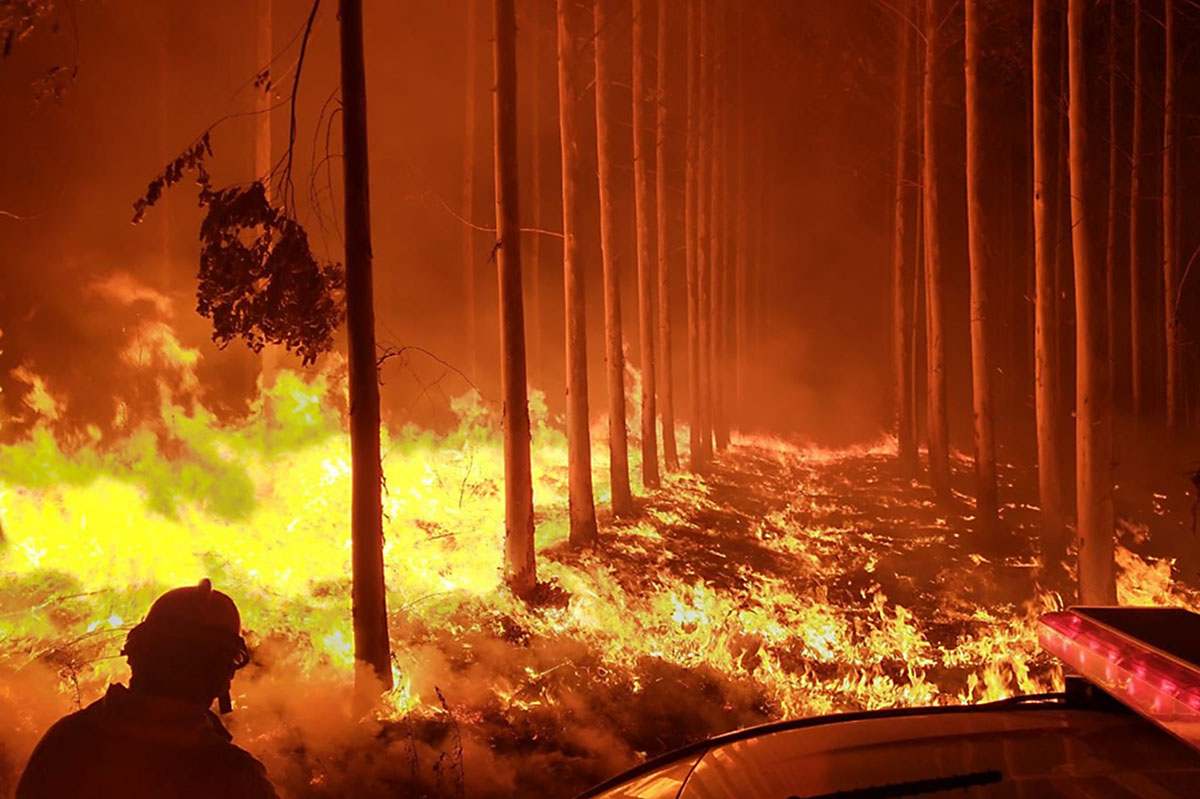
What a Case in Corrientes reveals about industrial tree plantations
Paper is everywhere. It wraps our food, fills our offices, and packages our online purchases. When we think of paper, we picture books and notepads, not single use packaging and waste. And we don’t see the vast industrial plantation landscape that feeds the global pulp and paper industry.
A symbolic ruling involving communities in Corrientes, Argentina sheds light on the real impacts of industrial tree plantations operated to supply the paper sector. The ruling was handed down by the Tribunal on the Rights of Nature. The ‘tribunal’ is a civil society court that hears cases where ecosystems are alleged to have been harmed or violated. Although this body does not have legal enforcement power, it issues expert judgments and recommendations meant to influence governments, courts, and public opinion.
Its 13th ruling, held in Corrientes, Argentina, investigated the environmental violations related to forest monocultures. The Tribunal, aimed to to hold governments and corporations accountable, is organized by the Global Alliance for the Rights of Nature, a network of scientists, attorneys, economists, and indigenous leaders. The case reveals a deeper story about environmental degradation, community harm, and the impacts of large-scale monoculture forestry. Here’s what it tells us about the true cost of paper in Argentina.
Industrial monocultures Replace Living Ecosystems. The modern paper industry depends heavily on fast-growing species such as eucalyptus and pine. In regions like Corrientes, these species are planted in dense monocultures—uniform rows of identical trees managed for rapid harvest cycles.
On paper, these plantations are often classified as “forests.” In ecological reality, they are agricultural systems. Unlike native forests, these plantations replace biodiverse ecosystems with single-species crops, reduce wildlife habitat, disrupt soil health and increase vulnerability to pests and disease.
Native forests are intricate webs of life—home to birds, mammals, insects, fungi, and understory vegetation. Industrial plantations, by contrast, are designed for efficiency and yield. The case in Corrientes brings into focus what happens when industrial forestry expands into landscapes that communities rely on for water, food production, and cultural continuity.
Water stress. Industrial plantations are water-intensive. Fast-growing eucalyptus in particular can significantly affect local water cycles. Fast-growing eucalyptus species are particularly water-intensive. Their deep root systems can alter local hydrological cycles, affecting groundwater levels, stream flow and wetlands. As well as overall soil moisture.
Communities in plantation-heavy regions frequently report reduced water availability and changing local water dynamics. In some cases, concerns extend to agrochemical use—herbicides and pesticides applied to maintain monocultures can enter waterways and soils.
While pulp and paper products may appear clean and renewable to consumers, their upstream production can place heavy demands on ecosystems already under stress from climate change.
Chemicals, health, and environmental risk. Industrial plantations are rarely “natural” systems. Maintaining large monocultures typically involves chemical inputs to suppress competing vegetation and protect against pests.
This chemical dependence creates multiple risks, the most common being exposure to spraying in nearby communities, especially when applied by air spraying. However impacts spread over soil contamination, poisoning pollinators and wildlife, and overall long-term ecosystem degradation. In rural areas where plantations border small farms or settlements, concerns about drift and exposure are common. The Corrientes ruling reflects the broader tension between industrial land use and community well-being. These are not isolated problems—they are structural features of large-scale plantation forestry.
Local communities. Beyond environmental effects, the expansion of industrial plantations often reshapes rural economies and land ownership patterns. Large forestry companies consolidate vast tracts of land, reducing space available for small-scale subsistence farming and erasing traditional agriculture practices.
For many rural and Indigenous communities, land is not simply an economic resource—it is identity, heritage, and survival. Industrial forestry can fragment these relationships. When monocultures replace diverse landscapes, livelihoods tied to mixed farming, native vegetation, and local resource use can decline. The Corrientes case underscores the importance of environmental oversight, land-use planning, and meaningful community consultation. It raises a fundamental question: who decides how land is used—and who bears the consequences?
The climate narrative: carbon storage or carbon emissions. The pulp and paper industry frequently presents plantations as part of the climate solution. Trees absorb carbon dioxide as they grow, and plantation forestry is often marketed as renewable and sustainable.
But the carbon story is complicated. Reality is that industrial plantations operate on very short harvest cycles based on clearcutting, after which the stored carbon is burned as biomass or ends up in extremely short living products such as paper, normally discarded the very same day of their first use. As a result the stored carbon is immediately released into the atmosphere. Meanwhile, the whole process resulted in soil erosion and drought, reducing long-term carbon storage.
A native forest, left intact, can store carbon for centuries in complex biomass and soils. A plantation harvested every 5–15 years is part of a continuous carbon cycle of growth and release.
Global demand, local impacts. The demand for pulp and paper is global, and it is currently driven by an unwise expansion of disposable products, such as single-use packaging. While goods can be stored and transported in reusable containers, the global consumer goods industry finds disposable packaging more convenient, despite the impacts it causes. The Corrientes case illustrates how global supply chains intersect with local realities. Consumers rarely see that connection, but paper consumed in one part of the world may originate from landscapes where communities face environmental transformation and social disruption.
Countries like Argentina have positioned themselves as key players in plantation forestry, leveraging favorable climates, land availability, and generous subsidies. But expansion often occurs in rural regions where governance, monitoring, and enforcement may lag behind industrial growth.
A turning point? Rethinking paper consumption. Paper feels harmless in our hands. But the landscapes that produce it tell another story. Industrial plantations tied to the paper industry reshape ecosystems, strain water resources, and disrupt rural life. As consumers, policymakers, and global citizens, understanding these impacts is the first step toward more responsible production and consumption.
The true cost of paper isn’t printed on the page—it’s written on the land.
Back to News