
EPN’s Biomass Action Network has sent a letter to the UN outlining the negative impacts of technologies linked to large-scale biomass energy, including: Bioenergy with Carbon Capture and Storage (BECCS), biomass co-firing, biomass-based e-fuels, industrial charcoal for “green” steel and biochar for carbon dioxide removal (CDR). It was signed by 51 organisations from around the world.
The submission was made in response to a call by the Special Rapporteur on Climate Change for inputs on technologies related to climate change and their impacts on human rights. In it, we argue that technologies which rely on biomass energy share the same supply chain and thus expand and exacerbate the human rights impacts associated with it. Many of these technologies also entrench fossil fuel use, despite being promoted as climate solutions.
The call by the Special Rapporteur presented an important opportunity to draw attention to the detrimental effects of the biomass industry on people around the world and builds on a previous submission by BAN the year before.
Some examples of human rights impacts from biomass technologies
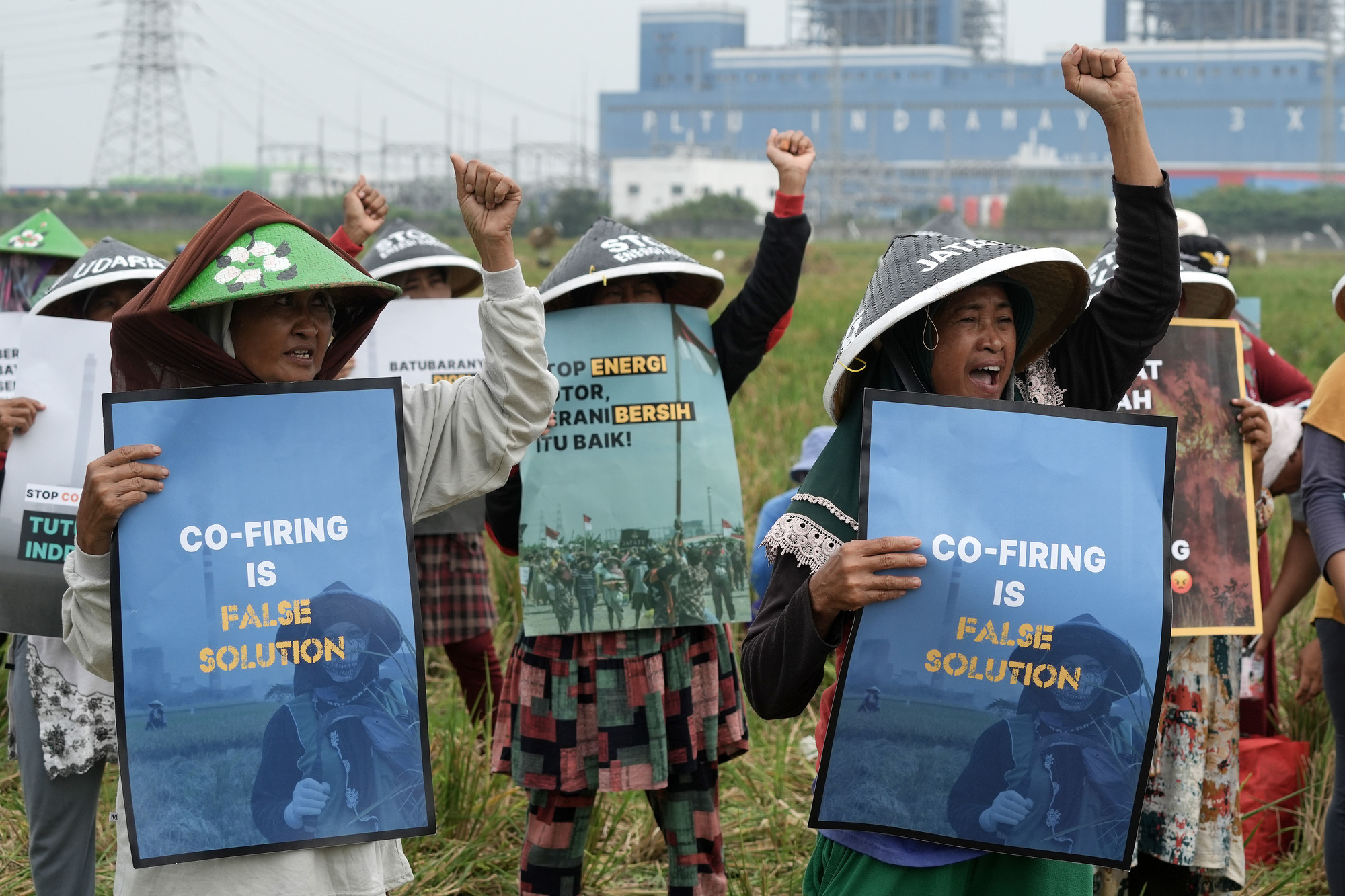
Biomass Co-firing: Prolonging our reliance on coal
Despite being promoted as a strategy to mitigate emissions, biomass co-firing is fundamentally flawed. Burning wood emits as much CO2 per unit of energy as coal, so this practice does not reduce greenhouse gas emissions. In fact, co-firing allows coal-fired power stations—which would otherwise be forced to shut down—to continue operating, thereby prolonging the use of coal and delaying the transition to genuinely clean and renewable energy sources. Communities living in the shadow of dirty coal-fired power stations are being condemned to pollution exposure, and the health implications of this, for years to come.
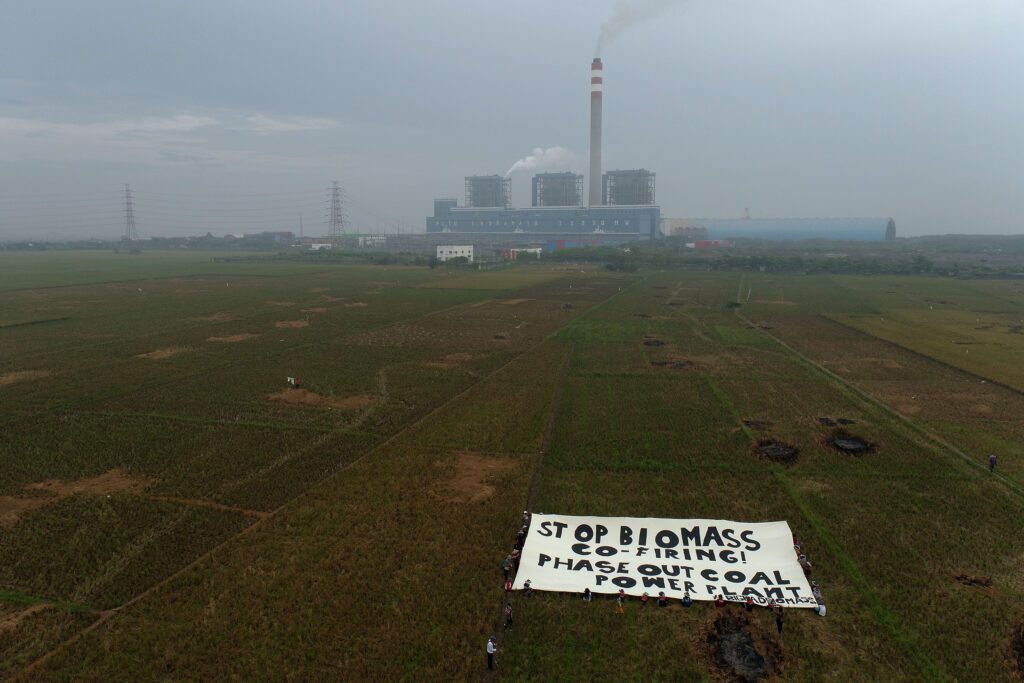
Communities protest against biomass co-firing in Indonesia. ⓒ Melvinas Priananda / Trend Asia.
In Indonesia, plans are underway for 52 coal power stations to co-fire with 5-10% biomass to meet Indonesia’s Nationally Determined Contributions under the Paris Agreement. Research indicates that even this relatively modest level of co-firing will result in the deforestation of millions of hectares of land. Biomass energy projects have already stripped local and Indigenous communities in Indonesia of access to forests essential for food, medicine, cultural practices, and livelihoods. Examples include the Indigenous Suku Anak Dalam in Jambi, who have lost gardens, forests, and fields to bioenergy development without proper compensation, and the O Hanga Manyawa Indigenous people in North Maluku, who were unaware of a project on their ancestral lands and received no information post-permit issuance. On Buru Island, communities have lost forests and farmland to plantations developed by companies that ignored Free, Prior, and Informed Consent (FPIC) protocols. On top of this, a 2024 report found that local communities living in Indonesian plantation development areas received no benefits from biomass energy; all output was exported to Japan. These examples demonstrate how demand for woody biomass directly threatens the rights of indigenous, tribal, and local communities.
Bioenergy with Carbon Capture and Storage (BECCS): A dangerous distraction
BECCS (the concept of capturing and storing emissions from burning biomass underground as a strategy for climate mitigation) poses significant threats to human rights, stemming from the sheer scale of the land it requires. Exactly how much land depends on the type of biomass and the scale of the expected negative emissions, but some scenarios require an area comparable to the size of India. This would create significant competition with agriculture, driving up food prices and compromising people’s rights to affordable food. BECCS also presents trade-offs between land and water usage that would dramatically increase global water demand, worsening water scarcity and undermining people’s right to clean drinking water.
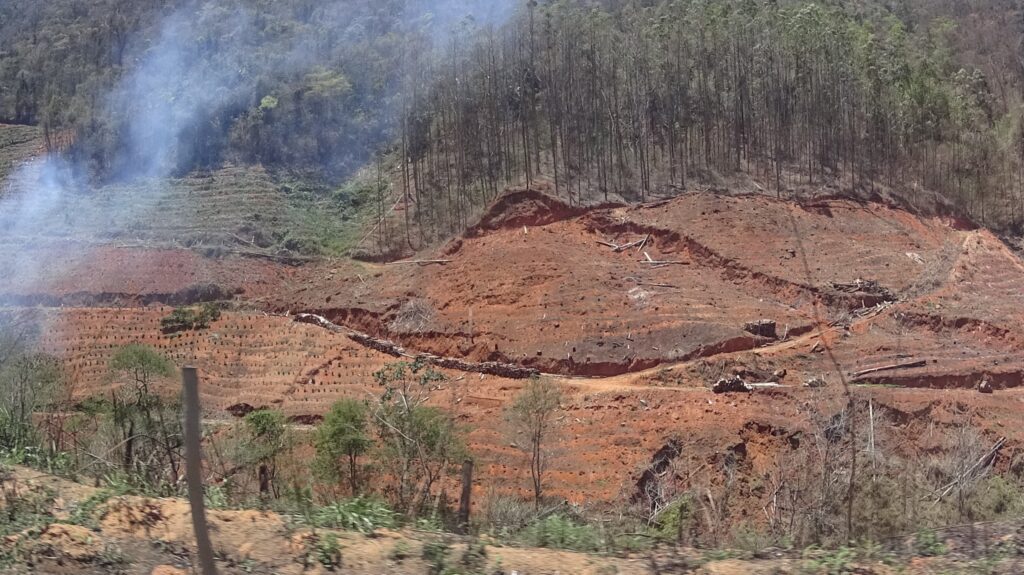
Eucalyptus plantations dominate the landscape and cause desertification in Minas Gerais, Brazil. ⓒ Federica Giunta
Charcoal for “green” steel and biochar for carbon dioxide removal: flawed carbon offsetting
Large amounts of wood are used globally to make charcoal, which is utilised in the production of so-called “green steel” in Latin America. Brazil produces about 7 million tonnes of charcoal annually, using wood from eucalyptus plantations, and 90% of it is used by its iron and steel industry. Seventy percent of Brazil’s iron and steel mills are in Minas Gerais, which has the largest area of tree plantations in the country. Charcoal is mostly produced in small kilns, exposing workers to serious health risks and poor conditions. In 2022, Minas Gerais had the highest forced labour rate in Brazil, with charcoal production among the most at-risk sectors for slavery-like conditions.
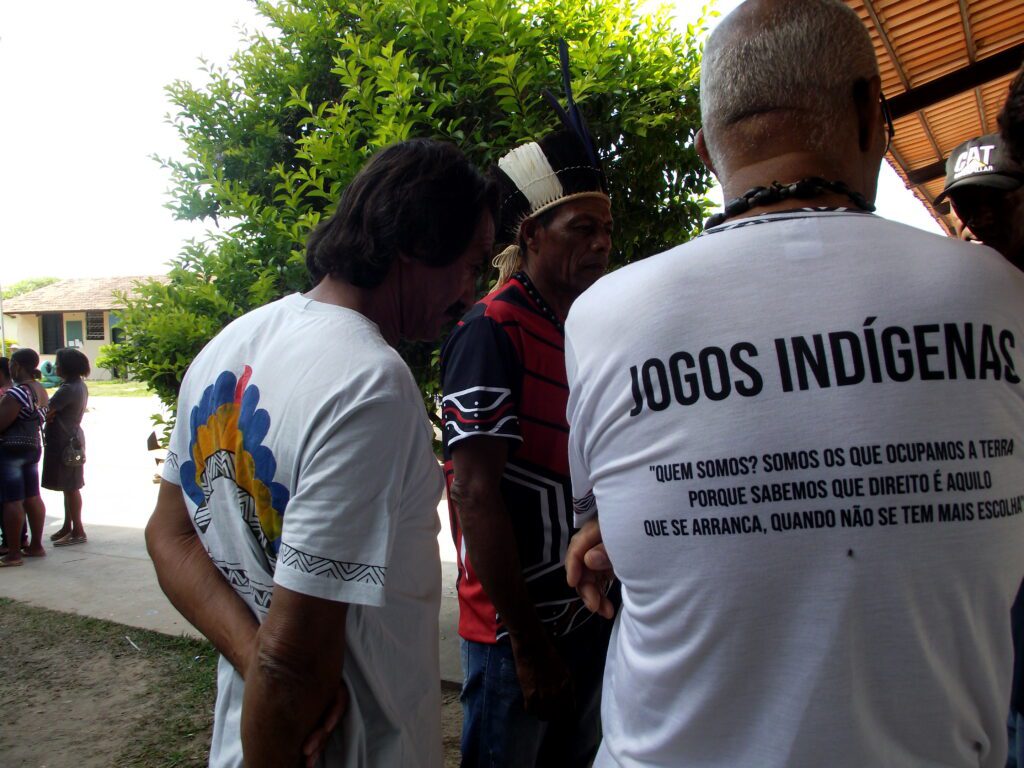
A meeting of communities impacted by the industry in Minas Gerais, Brazil. ⓒ Federica Giunta
In Maranhão, Aço Verde do Brasil (AVB) claims to be the world’s first carbon neutral steel producer, but its operations, including in Formiga (Anapurus), have negatively affected many communities. Charcoal production throughout Brazil has caused widespread land-grabbing, conflict with communities, deforestation, loss of livelihoods, water shortages, and increased use of pesticides and agrotoxins.
Biochar, closely tied to charcoal production, is now a leading form of Carbon Dioxide Removal (CDR) in voluntary carbon markets. One of the best examples of this is Brazilian steel producer Aperam, which sells some charcoal as biochar for carbon offsets and has sold nearly 120,000 tonnes of removal credits since 2021. Aperam’s charcoal and biochar come mainly from 125,000 hectares of non-native eucalyptus plantations in Minas Gerais, which have lowered groundwater by 4.5 meters since the 1970s, threatening local water supplies and livelihoods. Large-scale pesticide use has also been reported to have harmed human health.
Burning trees harms people and the climate; technologies that perpetuate this only increase such harms, because they:
- Delay the transition to genuinely clean and renewable energy sources and undermine true emissions reductions
- Entrench combustion infrastructure and sometimes prolong the use of fossil fuels
- Promote a business-as-usual approach at a time when we need to reduce resource extraction and consumption levels
- Exacerbate and increase demand on the world’s already overexploited forests
- Exacerbate and increase the human right’s impacts inherent in the biomass supply chain
We advise the Special Rapporteur on Climate Change that the priority must be:
- Recognition that the extraction and burning of woody biomass for energy at scale is unsustainable and carbon-emissive
- Rapid demand reduction for woody biomass (by not deploying biomass-based technologies)
- Deployment of genuinely low-emission technologies such as wind and solar, and increasing energy efficiency
- Rejection of biomass-based Carbon Dioxide Removal schemes and carbon offsetting
- Protection and restoration of forests as carbon sinks and for the well-being of all life on Earth
Back to News