
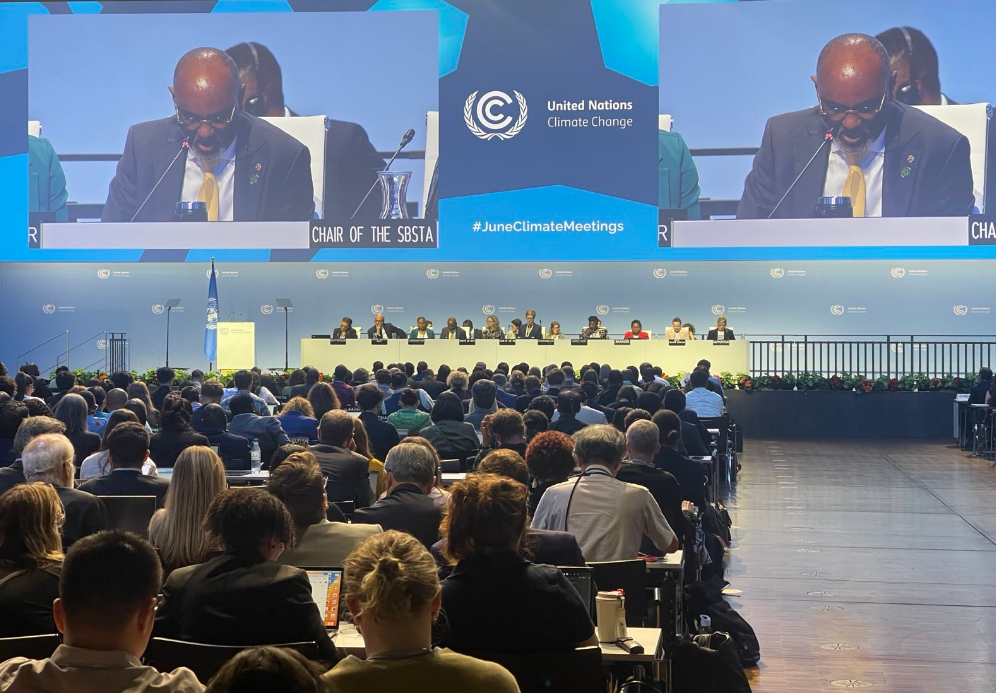
Davi Martins, The Biomass Action Network’s International Advocacy Campaigner, is on the ground in Bonn. Here is his take on events so far:
Two days. That’s what it took for delegates to agree upon the negotiation agenda for the Climate Talks in Bonn. This delay was mainly due to the inclusion of finance for climate action in the discussion, with much reservation from developed countries who never actually come up with the amount of money needed to help the poorest take action. In such a hot environment (no pun intended) what can we expect from negotiations in Bonn?
There are three very important agendas for biomass being discussed, synergies, just transition and mitigation. Spearheaded by the Brazilian COP 30 presidency, synergies around a joint Rio Convention cooperation that aligns climate and biodiversity action are being discussed. Positive synergies in the protection and restoration of forests and maintenance of ecosystem integrity exist, nonetheless negative synergies like large-scale forest biomass energy are a problem and need to be left out of the conversation. Commonly sold as a climate mitigation activity, large-scale forest biomass energy degrades and deforests, destroying ecosystem integrity, whilst also immediately releasing large amounts of carbon into the atmosphere with detrimental effects that cannot be re-sequestered within the Paris Agreement timelines for action, if ever. The synergies concept requires negotiating space in Bonn, most likely included via an existing agenda item on International Cooperation.
The Just Transition Work Programme (JTWP) agenda needs to address the serious impacts on people and communities that biomass energy production imposes throughout its supply chain. Meaning that this is not a just industry and has no place in a just transition negotiation. The Mitigation Work Programme (MWP) needs to include targets for ending deforestation and forest degradation, as well as ending industrial forest bioenergy. Disputes over the inclusion of substantive, or merely procedural, outcomes will be under discussion, and hopefully resolved in favour of substantive agreement.
As the negotiations agenda unfolds towards more collaborative propositions, attention towards synergies and a just transition will demand focused work on real ecosystem integrity measures and forest protection outcomes, if it is not held back by more tensions over finance for climate action (a very relevant item, let’s not forget).
Some of these topics will be presented in the press conference “Beware of a Bioeconomy Gateway to Big Biomass Energy at COP 30”, to be held on Friday, 20th of June at 10:30 (UTC +1). There, Biomass Action Network members will present how COP 30 must shy away from promoting the escalation of forest biomass burning for industrial energy due to its serious impacts on climate, nature and communities. Better alternatives exist.
Back to News