
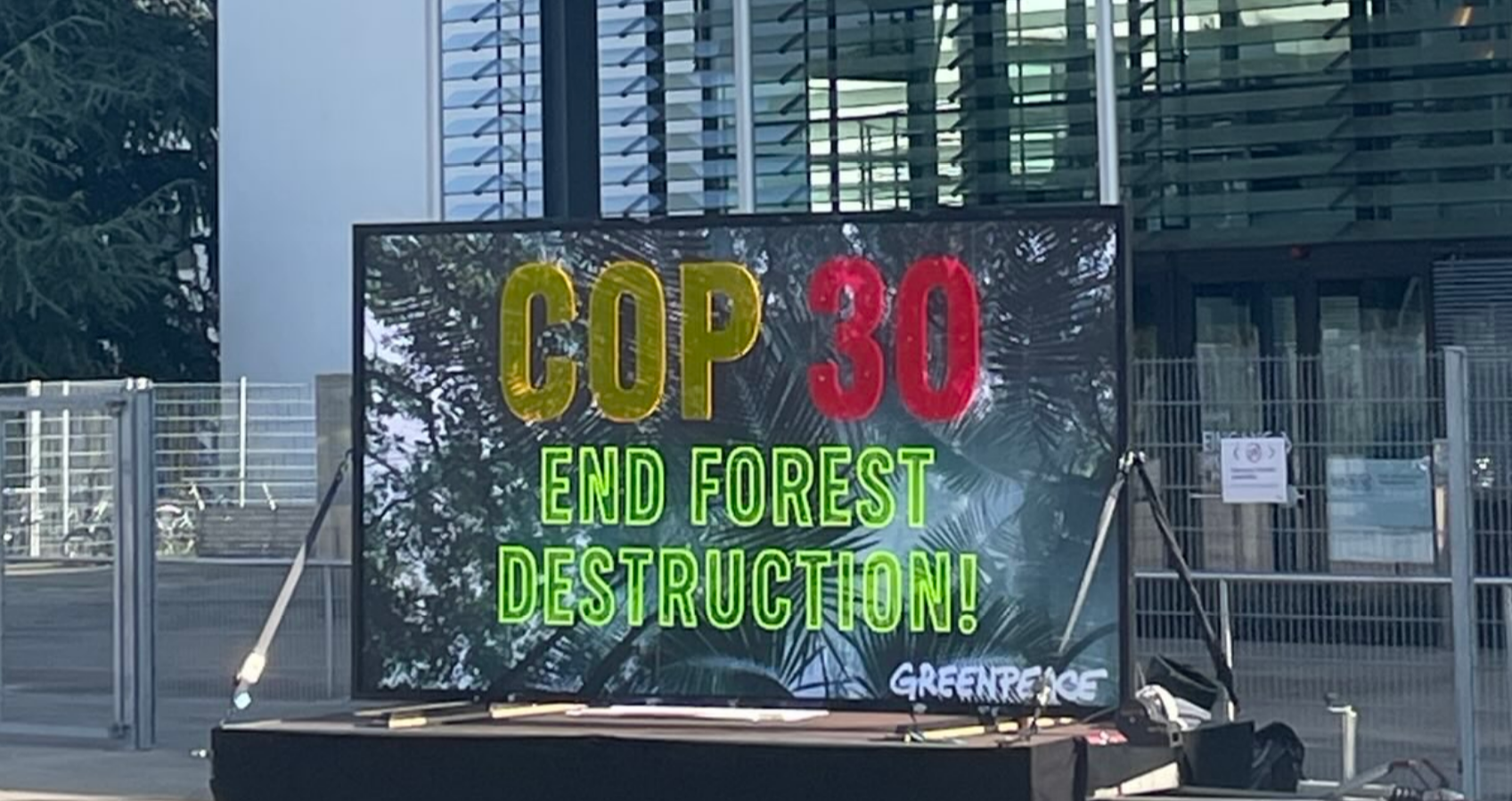
Achieving mitigation of climate change, a just energy transition, and synergies between actions to safeguard the Earth’s climate and biodiversity are under consideration at Climate Convention meetings in Bonn that will set up for COP 30 in Brazil in November, but a seemingly innocuous push for a bioeconomy contains threats to these important agendas via expanding large-scale forest bioenergy, according to the Biomass Action Network (BAN).
BAN today called for COP30 to shy away from promoting the escalation of forest biomass burning for industrial energy with its serious impacts on climate, nature and communities, outlining that better alternatives exist.
The likelihood that Brazil’s push for the bioeconomy could open the door for dangerous bioenergy has led the Climate Action Network of over 1500 NGOs to produce a new Bioenergy Position that calls for countries and corporations to immediately revise their plans and targets and eliminate their reliance on woody biomass (also biofuels and BECCS), saying that bioenergy must in no way harm or threaten community and Indigenous Peoples’ land rights, and that use of material from natural forests for large-scale bioenergy be strictly banned in order to protect and safeguard biodiversity and ecosystem integrity.
A BAN Coordinator Peg Putt said: “We are witnessing dramatic growth of this so-called ‘renewable’ energy driven by subsidies and based on false claims to emissions reductions and sustainability. Burning up the biosphere is no way to save the planet.”
Kwami Kpondzo, BAN Africa Coordinator said: “In the Global South, most biomass developments are synonymous with monoculture tree plantations using exotic species such as eucalyptus, which has implications on biodiversity, water and on surrounding communities’ livelihoods. Local Communities and Indigenous peoples in the Global South live better and in harmony with nature without large scale monoculture plantations. This capitalist way of development needs to stop. Our nature is not for business.”
Katherine Egland, EEECHO representative of Environmental Justice Communities in the southern US said: “Industrial-scale wood bioenergy producers are nothing more than well-subsidized, community assassins masquerading as clean energy alternatives. In the Gulf South U.S. and beyond, the rush to transition to a bioeconomy is primarily imperiling the health and life expectancy of vulnerable populations, decimating our forests, exacerbating flooding, and further deteriorating our climate.”
Ruairi Brogan from the RSPB said: “Harvesting of large-scale woody biomass can result in significant harm to the ecosystems and wildlife of northern forests. Environmental groups and independent investigations have documented logging from biodiverse forests in North America as well as forests that should be protected under European nature laws. These harvesting practices damage the irrecoverable habitat of our most threatened species of birds and other wildlife, they degrade vital carbon stocks, and they increase fire risk, with some forests now releasing carbon instead of storing it.”
Toby Aykroyd of Wild Europe concluded: “Commercial scale forest bioenergy produces higher emissions than the fossil fuels it is supposed to replace, even coal. Its adoption worsens climate change – yet its annual subsidy cost in Europe is projected to reach 35 – 40 billion Eur per annum by 2050. By contrast, redirection of those subsidies to underfunded genuine renewables, demand suppression enterprise and carbon absorbent ecosystems could not only deliver a significant proportion of the EU’s net zero target by that date, but also produce dramatic economic benefits. These include an extra 94 billion Euro pa of Gross Value Added, 40 billion Euro per annum in cost savings and 1.8 million extra high tech jobs. These findings headline a 140 page report recently published by Trinomics, energy advisors to the European Commission”.
Contact: peg.putt@gmail.com
Back to News