
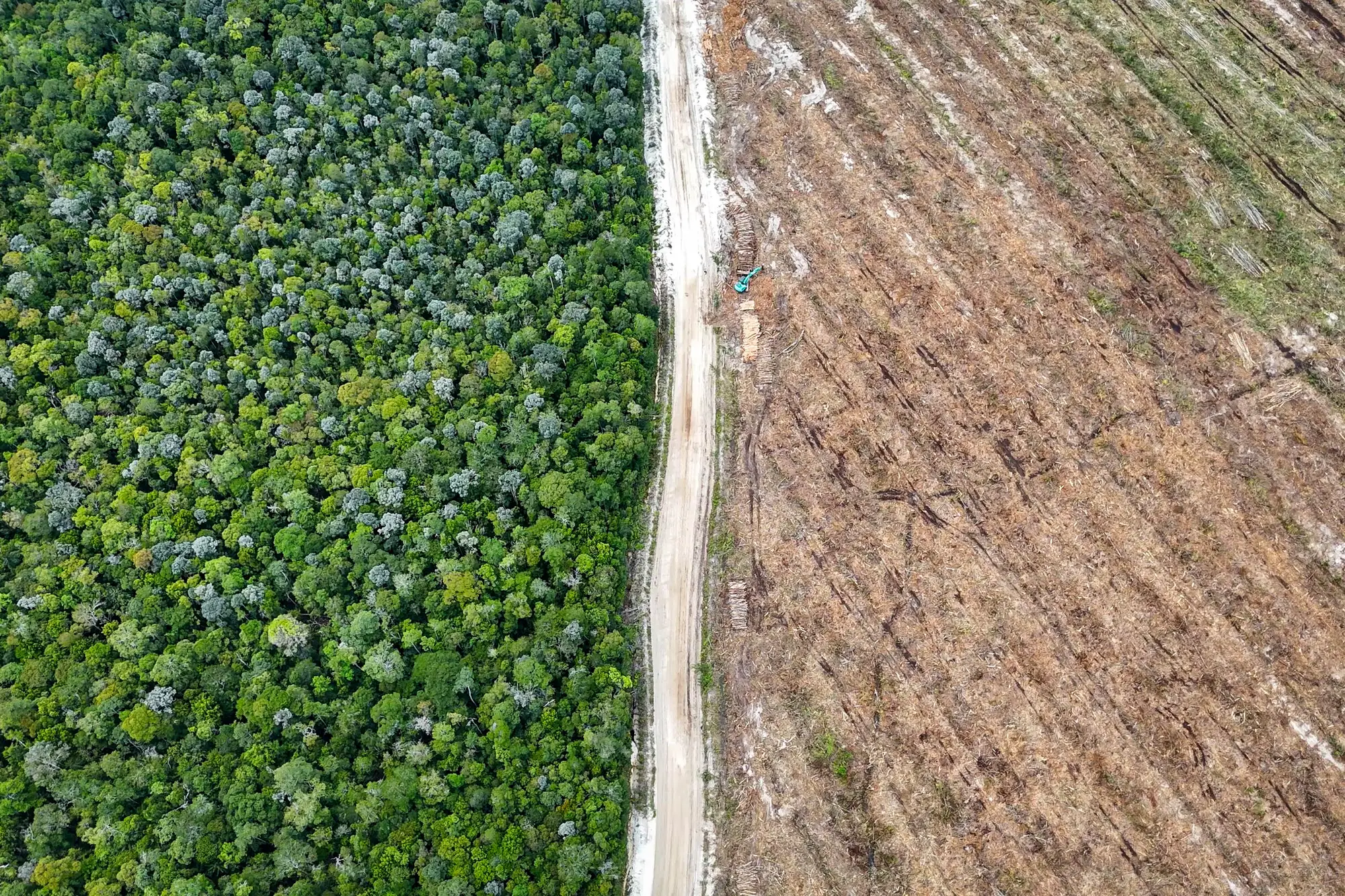
In today’s global economy, sustainability sells. Corporations proudly promote “deforestation-free” commitments, and consumers increasingly expect ethical sourcing behind their everyday products. What happens when those claims don’t match reality?
A recent investigation by The Gecko Project exposes a troubling pattern: major corporations may be maintaining clean reputations on paper while quietly benefiting from environmental destruction through hidden networks of suppliers.
The Illusion of Clean Supply Chains
At the center of the investigation is Asia Pacific Resources International Limited (also known as APRIL, part of the Royal Golden Eagle (RGE) conglomerate), a powerful pulp and paper conglomerate that pledged over a decade ago to eliminate deforestation from its supply chains. On the surface, it appears to have followed through.
However, reality is far more complex. To understand the full picture, we need to look at a concept called shadow integration. In simple terms, it means a company may appear to operate clean, sustainable supply chains, when in reality it is still connected to other businesses behind the scenes that do not have such practices.
The report reveals that RGE has been sourcing materials from a pulp mill called PT Phoenix Resources International, which is connected to companies responsible for clearing rainforests in Indonesia. Some of these firms are among the worst offenders in the region and have among their victims: indigenous communities, habitats of threatened Orangutans, and climate-precious peatlands.
This raises a critical question: how can a company uphold a zero-deforestation policy while still being linked to forest destruction?
The Role of “Shadow Companies”
The answer may lie in what investigators call “shadow integration.”
RGE’s China-based subsidiary, Asia Symbol, is reportedly supplied from a web of companies that appear independent, but are alleged to be secretly controlled by the same RGE group. From timber plantations, to the chip mill, to the pulp mill, at every stage its operators are presented as “independent”, despite being secretly controlled.
These “shadow companies” can carry out deforestation and transform deforestation products, all while the parent corporation remains untainted. This way, RGE can:
- Maintain a public image of a sustainable actor
- Continue accessing global markets with strict environmental standards
- Indirectly benefit from environmentally destructive practices
This structure creates a disconnect between corporate commitments and on-the-ground reality.
From Rainforests to Retail
The implications go far beyond forests.
Asia Symbol produces packaging marketed as “carbon-neutral,” which has been used by major consumer health brands owned by Haleon, the company behind products like Sensodyne and Panadol. As a result of the Gecko Project’s investigation, Haleon cut ties with Asia Symbol.
This highlights how deeply embedded such supply chains are: even companies with strong sustainability messaging can unknowingly rely on problematic sources.
The findings point to a broader systemic issue in global supply chains:
- Transparency gaps allow corporations to obscure true sourcing practices
- Complex ownership structures make accountability difficult
- Voluntary sustainability pledges can be circumvented without strict enforcement
If they want to retain even a shred of credibility, RGE and its controlled paper producer in China, Sateri, must suspend all supply from the pulp mill involved in deforestation (PT Phoenix Resources International), as well as from any associated fibre suppliers.
Despite this, the problem runs much deeper. In industries like palm oil, timber, and pulp, similar patterns have emerged before, suggesting that shadow networks may be more widespread than previously understood.

A Turning Point for Accountability?
On a positive note, public exposure has already triggered corporate responses, showing that scrutiny works. Corporate reactions included supplier suspensions and contract terminations.
It’s needless to say lasting change will likely require more than reactive measures. Stronger regulation, independent verification, and deeper supply chain transparency are essential if sustainability claims are to mean anything.
Shadow integration reveals a paradox at the heart of modern sustainability: companies can meet the letter of their commitments, while undermining their spirit.
For consumers, investors, and regulators, the lesson is clear—what’s visible in a supply chain is only part of the story.
The real question is no longer whether companies make sustainability promises, but whether those promises hold up when the shadows are examined.
Back to News