
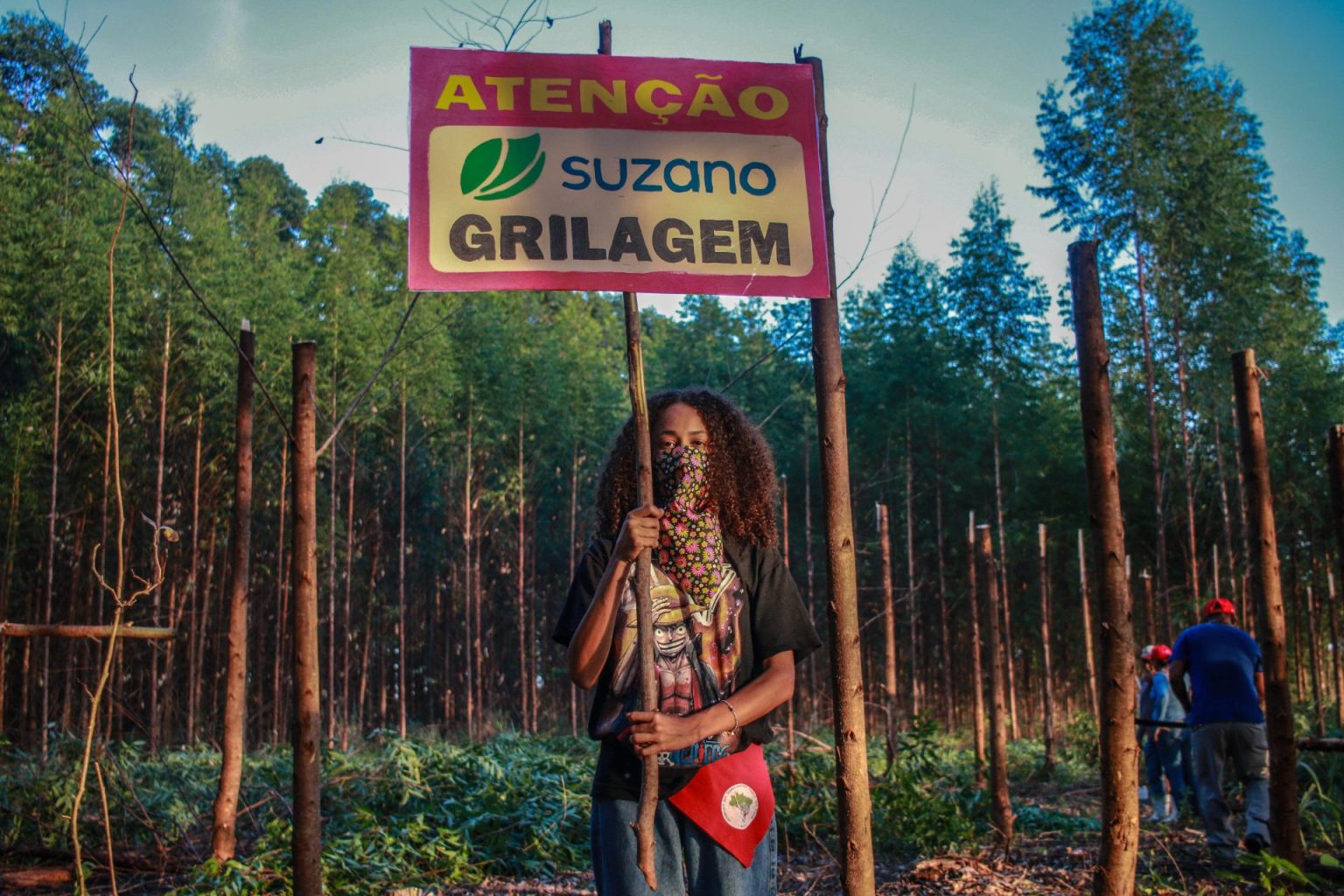
Around 1000 women from Sem Terra ocupam protest in Aracruz (Espirito Santo, Brazil). Foto: © MST
On March 13th, in the city of Aracruz (Espírito Santo, Brazil), 1,000 women from the Landless Workers’ Movement (MST) occupied land owned by Suzano Papel e Celulose, the world’s largest pulp producer, to protest the environmental impact of eucalyptus monoculture.
This action is part of a wave of protests that have also taken place across several Brazilian states, including Bahia, São Paulo, Minas Gerais, Rio Grande do Sul, Santa Catarina, Paraná, Rio Grande do Norte, Ceará, Goiás, Mato Grosso, Amazonas, Pará, Rondônia, Tocantins, Roraima, Pernambuco, Sergipe, Paraíba, and Piauí.
“Eucalyptus doesn’t make a forest, and it doesn’t put food on the table. Espírito Santo is going through a very difficult time due to the expansion of eucalyptus monoculture, which has been present here since the 1960s,” said one protester.
The protesters are demanding that Suzano honor a commitment it signed in 2011 to allocate 22 land parcels under its control for agrarian reform. This commitment was made in response to complaints about the damage caused by eucalyptus monoculture in the region. However, according to the MST, the commitment was never fulfilled, and the negative impacts have only worsened over time. Suzano now controls more than 500,000 hectares of eucalyptus plantations in the region and is planning to double its monoculture operations.
“We know that this will not solve the problem of rising food prices and will only worsen a range of environmental issues,” said Lia Fernandes, from the MST.
“This company has been responsible for the violent displacement of Quilombola communities in the municipalities of Pedro Canário and Conceição da Barra,” added a spokeswoman from Espírito Santo. In her municipality, Suzano alone controls 62% of the municipality’s arable land.
According to mapping of global expansion of pulping capacity carried out by EPN, at least 16 new pulp line projects have been announced to be operational from 2022 to 2028 in Brazil, with an added pulping capacity of over 22 million tonnes. This development is expected to significantly increase the land required for new eucalyptus plantations to supply these additional pulp production lines.
Suzano claims to reduce poverty, respect indigenous and traditional communities, and increase water availability in critical watersheds. However, a recent EPN report challenges these claims, exposing the company’s role in deforestation, displacement of indigenous communities, depletion of water resources, and increased fire risks.
Meanwhile, more evidence continues to accumulate. For example, a recent study published in March 2025 confirmed the impact of eucalyptus plantations on water resources in Mato Grosso do Sul, where plantations have been developed to supply seven pulp mills, either operational or currently under construction.
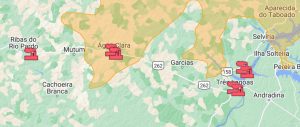
Pulp mills in Mato Grosso do Sul, Brasil – either operational or currently under construction – © EPN
Despite the significant environmental and social damage it has caused, Suzano has received high Environmental, Social, and Governance (ESG) ratings. According to Forests & Finance, between 2016 and 2023, Suzano secured $488 million in investments from BlackRock and $278 million from Vanguard, in addition to over $25 billion in credit from major financial institutions, including JPMorgan Chase, BNP Paribas, Rabobank, Mizuho, and Bank of America. Financial institutions should stop investing in projects with such severe impacts on local communities and the environment. Instead, they should prioritize real solutions—such as clean, community-based agriculture, forest protection, and innovative technologies that reduce or eliminate wasteful consumption, particularly in wealthy countries.
Back to News